GBTV - Where the Truth Lives

Election Season 2014

And it has brought us to this trainwreck called ObamaCare and we have bankrupted our kids and grandkids!

We are now headed into the 2014 Election Season and common sense and conservatism are on the rise. Please stand-up and be counted!

Reading Collusion: How the Media Stole the 2012 Election is a great place to start!

The Founding Father's Real Reason for the Second Amendment

And remember the words of Thomas Jefferson "The strongest reason for the people to retain the right to keep and bear arms is, as a last resort, to protect themselves against tyranny in government." See Video of Suzanna Gratia-Hupp’s Congressional Testimony: What the Second Amendment is REALLY For, below (u-tube HERE).

The Leaders Are Here... Palin, Cruz, Lee, Paul, Chaffetz....

T'S A WONDERFUL LIFE

Can You Really Still Believe That None of These People Would Have Done a Better Job???

Bloggers' Rights at EFF

SIGN THE PETITION TODAY...

Showing posts with label KARL ROVE. Show all posts

Tuesday, November 6, 2012

Final Election Predictions, Featuring Weekend Monkey

JoshuaPundit:

Well this is where the pedal hits the metal as they say. It's time for me to make my final election predictions, along with the able assistance of Joshua Pundit's political guru, ace handicapper and former Democrat presidential candidate Weekend Monkey.

RM: Hello Monkey, and thanks for joining us.

WM: Your pleasure, I'm sure Rob. Howdy Doody, primates!

RM: @##!#. Always the inflated ego...

WM: Hee hee hee! Lemme tell ya, I'm feeling good about tomorrow!

RM: Let me guess. I know you've been campaigning for Elizabeth Warren in Massachusetts... I take it you favor her chances tomorrow.

WM: Oh, you betcha Rob. And that translates into a lot of shekels for yours truly in election action, plus a high level staff position in DC when she gets in.

RM: I should have known. Anyway, you want to do the Senate first or the presidential race?

WM: Let's start at the top and work down.

RM: OK, fire away.

WM: It's really too close to call, but I see it leaning towards President Obama narrowly winning a second term..probably after some controversy among the primates:

scenario_2.jpg
It's really pretty simple. I see Romney the Robot narrowly getting frozen out of Ohio, Michigan, Wisconsin and Pennsylvania. And I mean narrowly. If even one state changes, it could go the other way. Let's call it 5-3 Obama.

Ohio is gonna be the poop storm, with a lotta weirdness in Cuyoga and Mahoning Counties that could leave us hanging on the branch for a long time, but in the end it's gonna come down to Ohio. If that goes Obama's way, he wins.Otherwise, Romney the Robot gets in.

RM: So you don't see Romney taking either Pennsylvania or Wisconsin?

WM: Y'know, anything's possible, But if I gotta make a call, I say Obama takes it overall. Especially Ohio, because a lot of the primates have jobs still, unemployment's relatively low, you got the unions and the Cleavland Machine. And they're all organized because of Governor Kasich trying to pull a Scott Walker on the public employee unions and getting his pee pee slapped. (The RNC’s Reince Priebus, from Wisconsin, says the polls were showing Walker down by 7 in the recall election and he won in a cake walk.  He also said that the GOPS ground game for Wisconsin is double what it was in 2004 and 2008… so the Monkey maybe off here!).

RM: Speaking of governors, what did you think of Chris Christie cozying up to Obama and dissing Romney, essentially telling him he wasn't welcome in Jersey to tour the storm areas?

WM: Ah hee hee hee! I got a real laugh outta that! Look, it's simple. Lardass is ticked off because he didn't run, he's looking at 2016 and the only way that opens up for him is if Romney the Robot loses. Simple as that.

RM: Makes sense. I never liked him anyway. The House?

WM: I say it stays ReThug, with maybe 3-5 seats changing hands.

RM: The Senate?

WM: Hee hee! Worst case, my Democrats will probably lose Virginia, North Dakota, Nebraska, Montana. They'll make pickups in Massachusetts and Maine, where the indy guy King will caucus with us Donkeys.Maybe another pickup in Indiana, depending on turnout.And we'll keep Florida.Probably Missouri too.

Pennsylvania and Wisconsin are wild cards. If they go Democrat like I think they will, we get those too. They might end up splitting, one apiece.

The ReThugs make pickups in Virginia, North Dakota, Montana and Nebraska. They'll keep Arizona and Nevada, maybe Indiana.They lose Massachusetts and Maine. They might get either Wisconsin or Pennsylvania, depending.

Bottom line? Including two indies, my Democrats end up with 49 seats maybe 50-51 if we get Indiana and either Wisconsin or Pennsylvania. The ReThugs end up with 49, 48 if they lose Indiana.To get control of the senate, they'd have to hang on to Indiana somehow and get both Wisconsin and Pennsylvania, or maybe Missouri which I don't see happening at all.

RM: You predicted a divided Senate before.

WM: Yup. It could shake out that way. OK, whaddya got?

RM: I see Romney winning.

WM: Cheez, what a surprise!

RM: Hey now...

WM: Alright, alright.

RM: Here's how I see it, but just like with your map, mine is subject to some changes..it really is a pretty close race to predict.

scenario_3.jpg
With the economy the way it is, and the other issues of Obama's presidency, I see Romney taking Virginia, Florida, Colorado and North Carolina pretty decisively. I also think he's going to take two of the Big Four in the Midwest, most likely Ohio and Wisconsin, although the last polls I saw that meant anything show Pennsylvania and Michigan tied up. I think there's a very good chance that Ohio and Pennsylvania might switch columns, with Romney taking the Keystone State and Obama getting Ohio by a narrow margin because of the factors you mentioned.Especially with Obama's EPA already salivating publicly at crippling coal for good.

WM: You see Romney taking Iowa and New Hampshire?

RM: Yeah, but with this scenario if he loses them both he still wins.

WM: Yeah, I can see that.You better hope he takes Colorado then,,,,

RM: I think he will. For what it's worth I agree with you Monkey, it's going to come down to the Big Four in the Midwest.Obama has to take both Pennsylvania and Ohio to win.
WM: You see the Elephants keeping the House?

RM: Of course, Monkey. With a maximum loss of 3-5 seats. Which means that even if you're right and Obama does get re-elected, Darrel Issa still has subpoena powers and Obama might wish he lost tomorrow in a couple of years.

WM: Ouchie! You got a point there!

RM: Here's how I see the Senate. OK, the Dems lose Virginia, North Dakota, Montana and Nebraska. I personally think there's an excellent chance of one or two more GOP pickups in Pennsylvania and Wisconsin. Maybe Florida if Romney wins decisively enough. I think Tammy Baldwin's lunatic fringe lefty ideas don't play well in the Badger State anywhere outside Madison and Dane County, and there's also the Catholic vote to consider in both PA and Wisconsin. And with Paul Ryan on the ticket, Scott Walker surviving the recall and Wisconsin being RNC head Preibus' home state, I think it's looking pretty good for Romney and for Tommy Thompson.The GOP hangs on to Arizona and Nevada.

The Republicans probably lose Massachusetts and definitely lose Maine. And probably one of either Missouri or Indiana, although I think Mourdock has a shot at surviving in Indiana. So that puts us at between 49 and 52 seats for the GOP, depending on what happens in Wisconsin, Pennsylvania, Florida, Missouri and Indiana.

I pretty much see the Democrats' scenario the same way you do, including the two indies. I'd like to think the people of Massachusetts have more brains than to put someone like Elizabeth Warren in the Senate -

WM: HEY!

RM: Nothing personal Monkey.

WM: Besides, it is Massachusetts....

RM: You got that right. Anyway, I also see a split senate as a real possibility. So there it is...

WM: I gotta tell you something Rob...you know that video of that little primate crying and saying she was tired of Bronco Bama and Mitt Romney? I feel the same way. I wanna get this thing over with.

RM: Me too Monkey. I think a lot of people feel that way. Two years for a political campaign is just to damned long, and I'll be relieved when it's over and done with. You ever think of running for something again?

WM: You know me Rob. I'm a political animal and I see my opportunities and take 'em. Hee hee!

RM: Spoken like a Democrat, Monkey. Thanks for swinging by.

WM: See ya later Rob. Smell Ya later, Primates.

Weekend Monkey was a Democratic candidate for president in 2008 and is JoshuaPundit's political Guru. He can be reached at wendmonkey@yahoo.com

Related:

Listening to the pundits, most say it is too close to call and it could go one of two ways… a landslide for Romney or a squeaker to the end, late into the night.  Dick Morris, Charles Krauthammer, Rush Limbaugh, and Karl Rove predict that it will be a Romney-Ryan win.  Dick Morris feels it will be a landslide for Romney because he claims pollsters are oversampling Democrats and says a poll that claims Obama is up 3, really means Romney is winning by 4. Claiming that "Ohio is overrated... Romney can lose the state and still win the election."

Charles Krauthammer Outlines Romney's Three Paths To Victory

Presidential paths: How Romney, Obama could win

Dick Morris Stands by Romney Landslide Prediction

Picking a U.S. President… in 2012… Now Just One Day Away From a New Start

‘Cooling Out’ the Voters

The Council Has Spoken!! Watcher’s Council Winners for 11.02.12

Have You Heard About ‘Spigot Cities’ That May Pump Votes to Obama?

The Choice

Krauthammer kicks Christie

Voter fraud complaints may be directed to any of the local U.S. Attorneys’ Offices, the local FBI offices or the Public Integrity Section (202-514-1412).

Monday, September 28, 2009

Obama's Top Aide Gaspard Tied to ACORN

Patrick Gaspard, considered one of the most powerful figures in the Obama White House, is a "longtime ACORN operative" and former union official, according to a report posted Monday on the American Spectator's online blog.

Gaspard's name recently surfaced as the official President Obama dispatched to urge beleaguered New York Gov. David Paterson not to run for another term. Paterson insists he'll continue to run for governor even without Obama's support.

Gaspard has extensive ties to organized labor and community-organizing groups. One measure of his influence in the White House: He holds the same "political affairs director" title that belonged to Karl Rove during the Bush administration.

The Spectator's Matthew Vadum, a senior editor at the Capital Research Center think tank, reported that Gaspard was the New York political director for top ACORN official Bertha Lewis before 2003. Lewis is the CEO and "chief organizer" for ACORN, which is the subject of more than a dozen investigations for vote-registration fraud nationwide.

The House and Senate recently moved to cut off ACORN funding after a series of videos revealed the willingness of its staff to help establish a reputed child-prostitution ring based in San Salvador. Obama refused to support ending federal funding for ACORN, however, telling ABC: "It's not something I'm paying a lot of attention to."

Vadum cited the blog maintained by ACORN founder Wade Rathke, ChiefOrganizer.org, as his source for the Gaspard-ACORN link.

In May, Rathke described how officials of the Service Employees International Union (SEIU) teamed up with HealthCare Reform Czar Nancy-Ann DeParle to pry big price concessions from private health firms.

Speaking of the advantage that comes from having powerful friends in high places, Rathke wrote: "Tell me that (Local) 1199’s former political director, Patrick Gaspard (who was ACORN New York’s political director before that) didn’t reach out from the White House and help make that happen, and I’ll tell you to take some remedial classes in 'politics 101.'"

The Spectator described Gaspard "ACORN's Man in the White House." It also reported that he was national field director in 2004 for American Coming Together (ACT), a get-out-the-vote organization.

The FEC hit ACT with a $775,000 fine for campaign-finance violations — one of the largest FEC fines ever — and it reportedly ceased operations in 2005.

Gaspard also worked for eight years for SEIU Local 1199, a hospital workers local, according to the Village Voice.

The Spectator report detailed what it calls the "fuzzy" line between the SEIU and ACORN.

Vadum reported that SEIU Local 880 and the SEIU Local 100 that Rathke heads are "part of the ACORN network of organizations."

He reported that the locals were listed as such on ACORN's Web site, buts the references recently were removed.

Monday, September 28, 2009 2:40 PM
By: David A. Patten

Source: Newsmax

What was that our President and Robt. Gibbs said last week…? Obama wasn’t paying attention to ACORN… there were many more important things going on and he really didn’t keep track of what was going on with ACORN… another liar liar moment?

More like what he said before her was elected

---------

Related Resources:

Harry Reid Blocks ACORN Investigation Despite Evidence… WHY?

Rove On Social Security, Health Care, Afghanistan…

Rove On Social Security, Health Care, Afghanistan – Video (Real Clear Politics)

Karl Rove says the social security deficit the should be a "wake up call" to Washington. Rove says Obama did not say a lot during his talk show blitz last week.

Friday, September 11, 2009

Obama's Big Political Gamble

~~ Red-state Democrats are being asked to risk their seats ~~

Millions of Americans watched President Barack Obama's speech last night to a joint session of Congress. Much of it was familiar, having been delivered in at least 111 speeches, town halls, radio addresses and other appearances on health care. But his most revealing remarks on the topic came on Monday, at a Labor Day union picnic in Cincinnati.

There Mr. Obama accused critics of his health reforms of spreading "lies" and said opponents want "to do nothing." These false charges do not reveal a spirit of bipartisanship nor do they create a foundation for dialogue. It is more like what you'd say if you are planning to jam through a bill without compromise. Which is exactly what Mr. Obama is about to attempt.

Team Obama is essentially asking congressional Democrats to take a huge gamble. The White House is arguing that ramming through a controversial bill is safer for Democrats than not passing anything. This is based on the false premise that the death of HillaryCare is what doomed Democrats in 1994. Mr. Obama told a reporter in July that the defeat of HillaryCare "Helped [Republicans] regain the House." Former President Bill Clinton echoed that thought recently by saying "doing nothing" today is "the worst thing we can do for the Democrats."

Actually, attempting to pass HillaryCare is what brought down the party. Voters rejected a massively complicated, hugely expensive government takeover of health care and the Democrats who pushed it.

In reality, it is riskier to be at odds with where Americans are than just standing by as an unpopular proposal goes down. The problem for Democrats is they are scaring voters by proposing a takeover of health care that spends too much money, creates too much debt, gives Washington too much power, and takes too much decision-making away from doctors and patients.

Rove

The political risk for Democrats is clearest among seniors. A late July Gallup poll showed they were the age group least likely to believe health-care reform would improve medical care. Seniors are coming out strongly against Mr. Obama's health-care plan even though they're already covered by government care. Perhaps it's because, as a White House fact sheet makes clear, he wants to pay for his plan's $948 billion cost over the next 10 years by cutting some $622 billion from Medicare and Medicaid.

The latest Pew poll (August 20-27) found that 30% of seniors supported health-care reform while 54% were opposed. In July, Pew showed 29% in favor and 48% opposed. The same August Pew poll shows Republicans gaining 12 points among seniors on the generic ballot, compared to where they stood in the 2006 congressional elections. The generic ballot among seniors then was at 50% Democrat, 39% Republican. Today, it's 51% Republican and 43% Democrat.

This matters because seniors make up a disproportionate share of the off-year vote. CNN exit polls showed that they were roughly 16% of eligible voters in 2008, but 29% of the turnout in 2006. The generic ballot among seniors in 1994 was 45% Republican and 43% Democrat.

These numbers should worry red-state Democratic senators and the 70 Democratic congressmen whose districts were carried by John McCain or George W. Bush. The people back home are likely to punish Democrats if they vote for ObamaCare.

Already, many of them are drawing fire for having toed the party line on a stimulus package that's likely to celebrate its first anniversary with unemployment near 10%. They're also likely to be blasted for supporting a budget that doubles the national debt in five years, a new energy tax in the form of cap and trade, and a host of other liberal policies that voters did not expect from a candidate who ran as a centrist.

Until Ted Kennedy's vacant Massachusetts Senate seat is filled and there is confidence West Virginia's Robert Byrd is well enough to show up for a vote, there simply aren't 60 Senate Democrats to invoke cloture. That means Republicans will have considerable procedural sway, even if the White House isn't interested in giving them a real role by taking out a clean sheet of paper and starting over.

Given the Senate situation, do vulnerable House Democrats really want to go first in voting for ObamaCare? They've already done that by slamming through cap and trade, which is now stalled in the Senate. How much political capital will Speaker Nancy Pelosi have to spend to pass an increasingly unpopular health-care measure?

The danger for vulnerable Democrats is they have a president who is losing popularity while championing an unpopular proposal. The wise course would be to push for more time to figure out the best consensus policy and for more bipartisanship in crafting any solution.

Congressional Democrats will be under enormous pressure to stand with Mr. Obama. But the prospect of their own political future may yet concentrate many Democratic minds in Congress.

By Mr. Rove - the former senior adviser and deputy chief of staff to President George W. Bush. – Source WSJ

DEMOCRATS LOSING SENIORS

Nowhere is the fallout from Obama's healthcare proposals more evident than among the elderly, and nothing is more dangerous permanently for the Democratic Party than their increasing disaffection.
A Wall Street Journal poll taken last week reflects a gain by Republicans in party identification, closing the gap from 40-33 in April in favor of the Democrats to a Democratic margin of only 35-34. The data reflects that one-third of this six-point closure of the partisan gap comes from a major shift among the elderly -- the only demographic group to have moved dramatically.
In April, the elderly broke evenly on their party identification, with 37 percent supporting each political party. Now the Republicans hold a lead, at 46-33. This 13-point closure among the 14 percent of the vote that is cast by those over 65 represents two of the six points of closure nationally.

No other group changed nearly as much. Neither liberals nor minorities nor any other age group moved nearly as dramatically as did the elderly. The Journal's pollsters noted that "perhaps the most striking movement is with senior citizens."

The Democratic Party, led by Obama, is systematically converting the elderly vote into a Republican bastion. The work of FDR in passing Social Security in 1937 and of LBJ in enacting Medicare in 1965 is being undone by the president's healthcare program. The elderly see his proposals for what they are: a massive redistribution of healthcare away from the elderly and toward a population that is younger, healthier and richer but happens, at the moment, to lack insurance. (Remember that the uninsured are, by definition, not elderly, not young and not in poverty -- and if they are, they are currently eligible for Medicare, Medicaid or SCHIP and do not need the Obama program.) The elderly see the $500 billion projected cut in Medicare through the same lens as they viewed Gingrich's efforts to slice the growth in the program in the mid-1990s.

When the president addresses Congress and the nation on Wednesday night, he will likely indicate a willingness to compromise on aspects of his program. He might attenuate his support of the public option for insurance companies and could soften other aspects of his proposal as it is embodied in the House bill.

But the fundamental equation will not change: He is cutting Medicare spending and using the money to subsidize coverage of those who are now uninsured but cannot afford to pay full premiums. It is this equation that has the elderly up in arms.
And our seniors correctly understand that you cannot extend full health benefits to some portion of the 50 million who live here and lack insurance without causing rationing of existing health services unless you expand the number of doctors and nurses and the amount of medical equipment.

When President Harry Truman first proposed compulsory health insurance in 1949, he coupled his proposal with a big increase in federal aid to medical education. He grasped the fundamental reality that you cannot expand coverage without expanding the number of people who provide the service -- unless you are prepared to resort to wholesale rationing.

If Democratic senators and congressmen believe that the elderly will recover from their Republican tendencies by Election Day 2010 -- or even by 2012 or 2014 -- they misjudge their senior constituents. The elderly are the group most dependent on government services, and they follow politics with an attention that only the needy can give.

They will not forget if the Democrats push through cuts in Medicare and then ask for their support in the next election. Their memories are long and they turn out in huge numbers. Until now, these traits have worked to the advantage of the Democrats. Now they are increasingly likely to deliver Congress and the White House to the Republicans.

Related Posts:

Posted: Daily Thought Pad – Cross-Posted: Knowledge Creates Power

Tuesday, July 7, 2009

The Latest on Sarah Palin - Part II

Rush, Levin, Beck, Coulter react to Sarah Palin's resignation

sarah palin Sarah Palin (AP)

Last Friday, Alaska Governor Sarah Palin has announced her resignation.

Conservative pundits everywhere were left scrambling to read the entrails, and opinions were all over the place. Some called Palin's "strategy" "brilliant", while others pronounced glumly: it's over. "She won't be back."

The awkwardly timed announcement caught talk radio hosts and many pundits off guard, with lots of show hosts either on vacation for the Independence Day holiday, running evergreen July 4th shows, or they were already off the air for the day.

Ann Coulter responded on the web (and, interestingly, name checked a few of her fellow conservative media stars in the process):

It’s a weird Washington insider perspective to be perplexed by what she’s doing. Contrary to Mark Sanford’s e-mails to his mistress, no one was really impressed with him; 99.99999999999999999% of Americans didn’t know who he was. Who is more influential: Rush Limbaugh, Matt Drudge and Bill O’Reilly, or Tim Pawlenty, Bobby Jindal and Mark Sanford (before the fall)? As Palin said, God bless people who run for political office, but – and she didn’t say this part – she’s too big to be a lame-duck governor stuck dealing with fishing licenses in Anchorage right now.

Glenn Beck reacted on Twitter:

True about Palin dropping out and stepping down. GOOD. Get out of the system. Be a CREATIVE extremist as MLK said. Many write: Palin is done. U don't understand EVERYTHING is about to change. What you thought you knew, could trust or depend on is shiftingn reading Palins speech again. SHE is going to be a force.GOP-be afraid. Very Afraid. There will be only one standing in the end. I'll bet on her.

Mark Levin was able to react on the air:

The ever intrepid Radio Equalizer, Brian Maloney, meanwhile, went straight to the top: he scored an EXCLUSIVE three-minute phone interview on the subject of Sarah Palin, with Rush Limbaughhimself:


In addition, Karl Rove, who admits he is a Palin fan, told Fox News’Chris Wallace on Sunday, Republican leaders are perplexed by Palin’s decision because “if she wanted to escape the ethics investigations and save the taxpayers money, she’s now done that, but it . . . sent a signal that if you do this kind of thing to a sitting governor like her, you can drive her out of office.” Nor, Rove said, is she going to be able to escape media attention: “If she thinks somehow that she’s going to be able to protect her family against the kind of things that she’s suffered over the last couple of months from David Letterman and others, and seek a role of leadership for effective change for our country, as she said in her speech, she’s not going to be able to do it." Rove also said that he questions how politically savy this move is, and that because of this move, her time will no longer be her own and she will be pulled in every direction without an excuse, like being Governor and being too busy, now that she has resigned.

Ron Kessler chief Washington correspondent for NewsMax.com says, "In contrast to the self-confidence and sunny demeanor that won over so many, Palin has become a sulking, suspicious diva. Quitting the governorship with 18 months left in her term only confirms that impression. Moreover, given that one of the knocks against her was lack of experience, Palin needed all the experience as governor she could get. In short, Palin seems to have lost what so many of us admired her for — her nerve.

Bill O'Rielly says he can understand where Palin in coming from and feels he could sell her as a candidate.

Posted: Knowledge Creates Power

Related Articles:

Monday, July 6, 2009

The Latest on Sarah Palin

Palin Resigns

Sarah Palin Fires Back at Critics Through Twitter

Alaska Gov. Sarah Palin used her Twitter page Sunday to fire back at critics seizing on her decision to abruptly resign from office this month and to rebut speculation of an FBI investigation.

Shortly after lawmakers, pundits and political strategists took to the Sunday morning television talk shows to call her decision to step down a political mistake, Mrs. Palin posted several Tweets on the social-networking Web site aimed at reassuring supporters that she had made the correct decision.

"Critics are spinning, so hang in there as they feed false info on the right decision made as I enter last yr in office to not run again," wrote Mrs. Palin, who has been considered a likely Republican presidential candidate in 2012.

A few hours later, in an attempt to debunk speculation that her pending resignation was linked to a rumored FBI investigation, she posted a link on her Twitter page to a Los Angeles Times article that quoted an agency official saying that there was "absolutely no truth" that the FBI was investigating the governor.

Mrs. Palin also earlier in the day posted a link to a letter from her attorney, Thomas Van Flein, which pushed back at allegations, saying that Mrs. Palin's resignation had nothing to do with the rumored criminal investigation that she illegally intervened in the construction of a sports complex in Wasilla, the Alaska town where she formerly served as mayor.

But many political figures say that Mrs. Palin's abrupt resignation will haunt her if she decides to run for president.

Former Arkansas Gov. Mike Huckabee, a potential GOP rival of Mrs. Palin in 2012, on Sunday called her decision to step down from office a "risky strategy" politically.

"Nobody knows whether it's going to pay off or not," he said on "Fox News Sunday." "And even if she did get out primarily because of a feeling of being chased, that's not going to stop if she continues in politics."

Mr. Huckabee, who ran for the 2008 Republican presidential nomination before withdrawing from the race several months before the November election, said Mrs. Palin's hastily called news conference on Friday to announce her resignation has raised more questions than it answered.

"My political mentor, Ed Rollins, the other day on his radio show brought that up - that you don't call a press conference that creates questions. You call one to resolve them," the former governor said.

Mrs. Palin, the Republicans' 2008 vice presidential nominee, said on Friday that her decision to step down from office July 26 was based in part on her family's desire for her to quit.

But Mr. Huckabee, Arkansas governor from 1996 to 2007, said she was making a serious political mistake if she was resigning to shield herself and her family from media scrutiny.

"If that had been the case for me, I'd have quit about my first month [as governor] because I was a Republican governor in a state where 89 percent of my Legislature were Democrats," he said.

Karl Rove, a former senior adviser to President George W. Bush, also said on Sunday that he was "perplexed" by Mrs. Palin's actions.

"If she wanted to escape the ethics investigations and save the taxpayers money, she's now done that, but it sort of sent a signal that if you do this kind of thing to a sitting governor like her, you can drive her out of office," Mr. Rove said on "Fox News Sunday."

Mr. Rove said that Mrs. Palin's decision has significantly hurt her chances of winning the Republican presidential nomination in 2012.

"When you're a sitting governor, you have the tactical advantage - if you're thinking about running for president - of turning down a lot of things with an excuse that people will accept: 'I've got a job to do as governor,' " he said. "She's now removed that."

Mrs. Palin, during her Friday press conference, bemoaned the amount of time and money she had to devote to personal legal battles and overcoming negative press coverage.

"I cannot stand here as your governor and allow the millions of dollars and all that time to go to waste, just so I can hold the title of governor," she said, referring to the impact of multiple ethics complaints against her. All but two of the 15 ethics complaints filed against Mrs. Palin have been dismissed with no findings of wrongdoing; the remaining two are pending.

Alaska Lt. Gov. Sean Parnell, in line to become governor when Mrs. Palin steps down, said she has spoken with him about the toll the ethics investigations have taken on her. He said the legal bills for fighting the complaints already have cost state taxpayers about $2 million.

"That was just over the top, and I think she used the word 'insane' ... in her remarks," he said.

Monday, July 6, 2009 9:07 AM
By: Sean Lengell,

Steele: Palin Will Be Helpful in ‘09 Governor’s Races

Republican National Committee Chairman Michael Steele said this week that he plans to ask Alaska Gov. Sarah Palin for her help in the gubernatorial races in New Jersey and Virginia, according to a report by ABC News.

The GOP gubernatorial candidates are Bob McDonnell in Virginia and Chris Christie in New Jersey.

“I plan on talking to Gov. Palin very soon,” Steele said. “She is an important and galvanizing voice in the Republican Party. I believe she will be very helpful to the party this year as we wage critical campaigns in Virginia and New Jersey.

“I am certain this has been a difficult decision for her to step down as Alaska’s governor. She has been a good governor for her state and I wish her and the Palin family the best during this transition,” Steele concluded.

Palin’s abrupt resignation as Alaska’s governor still has her party’s leaders scratching their heads.

Sen. John McCain, R-Ariz., issued a statement saying he had “the greatest respect and affection” for his former running mate, and was hopeful that “she will continue to play an important leadership role in the Republican Party,” according to USA Today.

Meanwhile, Karl Rove, former political guru for President George W. Bush, told Fox News over the weekend that he and other GOP strategists are “perplexed” by Palin’s bombshell.

Former Arkansas governor and presidential candidate Mike Huckabee referred to the Palin resignation as “risky.”

Palin officially steps down July 26. She will be replaced by Alaska’s lieutenant governor, Sean Parnell, a Republican.

By: Dave Eberhart - 2009 Newsmax

Palin Attorney Warns Media on Defamation

Alaska Gov. Sarah Palin’s attorney, Thomas Van Flein, issued a four-page warning to mainstream news organizations over the weekend that he will sue on behalf of his client if “defamatory material” relating to her or her family finds its way from Internet blogs to print.

In the statement released Saturday, Van Flein noted there will be severe consequences to those organizations that print stories accusing the governor of embezzling funds in the construction of a sports arena in Wasilla, Alaska. The FBI today released a statement saying Palin is not under investigation, Politico reports.

“We are not investigating her," FBI spokesman Eric Gonzalez said Sunday. "Normally we don't confirm or deny those kinds of allegations out there, but by not doing so it just casts her in a very bad light. There is just no truth to those rumors out there in the blogosphere."

Palin's personal spokeswoman, Meg Stapleton, sent the statement from Van Flein attacking "false and defamatory allegations that the 'real' reasons for Governor Palin's resignation stem from an alleged criminal investigation pertaining to the construction of the Wasilla Sports Complex,” the Anchorage Daily News reports.

Radio talk show host and blogger Shannyn Moore, who Van Flein called out personally for defaming Palin, followed that up by holding a press conference of her own in Anchorage yesterday to respond to Palin’s attorney’s claims.

Moore went on national television Friday, the day Palin said she would resign, and mentioned the rumor to MSNBC's David Shuster.

"There is a scandal rumor here that there is a criminal investigation into some activities and that's been rumored for about, I don't know, probably six weeks or two months," Moore told Shuster, noting Palin appeared nervous as she announced her resignation.

“I think she [Palin] was actually doing damage control for news that's coming up later," Moore said in explaining Palin’s abrupt resignation after serving just two-and-a-half years of a four-year term in office.

"I can say definitively I am aware of no criminal investigation whatsoever involving Sarah Palin. Zero," Van Flein said.

"The Palins used a combination of personal savings, equity from the sale of their private home, and conventional bank financing to build the house, like millions of American families," Van Flein wrote in reference to the Lake Lucille family home Palin’s husband Todd built as general contractor.

Van Fleini said Todd "is no stranger to construction. We will be exploring legal options this week to address such defamation."

In response to the defamation allegation, Moore said: "I haven't defamed the governor; I reported on speculation and rumor in Alaska. It's not my rumor; it's been out there for 10 months and the First Amendment protects me. Even if I didn't say it's 'rumors and speculation,' I'm still protected –– I would just lose credibility, which I'm not willing to do."

Moore called Palin "a coward and a bully" and said she only pointed out that rumors existed about Palin’s finances but never claimed them to be fact.

"What kind of politician attacks an ordinary American on the Fourth of July for speaking her mind?” Moore said. “What's wrong with her? The first amendment was designed to protect people like me from people like her. Our American revolution got rid of kings. And it got rid of queens, as well. Am I annoyed? You betcha. Shannyn Moore will not be muzzled.”


By: Rick Pedraza – 2009 Newsmax

And although we are hearing a lot of negative speculation about Palin’s decision to resign the governorship Limbaugh, Huckabee and Coulter say is was a gutsy move and could work for her!!!

Posted: Knowledge Creates Power

Related Articles:

Thursday, June 25, 2009

ObamaCare Isn't Inevitable

Americans are increasingly concerned about the cost -- in money and personal freedom -- of the president's nanny-state initiatives.

(And yesterday’s ABC infomercial was, as always… very vague!)

While still good, President Barack Obama's political health is deteriorating, threatened by what he thought would be balm -- his ambitious plan for a government takeover of health care.

Mr. Obama remains slightly more popular than most presidents have been in their opening months. But his job approval rating has drifted down to 60% in the RealClearPolitics.com average. His disapproval numbers have nearly doubled to 33%.

More troubling to Team Obama is the growing gap between the president's approval rating and declining support for major items on his policy agenda. Independents are increasingly joining Republicans in opposition to administration initiatives that range from reviving the economy to closing the terrorist detention facility at Guantanamo.

[Commentary]Chad Crowe

Things will likely get worse in the coming months as the congressional stage comes to be dominated by health care. A new poll by Resurgent Republic (a nonprofit, right-of-center education organization whose creation I helped spur), reveals some of the president's challenges. By a 60%-to-31% margin, Americans prefer getting their health coverage through private insurance rather than the federal government.

Mr. Obama's record-setting spending binge has also made Americans more sensitive to deficits and higher taxes. Thirty-nine percent said they supported "a health-care plan that raises taxes in order to provide health insurance to all Americans," while 52% preferred "a plan that does not provide health insurance to all Americans but keeps taxes at current levels." By a 58%-to-37% margin, American prefer reforming health care "without raising taxes or increasing the deficit" to government investing "new resources to make sure it is done right."

This is why Senate Finance Committee Chairman Max Baucus blanched when committee staffers priced his -- which is also the Obama administration's -- draft legislation at a cool $1.6 trillion over the next decade.

The federal government will release an update on the deficit in mid-July, which will likely increase the public's fear of deficit spending. The current fiscal year's $1.8 trillion deficit is likely to grow significantly.

There is some good news in the Resurgent Republic poll for Mr. Obama if he can sell his plan as shifting power from "insurance bureaucrats to consumers." Resurgent's poll found that Americans favor that by 57% to 38%.

But to argue, as Mr. Obama does, that a government-run health-care plan can control costs better than a market-based system is a mistake. This argument is belied by Medicare's experience. A study published by the Pacific Research Institute finds that since 1970 Medicare's costs have risen 34% a year faster than the rest of health care.

Mr. Obama's trashing of American health care as "a broken system" that must be brought "into the 21st century" doesn't resonate with most Americans. They are happy about their health care, doctor and hospital. Resurgent's poll found that 83% of Americans are very or somewhat satisfied with the quality of care they and their families receive.

Nearly everyone agrees that some reforms are needed. But it is also vital to protect areas of excellence and innovation. Stanford University professor Scott Atlas points out that from 1998 to 2002 nearly twice as many new drugs were launched in the U.S. as in Europe. According the U.S. Pharmaceutical Industry Report, some 2,900 new drugs are now being researched here. America's five top hospitals conduct more clinical trials than all the hospitals in any other developed country, according to Mr. Atlas. And a McKinsey Co. study reports that 40% of all medical travelers come to the United States for medical treatment.

Transforming health care into a government-run system would be difficult to do under any circumstances. Americans are still wary about big government. Health-care reform also always sounds better in the abstract. Public resistance rises once liberals are forced to release the details of their plans.

Meanwhile, the $787 billion stimulus package has not provided the economic kick Mr. Obama promised. The $410 billion Omnibus spending bill the president signed in March and his $3.5 trillion budget plan for next year are also adding to the river of red ink.

Health-care reform was said to be "inevitable" a few months ago. Today, its prospects are less certain, even to Democrats. The issue may even turn out to be a millstone for the party.

Americans are increasingly concerned about the cost -- in money and personal freedom -- of Mr. Obama's nanny-state initiatives. To strengthen the emerging coalition of independents and Republicans, the GOP must fight Mr. Obama's agenda with reasoned arguments and attractive alternatives. Health care may actually be an issue that helps resurrect the GOP.

By Mr. Rove - the former senior adviser and deputy chief of staff to President George W. Bush.

Printed in The Wall Street Journal, page A13 on June 25, 2009

ON THE AIR: KARL ROVE ON IRAN, HEALTH CARE AND MORE

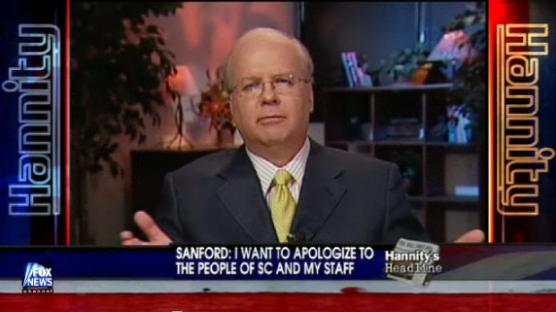
Karl Rove joined Hannity to analyze President Obama's rhetoric on the situation in Iran. Karl says Obama's statement condemning the violence against demonstrators came too late and its tardiness sent the wrong message to the Iranian regime. Karl also talks about health care and Gov. Sanford's political future.

>> Watch Video

Posted: Knowledge Creates Power

Thursday, June 11, 2009

How to Stop Socialized Health Care

Five arguments Republicans must make…

It was a sobering breakfast with one of the smartest Republicans on Capitol Hill. We can fix a lot of bad stuff President Barack Obama might do, he told me. But if Mr. Obama signs into law a "public option," government-run insurance program as part of health-care reform we won't be able to undo the damage.

I'd go the Republican member of Congress one further: If Democrats enact a public-option health-insurance program, America is on the way to becoming a European-style welfare state. To prevent this from happening, there are five arguments Republicans must make.

[Karl Rove]Getty Images

The first is it's unnecessary. Advocates say a government-run insurance program is needed to provide competition for private health insurance. But 1,300 companies sell health insurance plans. That's competition enough. The results of robust private competition to provide the Medicare drug benefit underscore this. When it was approved, the Congressional Budget Office estimated it would cost $74 billion a year by 2008. Nearly 100 providers deliver the drug benefit, competing on better benefits, more choices, and lower prices. So the actual cost was $44 billion in 2008 -- nearly 41% less than predicted. No government plan was needed to guarantee competition's benefits.

Second, a public option will undercut private insurers and pass the tab to taxpayers and health providers just as it does in existing government-run programs. For example, Medicare pays hospitals 71% and doctors 81% of what private insurers pay.

Who covers the rest? Government passes the bill for the outstanding balance to providers and families not covered by government programs. This cost-shifting amounts to a forced subsidy. Families pay about $1,800 more a year for someone else's health care as a result, according to a recent study by Milliman Inc. It's also why many doctors limit how many Medicare patients they take: They can afford only so much charity care.

Fixing prices at less than market rates will continue under any public option. Sen. Edward Kennedy's proposal, for example, has Washington paying providers what Medicare does plus 10%. That will lead to health providers offering less care.

Third, government-run health insurance would crater the private insurance market, forcing most Americans onto the government plan. The Lewin Group estimates 70% of people with private insurance -- 120 million Americans -- will quickly lose what they now get from private companies and be forced onto the government-run rolls as businesses decide it is more cost-effective for them to drop coverage. They'd be happy to shift some of the expense -- and all of the administration headaches -- to Washington. And once the private insurance market has been dismantled it will be gone.

Fourth, the public option is far too expensive. The cost of Medicare -- the purest form of a government-run "public choice" for seniors -- will start exceeding its payroll-tax "trust fund" in 2017. The Obama administration estimates its health reforms will cost as much as $1.5 trillion over the next 10 years. It is no coincidence the Obama budget nearly triples the national debt over that same period.

Medicare and Medicaid cost much more than estimated when they were adopted. One reason is there's no competition for these government-run insurance programs. In the same way, Americans can expect a public option to cost far more than the Obama administration's rosy estimates.

Fifth, the public option puts government firmly in the middle of the relationship between patients and their doctors. If you think insurance companies are bad, imagine what happens when government is the insurance carrier, with little or no competition and no concern you'll change to another company.

In other words, the public option is just phony. It's a bait-and-switch tactic meant to reassure people that the president's goals are less radical than they are. Mr. Obama's real aim, as some candid Democrats admit, is a single-payer, government-run health-care system.

Health care desperately needs far-reaching reforms that put patients and their doctors in charge, bring the benefits of competition and market forces to bear, and ensure access to affordable and portable health care for every American. Republicans have plans to achieve this, and they must make their case for reform in every available forum.

Defeating the public option should be a top priority for the GOP this year. Otherwise, our nation will be changed in damaging ways almost impossible to reverse.

By Karl Rove

About Karl Rove - Karl Rove served as Senior Advisor to President George W. Bush from 2000–2007 and Deputy Chief of Staff from 2004–2007. At the White House he oversaw the Offices of Strategic Initiatives, Political Affairs, Public Liaison, and Intergovernmental Affairs and was Deputy Chief of Staff for Policy, coordinating the White House policy making process.

Before Karl became known as "The Architect" of President Bush's 2000 and 2004 campaigns, he was president of Karl Rove + Company, an Austin-based public affairs firm that worked for Republican candidates, nonpartisan causes, and nonprofit groups. His clients included over 75 Republican U.S. Senate, Congressional and gubernatorial candidates in 24 states, as well as the Moderate Party of Sweden.

Karl writes a weekly op-ed for The Wall Street Journal, is a Newsweek columnist and is now writing a book to be published by Simon & Schuster. Email the author at Karl@Rove.com or visit him on the web at Rove.com.

Or, you can send him a Tweet @karlrove.

Posted: Knowledge Creates Power

Thursday, June 4, 2009

It's the Economy, Stupid

Tomorrow will likely bring more bad news for President Barack Obama on the number one issue for voters -- the economy. The Labor Department's monthly job report will almost certainly show unemployment topping 9%, with a couple hundred thousand more jobs lost in May.

It will get worse before jobs get better. Congressional Budget Director Douglas W. Elmendorf recently predicted that unemployment will continue rising into the second half of next year and peak above 10%.

Mr. Obama has an ingenious approach to job losses: He describes them as job gains. For example, last week the president claimed that 150,000 jobs had been created or saved because of his stimulus package. He boasted, "And that's just the beginning."

However, at the beginning of January, 134.3 million people were employed. At the start of May, 132.4 million Americans were working. How was Mr. Obama magically able to conjure this loss of 1.9 million jobs into an increase of 150,000 jobs?

As my former White House deputy press secretary Tony Fratto points out on his blog, the Labor Department does not and cannot collect data on "jobs saved." So the Obama administration is asking that we accept its "clairvoyant ability to estimate," and the White House press corps has let Mr. Obama's ludicrous claim go virtually unchallenged.

Still, there are limits to Mr. Obama's rhetorical tricks. Even he cannot turn job losses into real job gains. And he won't be rescued by stimulus spending.

Former National Economic Council Director Keith Hennessey made a persuasive case on his blog that the stimulus will be ineffective because the additional economic growth it spurs will come six to nine months later than it could have.

This is partly because, as the Congressional Budget Office estimates, only $185 billion (23% of a $787 billion stimulus package) will be spent this fiscal year. The government will spend an additional $399 billion next fiscal year. The balance -- $203 billion -- will be spent between fiscal years 2011 and 2019, long after the economy has turned on its own power and for its own reasons. In addition, much of the stimulus that went this year for tax cuts and transfer payments has been saved, not spent. (The national savings rate went from less than 0% to about 5%.)

If the Obama administration were more serious about growing the economy than just growing government, the stimulus would have been front-loaded into this fiscal year.

In addition, the claim made by Team Obama that every dollar in stimulus translates into a dollar-and-a-half in growth is economic fiction. The costs of stimulus reduce future growth. No country has ever spent itself to prosperity. The price of stimulus has to be paid sometime.

Any real improvement in the economy so far is more likely the result of the Federal Reserve expanding the money supply and the Fed and Treasury shoring up the financial sector.

But the Fed's actions are risky. Easy money and expansionary policies are not sustainable. We may soon be in for a bout of inflation unless the Fed soaks up much of the money it flooded into the system. The government is also likely to hamper private investment as it uses a vast amount of capital to finance its debt. And when the Fed stomps on its monetary brakes, as eventually it must, we'll get sluggish growth.

The irony for Democrats is that the Fed may hit the brakes in the run-up to the 2010 congressional elections or the 2012 presidential election.

It is becoming clear that the economy is now the top issue. Mr. Obama's presidency may well rise or fall on it. The economy will be his responsibility long before next year's elections. Americans may give him a chance to turn things around, but voters can turn unforgiving very quickly if promised jobs don't materialize.

That's what happened in Louisiana, where voters accepted Democrat Gov. Kathleen Blanco's missteps before Hurricane Katrina but brutally rejected her afterward because she failed to turn the state around.

Until now, the new president has benefited from public willingness to give him a honeymoon. He decided to use that grace period to push for the largest expansion of government in U.S. history and to reward political allies (see the sweetheart deals Big Labor received in the GM and Chrysler bankruptcies).

The difficulty for Mr. Obama will be when the public sees where his decisions lead -- higher inflation, higher interest rates, higher taxes, sluggish growth, and a jobless recovery.

By KARL ROVE - former senior adviser and deputy chief of staff to President George W. Bush.

Printed in The Wall Street Journal, page A13

About Karl Rove:  Karl Rove served as Senior Advisor to President George W. Bush from 2000–2007 and Deputy Chief of Staff from 2004–2007. At the White House he oversaw the Offices of Strategic Initiatives, Political Affairs, Public Liaison, and Intergovernmental Affairs and was Deputy Chief of Staff for Policy, coordinating the White House policy making process.

Before Karl became known as "The Architect" of President Bush's 2000 and 2004 campaigns, he was president of Karl Rove + Company, an Austin-based public affairs firm that worked for Republican candidates, nonpartisan causes, and nonprofit groups. His clients included over 75 Republican U.S. Senate, Congressional and gubernatorial candidates in 24 states, as well as the Moderate Party of Sweden.

Karl writes a weekly op-ed for The Wall Street Journal, is a Newsweek columnist and is now writing a book to be published by Simon & Schuster.

Posted:  Knowledge Creates Power

Thursday, May 28, 2009

How GOP Can Fight Soto's Identity Politics | The FOX Nation


Posted using ShareThis

'Empathy' Is Code for Judicial Activism

Both President Barack Obama and Republicans get something they want from the Supreme Court nomination of Sonia Sotomayor.

Mr. Obama said he wanted to replace Justice David Souter with someone who had "empathy" and who'd temper the court's decisions with a concern for the downtrodden, the powerless and the voiceless.

"Empathy" is the latest code word for liberal activism, for treating the Constitution as malleable clay to be kneaded and molded in whatever form justices want. It represents an expansive view of the judiciary in which courts create policy that couldn't pass the legislative branch or, if it did, would generate voter backlash.

There is a certain irony in a president who routinely praises America's commitment to "the rule of law" but who picks Supreme Court nominees for their readiness to discard the rule of law whenever emotion moves them.

Mr. Obama's pick also allows him to placate Hispanic groups who'd complained of his failure to appoint more high profile Latinos to his administration. After the Democratic share of the Hispanic vote increased to 67% in 2008 from 53% in 2004, Latino groups felt they were due more cabinet and White House posts.

Mr. Obama also hopes to score political points as GOP senators oppose a Latina. Being able to jam opponents is a favorite Chicago political pastime. Besides, the president has been reluctant to make comprehensive immigration reform an issue, so a high-profile Latina appointment buys him time.

The Sotomayor nomination also provides Republicans with some advantages. They can stress their support for judges who strictly interpret the Constitution and apply the law as written. A majority of the public is with the GOP on opposing liberal activist judges. There is something in our political DNA that wants impartial umpires who apply the rules, regardless of who thereby wins or loses.

Mr. Obama understands the danger of heralding Judge Sotomayor as the liberal activist she is, so his spinners are intent on selling her as a moderate. The problem is that she described herself as liberal before becoming a judge, and fair-minded observers find her on the left of the federal bench.

Republicans also get a nominee who likes showing off and whose YouTube moments and Google insights cause people to wince. There are likely to be more revelations like Stuart Taylor's find last Saturday of this Sotomayor gem in a speech at Berkeley: "I would hope that a wise Latina woman with the richness of her experiences would more often than not reach a better conclusion [as a judge] than a white male who hasn't lived that life." Invert the placement of "Latina woman" and "white male" and have a conservative say it: A career would be finished.

Both Mr. Obama and the Republicans are also are denied things in this nomination. Republicans are denied an easy target. Ms. Sotomayor has a compelling personal story, attractive for cable, celebrity magazines and tabloids.

The media has also quickly adopted the story line that Republicans will damage themselves with Hispanics if they oppose Ms. Sotomayor. But what damage did Democrats suffer when they viciously attacked Miguel Estrada's nomination by President George W. Bush to the D.C. Circuit Court of Appeals, the nation's second-highest court? New York Sen. Chuck Schumer was particularly ugly, labeling Mr. Estrada a right-wing "stealth missile" who was "way out of the mainstream" and openly questioning Mr. Estrada's truthfulness.

Nonetheless, Republicans must treat her with far more care than Democrats treated John Roberts or Samuel Alito and avoid angry speeches like Sen. Ted Kennedy's tirade against Robert Bork. The GOP must make measured arguments against her views and philosophy, using her own words and actions.

The Ricci case is an example: Whites were denied fire department promotions because of a clear racial quota. Ms. Sotomayor's refusal to hear their arguments won her stinging criticism from fellow Second Court of Appeals judge José Cabranes, a respected Clinton appointee.

Mr. Obama won't get a new leader on the Supreme Court. Ms. Sotomayor does not appear to be a consensus builder whose persuasive abilities would allow her to flip a 4-5 decision to a 5-4 decision. She is likely to be just another reliable liberal vote, much as Justice Souter was, only without his gloomy silences and withdrawn nature.

While the next two to four months of maneuverings and hearings may provide more insights into the views of Mr. Obama's pick, barring an unforeseen development -- not unheard of in Supreme Court nominations -- Judge Sotomayor will become the second Hispanic (Benjamin Cardozo was Sephardic) and third woman confirmed to the Supreme Court. Democrats will win the vote, but Republicans can win the argument by making a clear case against the judicial activism she represents.

Mr. Rove is the former senior adviser and deputy chief of staff to President George W. Bush.

Friday, May 8, 2009

Karl Rove: Obama's Past Will Haunt Court Pick

Karl Rove, the former senior adviser and deputy chief of staff to President George W. Bush, opined in a Wall Street Journal Op-ed this week that President Barack Obama may have painted himself into a corner as the battle looms over retiring Supreme Court Justice David Souter’s replacement.

“Mr. Obama will pay a price for voting against Mr. [John] Roberts and Samuel Alito after calling them ‘qualified’ and lauding their temperament, humility, excellence, passion for the law, and respect for precedent," Rove wrote.

“Both won confirmation with bipartisan support. By voting against well-qualified conservative nominees, Mr. Obama lost the ability to argue that a well-qualified liberal should be given the benefit of the doubt,” he argued.

Rove also highlighted then-Sen. Obama’s vote to allow a filibuster of Alito, making it at best supremely awkward for President Obama to now insist that his nominee has a right to a full Senate vote.

Combative Republicans will be very mindful of the Obama history as the latest political drama unfolds. Furthermore, as Rove points out, there is also an important procedural item swirling in the mix.

Rule IV of the Senate Judiciary Committee requires that a motion to end debate and bring a nominee to a vote pass with 10 votes in the affirmative, one of which the minority must cast.

“Before last week,” noted Rove, “that Republican was likely to be Arlen Specter, but he’s now a Democrat. Mr. Obama will have to consider if his pick is likely to win over at least one Judiciary Republican.”

Some of those entering the Supreme Court derby early on are: Sonia Sotomayor, judge of the U.S. Court of Appeals for the 2nd Circuit and potentially a history-making first Hispanic on the court; Elena Kaga, solicitor general of the U.S. Justice Department and former dean of Harvard Law School; and Diane Wood, judge of the U. S. Court of Appeals for the 7th Circuit.

Also adding to the Obama dilemma, wrote Rove, is the matter of timing. With just over 100 days in office, there just hasn’t been time to vet the prospects.

This rush to judgment is made all the more significant when cast against the backdrop of five administration nominees already found stained with the ugly blemish of unpaid taxes.

“Mr. Obama knows he has used up any capital that could have purchased forgiveness for such offenses by a Supreme Court nominee,” Rove wrote.

Looking on the Bright Side

Despite the obstacles, Obama has several things working in his favor, Rove wrote.

“First, Democrats control the Senate. It helps a great deal to have the Judiciary Committee chairman as an ally,” he noted.

Furthermore, he recalled, Republicans generally do not handle Supreme Court nominees as roughly as do Democrats.

“Consider their treatment of President Bill Clinton’s picks for the high court. Ruth Bader Ginsberg was confirmed by a 96-3 vote in 1993. The following year, Stephen Breyer was confirmed by a vote of 87-9. There were no fireworks at either hearing — and nothing close to what Democrats did to Robert Bork and Clarence Thomas,” Rove reminded.

Then there is the matter of Souter turning out in practice to be reliably liberal. Souter was appointed by former President George H.W. Bush — but the ostensible conservative often voted along liberal lines.

“An Obama nominee is also unlikely to dramatically change the court’s direction,” opined Rove. “A liberal replacing a liberal will smooth the path for most potential nominees.”

Finally, on the positive side of the ledger, there is the simple numbers game. Only 23 of 158 Supreme Court nominees have been rejected or withdrawn — and only 14 when the president’s party controlled the Senate.

‘Empathy,’ ‘Understanding’ – Hogwash

Rove’s primary advice for Republicans is that they should explain their view of the judiciary’s proper role and why Obama’s touted desire that a nominee have “empathy” and “understanding” is an “amorphous basis on which to pick a justice.”

What’s more, opined Rove, what Obama really wants isn’t a justice with “empathy” and “understanding” — he wants a liberal, activist Supreme Court justice.

“Senate Republicans may not be able to stop Mr. Obama’s nominee, but they can explain to the public the party’s reasons for opposing judges who think of themselves as legislators with life tenure,” he concluded.

By: Dave Eberhart -  Newsmax

Related Articles: