GBTV - Where the Truth Lives

Election Season 2014

And it has brought us to this trainwreck called ObamaCare and we have bankrupted our kids and grandkids!

We are now headed into the 2014 Election Season and common sense and conservatism are on the rise. Please stand-up and be counted!

Reading Collusion: How the Media Stole the 2012 Election is a great place to start!

The Founding Father's Real Reason for the Second Amendment

And remember the words of Thomas Jefferson "The strongest reason for the people to retain the right to keep and bear arms is, as a last resort, to protect themselves against tyranny in government." See Video of Suzanna Gratia-Hupp’s Congressional Testimony: What the Second Amendment is REALLY For, below (u-tube HERE).

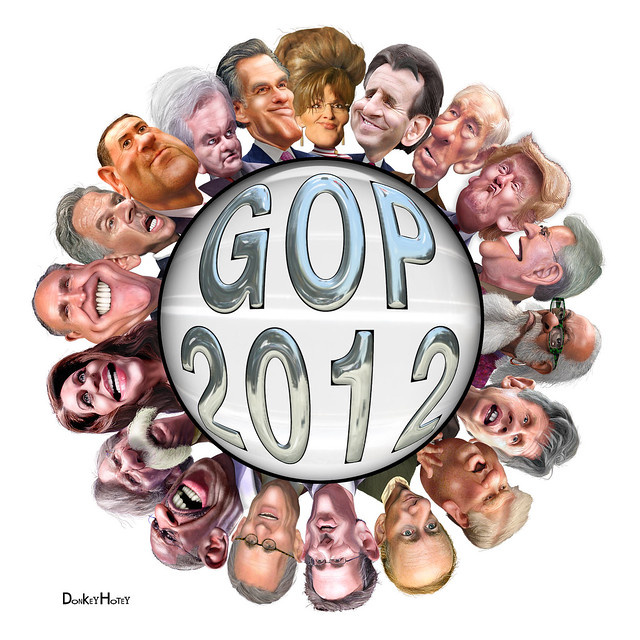
The Leaders Are Here... Palin, Cruz, Lee, Paul, Chaffetz....

T'S A WONDERFUL LIFE

Can You Really Still Believe That None of These People Would Have Done a Better Job???

Bloggers' Rights at EFF

SIGN THE PETITION TODAY...

Showing posts with label bank bailouts. Show all posts

Friday, September 21, 2012

Former FDIC Chair Bair: Bank Bailout Was ‘Overkill’

Moneynews:

The billions of taxpayer dollars spent to bailout big banks was largely unnecessary, according to Sheila Bair, former Federal Deposit Insurance Corp. chairwoman.

In an excerpt from her new book “Bull by the Horns: Fighting to Save Main Street From Wall Street and Wall Street From Itself,” which was published by Fortune, Bair writes “with the exception of Citi, the commercial banks' capital levels seemed to be adequate.”

“Without government aid some of them might have had to forgo bonuses and take losses for several quarters, but still, it seemed to me that they were strong enough to bumble through,” she writes.

That the U.S. government showered Wall Street with cash during the financial crisis as people were losing their homes and jobs continues to be a hot button issue. Many Americans blame the banks for the crisis and argue that Washington could have and should have done more for the people and less for those who created the problem.

Bair seems to agree and this is not a new position for her.

Last October, the San Francisco Chronicle reported that Bair spoke at the National Asian American Coalition conference about her disappointment that so little appears to have been done for the millions of homeowners still in distress.

“I wish I could say things have gotten better, but I don't see that they have. The loan programs are not doing what they need to. Part of the problem is a not very well-functioning mortgage services industry. The resources are not there. The training is not there. The commitment is not there,” the Chronicle quoted her as saying.

Consistent with that sentiment, Bair writes in the book, “We used up resources and political capital that could have been spent on other programs to help more Main Street Americans.”

She admits that there was a lot less information available when the bailout decision was made and that that uncertainty played a factor in how the situation was handled.

Still, she writes, “In retrospect the mammoth assistance to those big institutions seemed like overkill. I never saw a good analysis to back it up.”

Related:

Economist Schiff: QE3 is Coming and Will Worsen Our ‘Depression’

The Student Loan Debt Bubble Is Creating Millions Of Modern Day Serfs

Obama Blocking the Economic Recovery… And Stutistics: What the Media Is Not Telling you About Obama’s Unemployment Record

Why We Have No Budget and Why It Can’t Be Balanced

Obama’s Own Statements on His Vision and Beliefs… in Video

EPA Mandates Motorists Buy At Least 4 Gallons of Gas at Ethanol-15 Pumps

Friday, January 13, 2012

Audit of the Federal Reserve Reveals $16 Trillion in Secret Bailouts

This gives a new meaning to " gov’t. corruption"!!!!

No wonder they didn't want to be Audited..

Audit of the Federal Reserve Reveals $16 Trillion in Secret Bailouts - unelected.org - Click: The Silver Bear Cafe

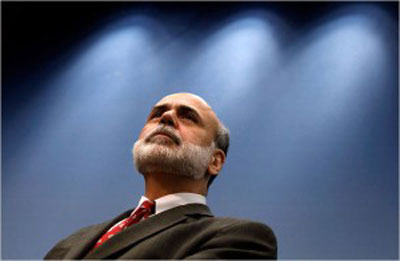
The first ever GAO (Government Accountability Office) audit of the Federal Reserve was carried out in the past few months due to the Ron Paul, Alan Grayson Amendment to the Dodd-Frank bill, which passed last year. Jim DeMint, a Republican Senator, and Bernie Sanders, an independent Senator, led the charge for a Federal Reserve audit in the Senate, but watered down the original language of the house bill (HR1207), so that a complete audit would not be carried out. Ben Bernanke(pictured to the right), Alan Greenspan, and various other bankers vehemently opposed the audit and lied to Congress about the effects an audit would have on markets. Nevertheless, the results of the first audit in the Federal Reserve’s nearly 100 year history were posted on Senator Sander’s webpage earlier this morning.

What was revealed in the audit was startling:

$16,000,000,000,000.00 had been secretly given out to US banks and corporations and foreign banks everywhere from France to Scotland. From the period between December 2007 and June 2010, the Federal Reserve had secretly bailed out many of the world’s banks, corporations, and governments. The Federal Reserve likes to refer to these secret bailouts as an all-inclusive loan program, but virtually none of the money has been returned and it was loaned out at 0% interest. Why the Federal Reserve had never been public about this or even informed the United States Congress about the $16 trillion dollar bailout is obvious - the American public would have been outraged to find out that the Federal Reserve bailed out foreign banks while Americans were struggling to find jobs.

To place $16 trillion into perspective, remember that GDP of the United States is only $14.12 trillion. The entire national debt of the United States government spanning its 200+ year history is "only" $14.5 trillion. The budget that is being debated so heavily in Congress and the Senate is "only" $3.5 trillion. Take all of the outrage and debate over the $1.5 trillion deficit into consideration, and swallow this Red pill: There was no debate about whether $16,000,000,000,000 would be given to failing banks and failing corporations around the world.

In late 2008, the TARP Bailout bill was passed and loans of $800 billion were given to failing banks and companies. That was a blatant lie considering the fact that Goldman Sachs alone received 814 billion dollars. As is turns out, the Federal Reserve donated $2.5 trillion to Citigroup, while Morgan Stanley received $2.04 trillion. The Royal Bank of Scotland and Deutsche Bank, a German bank, split about a trillion and numerous other banks received hefty chunks of the $16 trillion.

"This is a clear case of socialism for the rich and rugged, you’re-on-your-own individualism for everyone else." - Bernie Sanders (I-VT)

When you have conservative Republican stalwarts like Jim DeMint(R-SC) and Ron Paul(R-TX) as well as self identified Democratic socialists like Bernie Sanders all fighting against the Federal Reserve, you know that it is no longer an issue of Right versus Left. When you have every single member of the Republican Party in Congress and progressive Congressmen like Dennis Kucinich sponsoring a bill to audit the Federal Reserve, you realize that the Federal Reserve is an entity onto itself, which has no oversight and no accountability.

Americans should be swelled with anger and outrage at the abysmal state of affairs when an unelected group of bankers can create money out of thin air and give it out to megabanks and super-corporations like Halloween candy. If the Federal Reserve and the bankers who control it believe that they can continue to devalue the savings of Americans and continue to destroy the US economy, they will have to face the realization that their trillion dollar printing presses will eventually plunder the world economy.

The list of institutions that received the most money from the Federal Reserve can be found on page 131 of the GAO Audit and are as follows..

Citigroup: $2.5 trillion ($2,500,000,000,000)
Morgan Stanley: $2.04 trillion ($2,040,000,000,000)
Merrill Lynch: $1.949 trillion ($1,949,000,000,000)
Bank of America: $1.344 trillion ($1,344,000,000,000)
Barclays PLC (United Kingdom): $868 billion ($868,000,000,000)
Bear Sterns: $853 billion ($853,000,000,000)
Goldman Sachs: $814 billion ($814,000,000,000)
Royal Bank of Scotland (UK): $541 billion ($541,000,000,000)
JP Morgan Chase: $391 billion ($391,000,000,000)
Deutsche Bank (Germany): $354 billion ($354,000,000,000)
UBS (Switzerland): $287 billion ($287,000,000,000)
Credit Suisse (Switzerland): $262 billion ($262,000,000,000)
Lehman Brothers: $183 billion ($183,000,000,000)
Bank of Scotland (United Kingdom): $181 billion ($181,000,000,000)
BNP Paribas (France): $175 billion ($175,000,000,000)
and many many more including banks in Belgium of all places

View the 266-page GAO audit of the Federal Reserve(July 21st, 2011): http://www.scribd.com/doc/60553686/GAO-Fed-Investigation

Source: http://www.gao.gov/products/GAO-11-696
FULL PDF on GAO server: http://www.gao.gov/new.items/d11696.pdf
Senator Sander’s Article: http://sanders.senate.gov/newsroom/news/?id=9e2a4ea8-6e73-4be2-a753-62060dcbb3c3

Source: unelected.org  - Click: The Silver Bear Cafe

(The Motto of the Silver Bear Cafe is: "Serving up a heaping helping of the Truth, with a generous side of Common Sense")

Saturday, December 3, 2011

Have You Heard About The 16 Trillion Dollar Bailout The Federal Reserve Handed To The Too Big To Fail Banks?

The Daily Show With Jon Stewart Mon - Thurs 11p / 10c
America's Next TARP Model
www.thedailyshow.com
Daily Show Full Episodes Political Humor & Satire Blog The Daily Show on Facebook

Video:  America’s Next TARP Model – with Jon Stewart on the Daily Show

What you are about to read should absolutely astound you. During the last financial crisis, the Federal Reserve secretly conducted the biggest bailout in the history of the world, and the Fed fought in court for several years to keep it a secret.

Do you remember the TARP bailout? The American people were absolutely outraged that the federal government spent 700 billion dollars bailing out the "too big to fail" banks. Well, that bailout was pocket change compared to what the Federal Reserve did. As you will see documented below, the Federal Reserve actually handed more than 16 trillion dollars in nearly interest-free money to the "too big to fail" banks between 2007 and 2010. So have you heard about this on the nightly news? Probably not. Lately Bloomberg has been reporting on some of this, but even they are not giving people the whole picture. The American people need to be told about this 16 trillion dollar bailout, because it is a perfect example of why the Federal Reserve needs to be shut down. The Federal Reserve has been actively picking "winners" and "losers" in the financial system, and it turns out that the "friends" of the Fed always get bailed out and always end up among the "winners". This is not how a free market system is supposed to work.

According to the limited GAO audit of the Federal Reserve that was mandated by the Dodd-Frank Wall Street Reform and Consumer Protection Act, the grand total of all the secret bailouts conducted by the Federal Reserve during the last financial crisis comes to a whopping $16.1 trillion.

That is an astonishing amount of money.

Keep in mind that the GDP of the United States for the entire year of 2010 was only 14.58 trillion dollars.

The total U.S. national debt is only a bit above 15 trillion dollars right now.

So 16 trillion dollars is an almost inconceivable amount of money.

But some other dollar figures have been thrown around lately regarding these secret Federal Reserve bailouts. Let's take a look at them and see what they mean.

$1.2 Trillion

A recent Bloomberg article made the following statement....

The $1.2 trillion peak on Dec. 5, 2008 -- the combined outstanding balance under the seven programs tallied by Bloomberg -- was almost three times the size of the U.S. federal budget deficit that year and more than the total earnings of all federally insured banks in the U.S. for the decade through 2010, according to data compiled by Bloomberg.

The $1.2 trillion figure represents the peak outstanding balance on these loans, not the total amount of all the loans. On December 5, 2008 the "too big to fail" banks owed this much money to the Federal Reserve. Many of them could not pay these short-term loans back right away and had to keep rolling them over time after time. Each time a short-term loan got rolled over that represented a new loan.

$7.7 Trillion

Bloomberg is reporting that the Federal Reserve had made a total of $7.77 trillion in financial commitments to the big banks by the end of March 2009....

Add up guarantees and lending limits, and the Fed had committed $7.77 trillion as of March 2009 to rescuing the financial system, more than half the value of everything produced in the U.S. that year.

But as mentioned above, a one-time limited GAO audit of the Federal Reserve that was mandated by the Dodd-Frank Wall Street Reform and Consumer Protection Act covered an even broader time period and revealed even more bailout loans.

According to the GAO audit, $16.1 trillion in secret loans were made by the Federal Reserve between December 1, 2007 and July 21, 2010. The following list of firms and the amount of money that they received was taken directly from page 131 of the GAO audit report....

Citigroup - $2.513 trillion
Morgan Stanley - $2.041 trillion
Merrill Lynch - $1.949 trillion
Bank of America - $1.344 trillion
Barclays PLC - $868 billion
Bear Sterns - $853 billion
Goldman Sachs - $814 billion
Royal Bank of Scotland - $541 billion
JP Morgan Chase - $391 billion
Deutsche Bank - $354 billion
UBS - $287 billion
Credit Suisse - $262 billion
Lehman Brothers - $183 billion
Bank of Scotland - $181 billion
BNP Paribas - $175 billion
Wells Fargo - $159 billion
Dexia - $159 billion
Wachovia - $142 billion
Dresdner Bank - $135 billion
Societe Generale - $124 billion
"All Other Borrowers" - $2.639 trillion

This report was made available to all the members of Congress, but most of them have been totally silent about it. One of the only members of Congress that has said something has been U.S. Senator Bernie Sanders.

The following is an excerpt from a statement about this audit that was taken from the official website of Senator Sanders....

"As a result of this audit, we now know that the Federal Reserve provided more than $16 trillion in total financial assistance to some of the largest financial institutions and corporations in the United States and throughout the world"

So where is everyone else?

Why aren't leading Republicans and leading Democrats crying bloody murder over this report?

This scandal should have been front page news for months when it was revealed.

But it wasn't.

And Guess what?

Not only did the Federal Reserve give 16.1 trillion dollars in nearly interest-free loans to the "too big to fail" banks, the Fed also paid them over 600 million dollars to help run the emergency lending program. According to the GAO, the Federal Reserve shelled out an astounding $659.4 million in "fees" to the very financial institutions which caused the financial crisis in the first place.

In addition, it turns out that trillions of dollars of this bailout money actually went overseas. According to the GAO audit, approximately $3.08 trillion went to foreign banks in Europe and in Asia.

So why were our dollars being used to bail out foreign banks while tens of millions of American families were deeply suffering?

That is a very good question.

Also, it is important to remember that many of these bailout loans were made at below market interest rates, and this enabled many of these financial institutions to rake in huge profits.

According to a recent Bloomberg article, the big banks brought in an estimated $13 billion by taking advantage of the Fed’s below-market rates....

While the Fed’s last-resort lending programs generally charge above-market interest rates to deter routine borrowing, that practice sometimes flipped during the crisis. On Oct. 20, 2008, for example, the central bank agreed to make $113.3 billion of 28-day loans through its Term Auction Facility at a rate of 1.1 percent, according to a press release at the time.

The rate was less than a third of the 3.8 percent that banks were charging each other to make one-month loans on that day. Bank of America and Wachovia Corp. each got $15 billion of the 1.1 percent TAF loans, followed by Royal Bank of Scotland’s RBS Citizens NA unit with $10 billion, Fed data show.

So once the financial crisis was over, were adjustments made to the financial system to make sure that this type of thing would never happen again?

Of course not.

Today, the "too big to fail" banks are larger than ever. The total assets of the six largest U.S. banks increased by 39 percent between September 30, 2006 and September 30, 2011.

So now they are more "too big to fail" than ever.

But this is what happens when we allow unelected central bank bureaucrats to run our financial system.

Most Americans do not realize this, but the truth is that the Federal Reserve is not part of the government. In fact, it is about as "federal" as Federal Express is. The Federal Reserve has admitted that they are a privately owned institution in court many times, and you can see video of a Federal Reserve employee admitting that the Federal Reserve is privately owned right here.

The Federal Reserve is an out of control monster that is throwing around trillions of dollars whenever it wants to. Nobody should be allowed to do this. Nobody should be allowed to give bailouts to banks and corporations without the express permission of the U.S. Congress and the president of the United States.

This is a point that I made in my article yesterday. The Federal Reserve decided this week that it is going to provide "liquidity support" to Europe. If the American people do not like this move, that is just too bad. We do not get a say in the matter.

Are you starting to understand why I keep pushing the idea that it is time to shut down the Federal Reserve?

Please share this information about the secret 16 trillion dollar Federal Reserve bailout with your family and your friends.

If we can get enough people to wake up, perhaps there is still time to change the direction that this country is headed.

From the Economic Collapse Blog

Video: The Fed Grants $7.77 Trillion in Secret Bank Loan - Now Do You Understand Occupy Wall Street?

Kucinich bill seeks to end the Federal Reserve:

Kucinich bill seeks to end the Federal Reserve!
http://www.godlikeproductions.com/forum1/message1718844/pg1
Kucinich bill seeks to end the Federal Reserve
http://www.rawstory.com/rs/2011/12/01/kucinich-bill-seeks-to-end-the-federal-reserve/

Related:

WHAT THE HELL? The U.S. Secretly loaned 7.7 TRILLION To Banks Without Interest. Then Borrowed Back WITH Interest
http://www.godlikeproductions.com/forum1/message1718942/pg1

America's Next TARP Model
http://www.thedailyshow.com/watch/thu-december-1-2011/america-s-next-tarp-model

A Bloomberg report reveals that the U.S. government loaned banks $7.7 trillion in secret bailout funds at no interest and then borrowed the money back at interest.
Bloomberg reports 7.7 trillion in loans to big banks and Wall Street
http://reading-sage.blogspot.com/2011/11/bloomberg-reports-77-trillion-in-loans.html?m=1pg1

h/t to Jean Stoner

Wednesday, February 3, 2010

Debt: China and Japan Announces That America Must ‘Guarantee’ Every Penny of Fannie and Freddie - They Own 30%

We the United States are already far past the proverbial rabbit hole of no return on debt. Yet Obama told Americans last week: regardless of what you, the American People, want; regardless of what virtually all economic experts say; against all common sense; and in defiance of proof that there is no manmade Global Warming and that ObamaCare is a fraud… not a fix of any of the problems with healthcare, and that both are job killers, cost and tax hikes and the biggest government power grabs in US history, he is pushing forward with his progressive agenda.

Well… now both China and Japan have announced that we have to ‘guarantee’ every penny of what they’ve loaned us to bail out Fannie Mae and Freddie Mac. And insiders have leaked that Obama has now given the word to lay off of security observation of China. Hmmm?? Connection?? Just like when they poisoned our pet’s food and our kids with lead paint on toys a few years ago; we just had to roll with it because they own us… What comes next?

Our National Debt, China, and What We Must Do – Video

Checkout the Debt Clock: The U.S. Debt Clock

Our Debt Continued… JP Morgan Chase - Video

BEHIND OBAMA'S PHONY DEFICIT NUMBERS

Just released by Dick Morris, former advisor to former (Progressive) President Bill Clinton and author of: Catastrophe, Fleeced and Outrage

President Obama is being disingenuous when he says that the budget deficit he faced "when I walked in the door" of the White House was $1.3 trillion. He went on to say that he only increased it to $1.4 trillion in 2009 and was raising it to $1.6 trillion in 2010.
Congressman Joe Wilson might have said "you lie," but we'll settle for "you distort."

(As Mark Twain once said, there are three kinds of lies: "lies, damn lies, and statistics.")

Here are the facts:

In 2008, Bush ran a deficit of $485 billion. By the time the fiscal year started on October 1, 2008, it had gone up by another $100 billion due to increased recession-related spending and depressed revenues. So it was about $600 billion at the start of the fiscal crisis. That was the real Bush deficit.

But when the fiscal crisis hit, Bush had to pass TARP in the final months of his presidency which cost $700 billion. Under the federal budget rules, a loan and a grant are treated the same. So the $700 billion pushed the deficit -- officially -- up to $1.3 trillion. But not really. The $700 billion was a short term loan. $500 billion of it has already been repaid.

So what was the real deficit Obama inherited? The $600 billion deficit Bush was running plus the $200 billion of TARP money that probably won't be repaid (mainly AIG and Fannie Mae and Freddie Mac). That totals $800 billion. That was the real deficit Obama inherited.

Then...he added $300 billion in his stimulus package, bringing the deficit to $1.1 trillion. This $300 billion was, of course, totally qualitatively different from the TARP money in that it was spending not lending. It would never be paid back. Once it was out the door, it was gone. Other spending and falling revenues due to the recession pushed the final numbers for Obama's 2009 deficit up to $1.4 trillion.

So, effectively, Obama came close to doubling the deficit.
Obama seems not to understand that the deficit is the jobs problem. To add to the deficit in the hope of creating more jobs is an oxymoron. Additional deficit spending just crowds out small businesses trying to borrow money to create jobs and consumers seeking credit to buy cars and homes.

Soon, when the Fed stops printing money and we have to borrow real funds from real lenders, the high deficit will send interest rates soaring, further retarding growth and creating a cost-push inflation.
The interest rate we are now paying for the debt -- about 3.5% -- is totally artificial and based on the massive injection of money supply created by the purchase of mortgage backed securities by an obliging Federal Reserve. Once these injections of currency/heroin stop, the rate will more than double, sending our debt service spending into the stratosphere. Once we had to choose between guns and butter. Now we will have to choose between guns and butter on the one hand and paying our debt service on the other.
Obama's program of fiscal austerity in this new budget is a joke. He freezes very selected budget items while he shovels out new spending in his stimulus packages. If he wanted to lower the deficit, here's what he could do:

1. Cancel the remaining $500 billion of stimulus spending and

2. Cancel the $300 billion of spending in stimulus II.

Those are the real numbers. Or, as Al Gore would have it, "the inconvenient truth."

Watchdog: Bank Bailouts created more risk in system

Fair Tax – Abolish Income Tax

Monday, February 1, 2010

WATCHDOG: BANK BAILOUTS CREATED MORE RISK IN SYSTEM

The problems that led to the last financial crisis have not yet been addressed, and in some cases have grown worse, says Neil Barofsky, the special inspector general for the trouble asset relief program, or TARP. The quarterly report to Congress was released Sunday.

The government's bailout of financial institutions deemed "too big to fail" has created a risk that the United States could face a worse fiscal meltdown in the future, an independent watchdog assigned to review the program told Congress on Sunday.

The Troubled Assets Relief Program, known as TARP, has not addressed the problems that led to the last crisis and in some case those problems have festered and are a bigger threat than before, warned Neil Barofsky, the special inspector general at the Treasury Department.

"Even if TARP saved our financial system from driving off a cliff back in 2008, absent meaningful reform, we are still driving on the same winding mountain road, but this time in a faster car," Barofsky wrote.

Barofsky wrote the $700 billion financial bailout has encouraged more risk-taking because bank executives, who are still receiving massive bonuses, figure the government will come to the rescue the next time they steer their ships nearly aground.

"The market mentality now seems fixed that the U.S. government will continue to step in and bail out giant financial institutions," said Sen. Susan Collins, R-Maine, ranking member of the Senate Homeland Security and Governmental Affairs Committee. "The IG's findings confirm my decision to oppose releasing $350 billion in TARP funds last year and my recent vote to terminate the program altogether."

"The SIGTARP's report is just another reminder of how Congress and the administration have ignored the role that politics and government played in causing the housing crisis and the economic collapse while pursing other regulatory reforms will not fix the underlying problem," said Rep. Darrell Issa, R-Calif., the ranking member on the House Oversight and Government Reform Committee.

But House Speaker Nancy Pelosi's spokesman Nadeam Elshami said politics is the reason the government stepped in to save the banks in the first place.

"The American people paid a heavy price because of the reckless economic policies of the Bush administration where the interests of Wall Street were placed ahead of the interests of Main Street. The House passed Wall Street reform legislation to protect taxpayers and consumers and ensure transparency and accountability without a single Republican vote. We hope that House Republicans would drop their unanimous opposition and work for reform instead of against it," Elshami said.

The inspector general's report details stonewalling by the Treasury Department over a recommendation that walls be built between managers of the public-private investment program, which uses taxpayer cash to buy bad assets, and employees of the fund management companies which sell the toxic assets.

Barofsky's report outlined 77 cases of possible criminal and civil fraud, including crimes of tax evasion, insider trading, mortgage lending and payment collection, false statements and public corruption.

One case concerns apparent self-dealing by one of the private fund managers Treasury picked to buy bad assets from banks at discounted prices. A portfolio manager at the firm apparently sold a bond out of a private fund, then repurchased it at a higher price for a government-backed fund.

A rating agency had just downgraded the bond, so it likely was worth less, not more, when the government fund bought it. The company is not being named pending the outcome of Barofsky's investigation.

Treasury said it welcomed Barofsky's oversight but resisted the call to erect new barriers against conflicts of interest. The new rules "would be detrimental to the program," Treasury spokeswoman Meg Reilly said in a statement. The existing compliance rules "are a rigorous and effective method of protecting taxpayers," she said.

"As the report says, 'for various reasons, Treasury has decided that requiring such walls 'is simply not practical in the context of PPIP,' and has refused to adopt this recommendation. It is disappointing but not unsurprising that the Treasury Department under the leadership of Secretary (Tim) Geithner is once again stonewalling transparency," Issa said.

"Frankly, just because it may be inconvenient is not a good enough excuse to justify leaving taxpayer dollars vulnerable to manipulation and fraud," he continued.

Much of Barofsky's report focused on the government's growing role in the housing market, which he said has increased the risk of another housing bubble.

Over the past year, the federal government has spent hundreds of billions propping up the housing market. About 90 percent of home loans are backed by government controlled entities, mainly Fannie Mae, Freddie Mac and the Federal Housing Administration.

The Federal Reserve is spending $1.25 trillion to hold down mortgage rates, and millions of homeowners have refinanced at lower rates.

"The government has stepped in where the private players have gone away," Barofsky said in an interview. "If we take government resources and replace that market without addressing the serious (underlying) concerns, there really is a risk of" artificially pushing up home prices in the coming years.

The report warned that these supports mean the government "has done more than simply support the mortgage market, in many ways it has become the mortgage market, with the taxpayer shouldering the risk that had once been borne by the private investor."

Barofsky's report echoed concerns raised by housing experts in recent months, as home sales and prices rebounded. They warn that the primary reason for the turnaround last year has been billions of dollars in federal spending to lower mortgage rates and prop up demand.

Once that spigot of cash is turned off, they caution, the market will be vulnerable to a dramatic turn for the worse. Daniel Alpert, managing partner of investment bank Westwood Capital, wrote in a report that national home prices are bound to fall 8 to 10 percent below the lows of last spring.

"The lion's share of the remaining decline will occur in markets that saw sizable bubbles but have not yet retrenched," he wrote.
Officials from the Obama administration counter that massive federal intervention has helped the housing market stabilize and prevented more dire consequences.

Barofsky's report also disclosed that, while the Obama administration has pledged to spend $75 billion to prevent foreclosures, only a tiny fraction -- just over $15 million -- has been spent so far. Under the Making Home Affordable program, only about 66,500 borrowers, or 7 percent of those who signed up, had completed the process as of December.

He said the key to preventing future crises is to reform Fannie Mae and Freddie Mac, create and improve loan underwriting and supervision of banks. He stopped short of endorsing specific proposals for overhauling financial regulation, but said many of the proposals would go far to improving the system.

The Associated Press contributed to this report.

FOXNews.com

When you hear reports like this, there is no question that we cannot afford ObamaCare or Cap and Trade, yet Obama told us just last week in his State of the Union that he intends to push through that agenda against our wishes and obviously opposite of what we can afford or will help out country. He also urged the Congress to pass the 'Stimulus 2 Bill', renamed the jobs bill. It leaves little room for question. He is an ideologue who intends to destroy our Country and our system.

We cannot afford to continue on this path and survive!!!

** Mr. Barofsky better watch himself. Even though the IG’s are supposed to be immune to being fired on a whim by the Inspectors General Reform Act, it didn’t help Gerald Walpin.

What’s Behind Obama’s Sudden Attempt to Fire the AmeriCorps Inspector General??

Tuesday, June 9, 2009

Banks to return $68 billion in bailout money


New York buildings are reflected in the window of a Capital One bank office window. The Treasury Department said Tuesday it will allow 10 of the nation's largest banks to repay $68 billion in government bailout money. (AP File)

Ten of the nation’s biggest financial companies got a green light Tuesday to return $68 billion in federal bailout money — freeing the banks from limits on executive pay and leaving the government with a small gain on the rescue cash.

While the paybacks could be a signal that the banking industry is stabilizing, analysts say it is far from a clean bill of health, and some said it was too soon to let the banks give back the money.

Presidential spokesman Robert Gibbs said the returned money would go “back into general revenue” and could even be used to bail out banks again. (And this seems to be the plan… Many banks have wanted to repay stimulus money before but were not allowed because they weren’t ready… per the administration. But now that people are starting to get fed up and money sources are drying up, they need the money, they will take the pay back and do it all again.

Still, the government has collected $1.8 billion from dividends on shares of preferred stock it received in exchange for bailout money, he said. And the government still holds warrants to buy shares of bank stock at cut-rate prices in the future.

The $68 billion in paybacks would be the largest since the $700 billion Troubled Asset Relief Program took effect eight months ago at the peak of the financial crisis. Specifically, the money comes from a $250 billion slice of the $700 billion bailout package.

Other chunks of the $700 billion will be harder, if not impossible, to recover. Some of it, such as $70 billion funneled to failed insurer American International Group Inc., ended up in the pockets of healthier banks that did deals with AIG.

And even the banks getting out from under the TARP still rely on government support, including debt guarantees from the Federal Deposit Insurance Corp. and credit lines from the Federal Reserve.

The banks chafed under restrictions on executive pay imposed by the government for banks that took bailout cash, arguing they were losing top talent to other firms. The administration is expected to roll out new executive pay rules Wednesday that would apply to banks that still have TARP money.

“It’s our obvious hope that additional money is not going to have to be used to stabilize banks,” Gibbs said. “I certainly wouldn’t rule it out.”

Indeed, banking experts stressed that the payments do not signal an end to the financial crisis. In fact, they say, most banks approved to pay the money back never needed it in the first place.

And three major banks that have not been approved by the government to pay the money back — Citigroup Inc., Bank of America Corp. and Wells Fargo & Co. — could need federal help for years to come.

“When a troubled bank is capable of repaying, that would be significant,” said Barry Ritholtz, head of the financial research firm FusionIQ. “But we’re not going to see that anytime soon because they can’t afford it.”

Among the banks approved to pay back their bailout cash are eight that passed the government “stress test” earlier this year: JPMorgan Chase & Co., American Express Co., Goldman Sachs Group Inc., U.S. Bancorp, Capital One Financial Corp., Bank of New York Mellon Corp., State Street Corp. and BB&T Corp.

Those banks had to show they could raise private capital without federal guarantees before getting permission to pay back TARP money.

Morgan Stanley did not pass the test, but got approval to return its bailout money after quickly raising enough capital. And Northern Trust Corp. did not undergo the “stress test” but said it also had received permission to repay its bailout money.

President Barack Obama welcomed the news but said: “This is not a sign that our troubles are over — far from it.”

Indeed, the repayments carry risk. Some say it could create a banking system of winners and losers, with weaker banks stuck with federal restrictions and finding it harder to compete for customers and talent against rivals that operate more freely.

Others say the repayments could conceal problems in the banking industry. Smaller banks are still saddled with billions in risky commercial real estate loans. And large banks still hold the toxic mortgage-backed assets at the heart of the financial crisis.

Paying the government back leaves banks with less protection against future losses, said Christopher Whalen, managing director of the consulting firm Institutional Risk Analytics. And with less capital on hand, they may have to scale back lending.

Other critics said it was dangerous to allow the money to be paid back before the administration overhauls the regulatory framework that governs banks.

“The credit crisis made it clear that the banks acted in irrational and greedy ways. I don’t believe that enough changes have really happened yet,” said Donald Thomas, an independent research analyst.

Adding to the concerns, a report released Tuesday by the congressional panel overseeing the bailout said the hypothetical scenarios used in the “stress tests” might have been too rosy.

That raises the troubling possibility that even raising enough capital to satisfy the government won’t guarantee banks can withstand a deeper recession. And that means the banks might have to seek more federal aid.

Citi and Bank of America, two of the most troubled financial institutions, have taken $45 billion each in bailout money. Wells Fargo said it has not asked for permission to pay back $25 billion in TARP money.

Banking analyst Bert Ely said it could be years before those banks disentangle themselves from the government.

More than 600 banks have received a total of almost $200 billion from the TARP, and 22 smaller banks have already paid the money back. The $1.8 billion in dividend money includes stock the government owned in these smaller banks.

Besides the preferred-stock dividends, the banks that took bailout money issued warrants that give the government the right to buy bank stock at a fixed price later. Bank stocks have been battered but are expected to rise as the economy recovers, so the warrants could deliver substantial profits to taxpayers.

Or the government could sell the warrants back to the banks “at fair market value,” the Treasury Department said — presumably also locking in profits for the taxpayers.

Testifying before a Senate panel, Treasury Secretary Timothy Geithner said the value of the warrants for banks permitted to repay TARP funds are in the “several billion dollar range.”

But it sounds like Secretary Geithner’s understanding might not always be right on…~ Geithner said, after his visit to China that “the Chinese have justifiable confidence in our economy”. Yet other reports, including from Illinois Congressman Kirk, say that China is very uneasy and concerned about the U.S. economy. A telling moment was when a round of laughter broke out as Tim Geithner was speaking in China and said “your investments are secure”; the rudeness of laughing at someone virtually never happens in China. M~

By: Stevenson Jacobs and Daniel Wagner - Associated Press
06/09/09 7:44 PM EDT

This week we will be selling treasury bonds (T-bills). The question is who will buy them… Who wants to luck up their money our future for 30-years? Who buys those bills could make a huge difference in all our lives!

Related Articles:

Posted: Knowledge Creates Power