GBTV - Where the Truth Lives

Election Season 2014

And it has brought us to this trainwreck called ObamaCare and we have bankrupted our kids and grandkids!

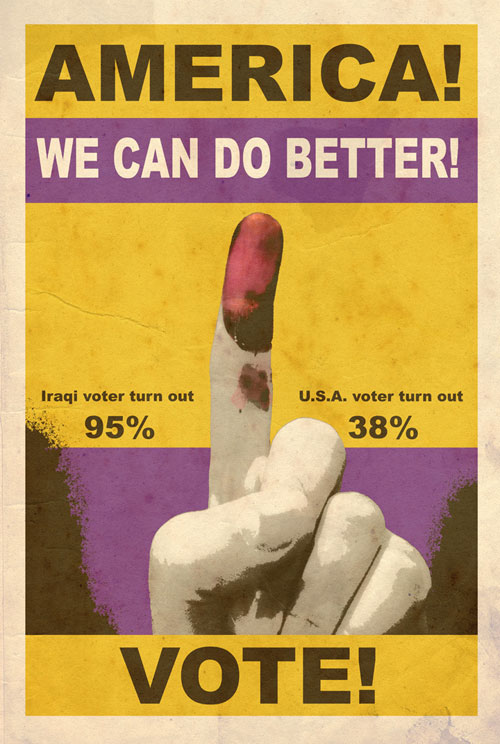
We are now headed into the 2014 Election Season and common sense and conservatism are on the rise. Please stand-up and be counted!

Reading Collusion: How the Media Stole the 2012 Election is a great place to start!

The Founding Father's Real Reason for the Second Amendment

And remember the words of Thomas Jefferson "The strongest reason for the people to retain the right to keep and bear arms is, as a last resort, to protect themselves against tyranny in government." See Video of Suzanna Gratia-Hupp’s Congressional Testimony: What the Second Amendment is REALLY For, below (u-tube HERE).

The Leaders Are Here... Palin, Cruz, Lee, Paul, Chaffetz....

T'S A WONDERFUL LIFE

Can You Really Still Believe That None of These People Would Have Done a Better Job???

Bloggers' Rights at EFF

SIGN THE PETITION TODAY...

Showing posts with label rationing healthcare. Show all posts

Tuesday, June 26, 2012

Obamacare Has Literally Replaced the Constitution

Written by Gary North on June 22, 2012   - Tea Party Economist – Cross-Posted at True Health Is True Wealth

The textbook account of how laws are made is for children. It presents the procedure as if it were governed by the Constitution. This is silly. That went out with high-button shoes.

The legal system that prevails today is administrative law: rule by government bureaucracies that cannot be fired. The story of how this legal revolution has re-shaped law in the West, threatening a new tyranny, appears in the 45-page introduction to Law and Revolution (1983), a great book by Harvard University’s legal historian Harold Berman. Those 45 pages are among the most important that I have ever read.

A recent study by the Cato Institute describes one section of Obamacare: the creation of the Independent Payment Advisory Board, or IPAB. This unelected board will set prices and payment systems for medicine under the plan.

Obamacare was created by the Patient Protection and Affordable Care Act (PPACA), which in turn creates IPAB. According to the Cato report, written by a lawyer,

When the unelected government officials on this board submit a legislative proposal to Congress, it automatically becomes law: PPACA requires the Secretary of Health and Human Services to implement it. Blocking an IPAB “proposal” requires at a minimum that the House and the Senate and the president agree on a substitute. The Board’s edicts therefore can become law without congressional action, congressional approval, meaningful congressional oversight, or being subject to a presidential veto. Citizens will have no power to challenge IPAB’s edicts in court.

But what if — this is 99% hypothetical — a majority in Congress decides that the IPAB payment schedule (taxes) is not a good idea? Well, tough bananas.

PPACA forbids Congress from repealing IPAB outside of a seven-month window in the year 2017, and even then requires a three-fifths majority in both chambers. A heretofore unreported feature of PPACA dictates that if Congress misses that repeal window, PPACA prohibits Congress from ever altering an IPAB “proposal.” By restricting lawmaking powers of future Congresses, PPACA thus attempts to amend the Constitution by statute.

IPAB’s unelected members will have effectively unfettered power to impose taxes and ration care for all Americans, whether the government pays their medical bills or not. In some circumstances, just one political party or even one individual would have full command of IPAB’s lawmaking powers. IPAB truly is independent, but in the worst sense of the word. It wields power independent of Congress, independent of the president, independent of the judiciary, and independent of the will of the people.

This means that the Constitutional sovereignty is a dead concept, unless five people on the U.S. Supreme Court declare the law unconstitutional. (Therefore the ruling on Thursday 06.26.12 is the most important in America’s history… there is a lot more at stake than just healthcare!)

This will serve as a legal precedent. New laws will create similar boards.

Kiss the Constitution goodbye.

It was all so easy.

The 22-page report is here: Continue Reading on www.cato.org

Wednesday, May 2, 2012

Obamacare to Herd Disabled Seniors to Bare-Bones Medicaid Plans

Dr. Scott Gottlieb, a former senior official at the Centers for Medicare and Medicaid Services in the Bush administration, warns that under Obamacare disabled seniors who are eligible for both Medicare and Medicaid will receive inferior care, according to a report by the New York Post.

Gottlieb, an American Enterprise Institute resident fellow, says these low-income people who are elderly or have disabilities will be uprooted from the tried-and-true Medicare fold and “herded” into state-run Medicaid plans as another phase of Obamacare grips the nation.

“It’s hard to see how they’ll be better off in bare-bones, and sometimes poorly-run state Medicaid plans than by getting access to Medicare options they were entitled to before Obamacare,” Dr. Gottlieb lamented on Friday.

A so-called Obamacare “demonstration” program kicking-off in January will turn over management of such “dual-eligibles,” along with the money that the federal government was spending on their medical care to any state that wants to climb aboard the latest federal money wagon.

Some cash-strapped states are jumping at the chance to capture federal Medicare dollars for their Medicaid programs, according to Gottlieb.

Indeed, some anxious states have already committed to automatically placing these folks in existing Medicaid plans. Big problem lurking here, says Gottlieb: Such plans often aren’t equipped to serve an older, sicker group of patients. “That will mean big savings for the state and worse care for the vulnerable,” he concludes.

The doctor cites significant examples:

  • New York is looking to shift 700,000 “dual-eligibles” into a capitated managed-care model or HMO-style care. The target: Corral most of the elderly poor and disabled by 2015.
  • California plans to move up to 1.1 million duals into its state-run Medicaid managed-care system.

These examples are but the tip of a huge green iceberg of big cash.
According to the Post report, Wall Street figures the entire “dual eligible” market at $350 billion a year.

While this is good news on The Street where the stocks of Medicaid HMOs are being bid skyward, Gottlieb is not consoled. “Care is likely to suffer. Many of these elderly poor also suffer from a lot of chronic ailments like diabetes and lung disease. [T]hese people have diverse medical problems, and have been most successfully served by Medicare programs that tailored services to their specific needs.”

Gottlieb’s bottom line: The Obamacare demonstration looks like an effort to shore up Medicaid by subsidizing it with Medicare dollars. “It’s another case of how Obamacare is designed to serve the existing health-care system, rather than transforming it to meet the needs of individual patients.”

Source: Newsmax.com: Expert: Obamacare to Herd Disabled Seniors to Bare-Bones Medicaid Plans

Wow… two ObamaCare death panel target groups rolled into one, the disabled and seniors.  Time for some major apologies to Sarah Palin who was soooo right!

Related:

“People 70 and Over Will Not Be Treated Under ObamaCare”… and You Thought DEATH PANELS Were Gone – Updated

Obama Embraces ‘Death Panel’ Concept in Medicare Rule

Replacing ObamaCare: True Insurance

By Daniel Anderson on April 30, 2012 - FreedomWorks

Consider this: Why does your job offer health insurance, but not auto insurance? Certainly, you need to be healthy to come into work, but most Americans also need a car to get to work. For that matter, why doesn’t your job offer home or life insurance? What makes health insurance a common, nearly-ubiquitous benefit of employment in the United States?

The prevalence of employer group-based health insurance in America is a result of World War II. During the lead-up to the war in the Great Depression, there was an enormous surplus of labor relative to demand. However, as millions of Americans were sent overseas to fight in World War II, the labor pool shrunk dramatically. At the same time, the demand for labor skyrocketed as the federal government poured enormous resources into war production, creating a massive industry that desperately needed workers.

Given these conditions, businesses would normally raise wages in order to attract workers. However, the federal government also imposed wage controls on many American industries. In order to get around these wage controls, businesses began to offer health insurance to lure in prospective employees, along with other “fringe benefits.”

Following the war, Congress created a tax code that rewarded employer group-based health insurance. If businesses provided their employees with health insurance, that insurance benefit would not be taxed. However, if businesses simply raised their employees’ wages, the wages would be taxed. Understandably, most businesses decided to offer health insurance to their employees instead of raises.

In this way, the federal government largely created the employer group-based health insurance system. This system is unique to the United States. Every other developed country has some form of government health care, whether it’s truly socialized medicine such as in Britain, or a single-payer system like in Sweden. Our system is a result of both the unforeseen consequences of government involvement in business, and the natural American aversion to big government.

For most Americans, employer-based health care works. A March 28th Reason-Rupe poll found that:

• 87% of Americans are covered by health insurance

• 63% of Americans with health insurance are covered by employer group-based plans

• 23% of Americans with health insurance are covered by Medicare or Medicaid

• 58% of Americans are satisfied with their overall health care

• 23% of Americans are dissatisfied with their overall health care

So, the vast majority of Americans have health insurance coverage, a majority of Americans with health insurance receive it through their employer, and a majority of Americans are satisfied with things as they are.

What does this mean?

Simply put, there’s little reason to dramatically alter health insurance in America as things stand. Unfortunately, the provisions in ObamaCare will force a radical, fundamental shift in health care from employer group-based health insurance to health insurance exchanges controlled by the federal government. ObamaCare won’t destroy the employer group-based system, but it will change the basic dynamics of the health insurance market.

Still, while the polling numbers strongly support the continuation of the employer group-based system, not everyone is happy with it. After all, more than a tenth of Americans lack coverage, and nearly a quarter of Americans are dissatisfied with their overall health care.

What’s the best way to respond to those numbers? Congress could follow the ObamaCare route: mandating insurance and expanding federal control of health care through government health plans. For most Americans, this unconstitutional and expensive path toward addressing the problem is unacceptable.

The solution to helping people left behind by the employer group-based health insurance system isn’t an expansion of the government group-based health insurance system. Instead, we ought to encourage true, individual insurance.

What are some of the benefits of true insurance? The main benefit is portability. For most Americans, losing or leaving their jobs means losing their health insurance as well, since the two are connected. This increases the hardship of the unemployed, while simultaneously discouraging entrepreneurial Americans from leaving their jobs and their health insurance in order to start their own businesses.

But if you purchase health insurance separately from your job, like you purchase auto or homeowner’s insurance, that insurance now stays with you regardless of your employment status. The portability of true, individual insurance helps to calm some of the anxieties that come with unemployment while also freeing up America’s entrepreneurs to start businesses and to create jobs.

True insurance’s portability also helps to deal with the problem of pre-existing conditions in health care. The problem of pre-existing conditions should not be overstated, as it only afflicts about 1% of Americans. Still, it was a key impetus behind the push for ObamaCare, and all health care policy experts who hope to implement reform must address it. While by no means a silver bullet, the ability to keep the same insurance provider throughout several jobs, and possibly throughout your entire career, helps to alleviate the pre-existing conditions problem.

Most people acquire their “pre-existing condition” during their adult life, while in the workforce. When that happens, their insurance will most likely cover the new condition, similar to other ailments. But once these people change jobs, they now suddenly have a “pre-existing condition.” The portability and continuity of true insurance would do a great deal to reduce the number of Americans who have trouble accessing health care due to their pre-existing conditions.

Finally, true insurance provides Americans with greater choice and freedom with their health care. In a sense, when you apply for a job today, you’re also applying for that job’s health plan. Unfortunately, you don’t really know the details of the health plan until you’ve already taken the job and the plan.

What if you purchase true, individual insurance? You can pick a plan that the right premium and deductible. You can ensure that the plan covers the things you want covered. In short, you can get a plan that appeals to you, instead of being forced into your employer’s pre-packaged plan, which may or may not cost what you would prefer or cover what you want covered.

So, there are several major advantages to a true insurance system. How do we encourage its growth? The most important step to growing the true insurance market is to equalize tax treatment of the employer and true insurance systems. Full deductibility of all health care expenditures would help to level the playing field in the insurance market, thereby increasing patient choice.

The employer group-based health insurance system works for most Americans, but it’s not perfect. For those Americans who would prefer something different, we ought to forgo government group-based health insurance like in ObamaCare in favor of encouraging true, individual health insurance.

TAKE ACTION: Urge your Members of Congress to cosponsor the Patient OPTION Act!

Source:  True Health Is True Wealth

Friday, March 23, 2012

March 23rd Second Anniversary of ObamaCare… March 26th a Future Day in American Infamy?

Photo:  The Foundry Blog

Friday March 23rd, 2012 is 2nd-year anniversary of the signing of the Affordable Care Act, ObamaCare, into law,  Monday March 26th is the day the states take their case against the ObamaCare individual mandate (as well as the full law itself) to the Supreme Court of the United States (SCOTUS).  It could end up being the day that saved America, or the day the Supreme Court helped America sink further into debt and further down the road toward Socialism.

If SCOTUS strikes down the individual mandate, ObamaCare will implode and die, giving America another chance at both surviving and re-addressing healthcare and Medicare.  If SCOTUS does not strike down the mandate, we will get a second chance to overturn the bill that will be the final nail in the coffin of American freedom in November 2012.  After that the only thing that will save us from ourselves is a total financial collapse.

Government-controlled/run healthcare is the jewel socialism and the most Progressive president and congress America has ever had crammed this bill down the throats of the American people without most of them ever realizing what happened. They even managed to force both the House and Senate to vote on this program, several times each, without reading the bills. Think about it.

There was a small group of people, the Tea Party and other patriots, who were engaged and did read those bills (at least one version), reviewed and  shared their findings, spoke out and traveled to Washington D.C. to stand up. I was one of those people… but nobody in Washington and not enough people in America listened.

Nancy Pelosi said, We have to pass the bill (without reading it… because there was not time) to find out what was in it?”.   They did… and now we, the American people, are beginning to find out what is in it… in dribs and drabs… one bad provision at a time. ObamaCare is fraught with broken promises and misrepresentations:  Obamacare’s Top 5 Broken Promises 

Well, we now have a group of doctors who have come together to get out the truth, the whole truth on how Obamacare will impact the health and welfare of your loved ones at: www.AmericanDoctors4Truth.org.  It is information absolutely vital for every American, especially if the SCOTUS does not over the full law or at least the individual mandate.

Remember the Democrat ad showing Paul Ryan throwing grandma off a cliff?

Well here is the response to that ad by www.AmericanDoctors4Truth.org based on the information of what really is in ObamaCare, now coming out. Please watch:

Video: The Whole Truth

It helps make the point by point case against ObamaCare.

My question is why nobody in Washington has read the full ObamaCare Bill in the meantime after it was passed and then spoken out… yelling from the rooftops?  Why?

Recently several important provisions have come to light.  Below are back-up articles and information for those who did not read the bill or at least the reviews of those who did:

Abortion, Birth Control an Woman’s Health:

Rep. Chris Smith on Obama Violating Own Executive Order, Funding Abortion

Obama Admin Finalizes Rules: $1 Abortions in ObamaCare

The Obamacare Second Anniversary: No Gift for Women

Sebelius: Decrease in Human Beings Will Cover Cost of Contraception Mandate

Timing of War Over ObamaCare Mandatory Birth Control Payments… God’s Answer to Prayers for Intervention?

What is the real purpose of birth control? Why is all of this so important to progressives?

Obamacare Will Not Value Human Life – Proof Lies In A Killer Theory

Costs and Funding of ObamaCare:

Democratic Leaders Run From Budget Deadline As Health Law Threatens Nation’s Finances

Oops ObamaCare’s Cost Has Doubled

ObamaCare 2nd Birthday, No Surprise: Still Not Lowering Costs

Insurance and Doctors:

Side Effects: Doctors Fear Obamacare

Obamacare Knows Best?

Power Grab:

Updated: 5-Reasons Obama is Losing the Contraceptive Mandate Battle… But Could be Winning the Power Grab Mandate War

Religious Liberty:

Stand Up For Religious Freedom Nationwide Rallies Friday - Coalition to Stop the HHS Mandate

Religious Liberty: Obamacare's First Casualty

War On: Obama and ObamaCare verses Constitutional Patriots and Religious Freedom

‘We Will Not Comply’: Catholic Leaders Distribute Letter Slamming Obama Admin Contraceptive Mandate

Seniors and Rationing:

Meet the ObamaCare Mandate Committee

Obamacare rationing panels an ‘immediate danger to seniors’: former AMA president

Obamacare’s Second Anniversary: No Gift for Seniors

IPAB Spells Gloom And Doom For Medicare  -  Just yesterday (03.22.12) the House of Representatives voted to repeal key 'Obamacare' provision” IPAB  (the CLASS ACT has also been nullified)

Was told by a friend whose husband who works for one of our major hospitals here that the HR department posts upcoming news on a weekly basis on their bulletin boards throughout the hospital.

Late last week a posting went up stating: PER THE US FED GOVT, AS OF APRIL 24, 2013 THERE WILL BE NO CHEMO/RADIATION/MEDICATIONS/FOR ALL PERSONS DIAGNOSED WITH CANCER AT AGE 76. SURGICAL PROCEDURES WILL BE DONE ONLY IF THE SURGEONS CAN GET IT ALL. 

Taxes and ObamaCare Tentacles on house sales:

Thinking About Selling Your House After 2012?

Four Small Business Hikes in ObamaCare

Foundry:  The 10 Terrible Provisions of Obamacare You May Not Have Heard Of      

Alyene Senger  -  March 7, 2012 at 1:00 pm  (218)  - posted on the Foundry

Photo: The Foundry Blog

Obamacare includes such a variety and volume of negative policies that it’s hard to keep track of them all. Here is a list of 10 terrible provisions that every American should be aware of:

  1. It increases taxes on families earning over $250,000. In 2013, the employee portion of the Medicare payroll tax will increase from 1.45 percent to 2.35 percent for families earning $250,000 or more and individuals earning $200,000 or more. The income threshold is not indexed for inflation, so more and more middle-income families will be hit by the tax hike as time goes on.
  1. It adds a new tax to investment income. The increased payroll tax rate is also applied to high-earners’ investment income for the first time beginning in 2013. It will hit capital gains, dividends, rents, and royalties, discouraging investment and harming economic growth.
  2. It puts new limitations on those with HSAs and FSAs. Starting in 2012, Obamacare restricts the products that consumers may purchase with a Health Savings Account (HSA) or Flexible Savings Account (FSA)—such as over-the-counter medications—and increases the penalty for such non-qualified uses of HSAs. It also limits the amount taxpayers may deposit into an FSA to $2,500 a year in 2013.
  3. It adds a new tax on those who purchase medical devices. In 2013, a 2.3 percent excise tax will be applied to medical devices, causing a $28.5 billion tax hike on medical device manufacturers. The industry will pay for this tax by reducing jobs and passing additional costs on to consumers.
  4. It penalizes marriage. Obamacare creates new taxpayer-funded subsidies for the low and middle classes to purchase health coverage, but the structure of the subsidies allows two individuals to claim more in subsidies alone than if married. This discriminates against married couples and discourages marriage at almost all age and income levels.
  5. It violates religious liberty. The Department of Health and Human Services included the full range of contraceptives, including abortion-inducing drugs, among the women-specific preventive services that Obamacare requires insurers to include with no cost-sharing. This mandate violates Americans’ conscience rights and religious liberty. Its narrow exemption for religious employers will force many who find these products morally objectionable—including religious charities, hospitals, and schools—to pay for them.
  6. It puts Medicare decisions in the hands of an unelected board. The Independent Payment Advisory Board, a board of 15 unelected officials, will have the power to cut Medicare spending without congressional approval. These unaccountable government appointees will be able to restrict seniors’ access to providers, treatments, and services.
  7. It puts a premium tax on health insurers. Obamacare adds a premium tax on health insurers that offer full coverage beginning in 2014. On average, the tax is expected to increase premiums by 1.9 percent to 2.3 percent in 2014 and between 2.8 percent and 3.7 percent by 2023. Combined with the other provisions in Obamacare, this tax will have a huge impact on the cost of premiums.
  8. It creates a new unsustainable entitlement program. On top of Social Security, Medicare, and Medicaid, Obamacare created a new long-term care entitlement called the CLASS program. It is actuarially unsound, unworkable, and unsustainable. As a result, the Administration has already put its implementation “on hold.”
  9. It puts over half of all Americans on a government program. Because of Obamacare’s huge expansion of Medicaid and creation of taxpayer-funded subsidies to purchase health coverage, more than half of all Americans will be dependent on a government health care program (Medicare, Medicaid, or the government exchanges) by the end of this decade.

Again, we only have a few chances of getting rid of ObamaCare, 4 if you consider a total financial collapse:

  1. Having the Supreme Court overturn it after the court hearing on March 23rd.
  2. Rep. Paul Ryan has just released the GOP’s new budget proposal that includes the repeal and replacement of ObamaCare, however, short of a miracle, that budget will pass in the House but will never even be put up for a vote in the Senate.
  3. Voting in anyone (anyone but Obama… ABO) in November and then having them overturn and repeal as much of the entire bill as possible, on day one of their presidency, and start over, which all the GOP candidates have vowed to do.
  4. Experiencing a total financial collapse of the United States after which there will be no money for any programs, especially ObamaCare.

If none of the first three above is done, the government will gain control of an additional 6 to 10% of the U.S. economy through ObamaCare and the tentacles will go so deep and wide that it can never be unwound after 4-more years of Obama and his radical team. Government controlled healthcare is always the crown jewel and center of socialism, especially with what is written into the Affordable Care Act or ObamaCare.  And if you realize what is in this bill and what has been done, it is also obvious that Nancy Pelosi,  Harry Reid and President must be ousted or shamed into quitting!!

clip_image001

Realizing how unpopular ObamaCare is the President and the White House have been very quiet about the 2-year anniversary, but Nancy Pelosi held a celebration in Washington on Thursday.

The SCOTUS decision is going to be a nail-bitter.  Many feel that the individual mandate will be struck down in a 5 to 4 decision; the 4-conservatives on the bench plus Judge Kennedy against the 4-liberals on the bench, which include Sotomayor and Kagen appointed by Obama just for this fight.  We shall see.  And unwinding this monster will be a mess no matter what SCOTUS decides or which method with use.

Saturday, March 17, 2012

Obama Admin Finalizes Rules: $1 Abortions in ObamaCare

Remember Nancy Pelosi: “Well, we have to pass the ‘ObamaCare’ Bill so you can find out what is in it.”

Well… for those who didn’t read the bill in advance, trusted Washington and doubted those who did read the bill… We are now finding out:

The Cost of ObamaCare Has Doubled… From What They Told Us

There are Rationing Boards (Death Panels…. A Mandate Committee) and people/seniors over 76 and special needs patients will get few major services. once ObamaCare takes affect.

And Yes… Abortion ‘Will’ not only be covered, but murder will be wholesaled at $1 for an abortion under ObamaCare.

And that is only the beginning of the ugly!!!  Guess Sarah Palin and those dang Conservatives were right after all…

Obama Admin Finalizes Rules: $1 Abortions in ObamaCare

It’s official. The concern pro-life organizations had about the ObamaCare legislation funding abortions has been confirmed, as the Obama administration has issued the final rules on abortion funding governing the controversial health care law.

Nestled within the “individual mandate” in the Obamacare act — that portion of the Act requiring every American to purchase government — approved insurance or pay a penalty — is an “abortion premium mandate.” This mandate requires all persons enrolled in insurance plans that include elective abortion coverage to pay a separate premium from their own pockets to fund abortion. As a result, many pro-life Americans will have to decide between a plan that violates their consciences by funding abortion, or a plan that may not meet their health needs.

The Department of Health and Human Services has issued a final rule regarding establishment of the state health care exchanges required under the Patient Protection and Affordable Care Act.

As a knowledgeable pro-life source on Capitol Hill informed LifeNews, as authorized by Obamacare, “The final rule provides for taxpayer funding of insurance coverage that includes elective abortion” and the change to longstanding law prohibiting virtually all direct taxpayer funding of abortions (the Hyde Amendment) is accomplished through an accounting arrangement described in the Affordable Care Act and reiterated in the final rule issued today.

“To comply with the accounting requirement, plans will collect a $1 abortion surcharge from each premium payer,” the pro-life source informed LifeNews. “The enrollee will make two payments, $1 per month for abortion and another payment for the rest of the services covered. As described in the rule, the surcharge can only be disclosed to the enrollee at the time of enrollment. Furthermore, insurance plans may only advertise the total cost of the premiums without disclosing that enrollees will be charged a $1 per month fee to pay directly subsidize abortions.”

The pro-life advocate told LifeNews that the final HHS rule mentions, but does not address concerns about abortion coverage in “multi-state” plans administered by the Federal Government’s Office of Personnel Management (OPM).

“There is nothing in the Affordable Care Act to prevent some OPM (government administered) plans from covering elective abortion, and questions remain about whether OPM multi-state plans will include elective abortion,” the pro-life source said. “If such plans do include abortion, there are concerns that the abortion coverage will even be offered in states that have prohibited abortion coverage in their state exchanges.”

The final rule indicates: “Specific standards for multi-state plans will be described in future rulemaking published by OPM…”

Set to go into effect in 2014, the unconstitutional provisions found in Section 1303 of the Obamacare Act compel enrollees in certain health plans to pay a separate abortion premium from their own pocket, without the ability to decline abortion coverage based on religious or moral objection.

That provision was the subject of a legal document that Bioethics Defense Fund’s Dorinda C. Bordlee, lead counsel for the group, submitted to the Supreme Court in February.

“This violates the Free Exercise Clause because religious exemptions are made for groups such as the Amish who morally object to purchasing any insurance, but no exemptions are made for Americans who have religious or moral objections to abortion,” Bordlee said.

“President Obama’s healthcare overhaul includes an ‘abortion premium mandate’ that blatantly violates the conscience rights and First Amendment religious rights of millions of Americans,” AUL president Charmaine Yoest said. “Nowhere in the Constitution does it require Americans to violate their beliefs and pay for abortions.”

ADF Senior Counsel Steven Aden says Americans should not be compelled to pay for other people’s elective abortions.

“No one should be forced to violate their conscience by paying for abortions, but that’s precisely what ObamaCare does,” he explained. “ObamaCare requires that employees enrolled in certain health plans pay a separate insurance premium specifically to pay for other people’s elective abortions and offers no opt-out for religious or moral reasons. Such a mandate cannot survive constitutional scrutiny.”

BDF president and general counsel Nikolas Nikas said the individual mandate not only forces individuals into private purchases, it also effectively mandates personal payments for surgical abortion coverage, without exemption for an individual’s religious or moral objections.

He told LifeNews in an email, “Like a Russian nesting doll, the individual mandate has nestled within it a hidden, but equally unconstitutional scheme that effectively imposes an ‘abortion premium mandate’ that violates the free exercise rights of millions of Americans who have religious objections to abortion.”

by Steven Ertelt | Washington, DC | LifeNews.com | 3/12/12 7:11 PM  -  Cross-Posted at True Health Is True Wealth

Friday, February 17, 2012

Meet the ObamaCare Mandate Committee

Think the contraception decision was bad? Wait until bureaucrats start telling your insurer which cancer screenings to cover.

Offended by President Obama's decision to force health insurers to pay for contraception and surgical sterilization or my religious institutions mandated to go against their core beliefs? It gets worse: In the future, thanks to ObamaCare, the government will issue such health edicts on a routine basis—and largely insulated from public view. This goes beyond contraception to cancer screenings, the use of common drugs like aspirin, and much more.

Under ObamaCare, a single committee—the United States Preventative Services Task Force—is empowered to evaluate preventive health services and decide which will be covered by health-insurance plans.

gottlieb

The task force already rates services with letter grades of "A" through "D" (or "I," if it has "insufficient evidence" to make a rating). But under ObamaCare, services rated "A" or "B"—such as colon cancer screening for adults aged 50-75—must be covered by health plans in full, without any co-pays. Many services that get "Cs" and "Ds"—such as screening for ovarian or testicular cancer—could get nixed from coverage entirely.

That's because mandating coverage for all the "A" and "B" services will be very costly. In 2000, the Congressional Budget Office estimated that the marginal cost of similar state insurance mandates was 5%-10% of total claims. Other estimates put the cost of mandates as high as 20% of premiums.

Health plans will inevitably choose to drop coverage for many services that don't get a passing grade from the task force and therefore aren't mandated. Insurance companies will need to conserve their premium money, which the government regulates, in order to spend it subsidizing those services that the task force requires them to cover in full.

gottlieb

David Klein

Americans first became familiar with the task force in November 2009, when it made the controversial decision to recommend that women ages 40-49 shouldn't get routine mammograms. More recently, it rebuffed routine prostate-cancer screening and the use of tests that detect the viruses that can cause cervical cancer.

The task force relishes setting a very high bar. Like the Food and Drug Administration in approving new drugs, it usually requires a randomized, prospective trial to "prove" that a diagnostic test or other intervention improves clinical outcomes and therefore deserves a high grade of "A" or "B."

This means its advice is often out of sync with conventional medical practice. For example, it recommended against wider screening for HIV long after such screening was accepted practice. As a result, many of its verdicts are widely ignored by practicing doctors.

The task force is a part-time board of volunteer advisers that works slowly and is often late to incorporate new science into its recommendations. Only in 2009 did it finally recommend aspirin for the prevention of stroke and heart attack among those at risk—decades after this practice was demonstrated to save lives and had become part of standard medical practice.

The task force is also the only federal health agency to have the explicit legal authority to consider cost as one criterion in recommending whether patients should use a medical test or treatment.

Over time, the task force will surely recommend against many services that patients now take for granted, while mandating full insurance coverage for things that they'd be just as happy paying for. Among the interventions that it plans to consider in 2012 are screening for hepatitis C in adults, for osteoporosis in men and for depression in children; counseling for obesity in adults and for alcohol use in adolescents; and daily aspirin for heart-attack and stroke prevention in people over 80.

The task force's problems are compounded by the fact that it is deliberately exempted from the rules that govern other government advisory boards and regulatory agencies. Thus it has no obligation to hold its meetings in public, announce decisions in draft form or even consider public comments. Consumers have no way to directly appeal its decisions. And health providers or product developers affected by its decisions can't sue it for recourse.

To begin addressing these problems, Congress should make the task force subject to the Federal Advisory Committee Act, which would at least require it to hold its deliberations in public. Congress could also make it a full-fledged part of the Agency for Healthcare Research and Quality, which already convenes its meetings. That would make the task force subject to the Administrative Procedures Act and all the rules that bind other regulatory bodies, including the legal requirement to consider public comments and provide avenues for appeal.

Better still, Congress could let private health plans—and their members—decide on their own how preventive tests and treatments should be covered. If not, Americans will soon be surprised by all the important tests and treatments that become more costly, and all the less relevant stuff that's suddenly free.

It's all a reminder that President Obama's decision on contraception isn't a one-off political intervention but the initial exploit of an elaborate new system.

by Dr. Gottlieb, a physician and resident fellow at the American Enterprise Institute, has served as deputy commissioner of the Food and Drug Administration and senior policy adviser to the Centers for Medicare and Medicaid Services. He consults with and invests in health-care companies.  -  WSJ

As time goes on… if people don’t start reading the ObamaCare Bill and make sure it is repealed in its entirety, either by the Supreme Court or a New President and a primarily new Congress in November 2012, Americans will soon find out that former Alaska Governor and GOP VP candidate in 2008, Sarah Palin plus others who were paying attention, was 100% right about rationing, death panels or whatever you want to call it in ObamaCare and a lot more that we all won’t like… especially seniors, the disabled and special needs children and adults!  Wake-up America… before it is too late.

Related:

** Breaking:  U.S. Supreme Court Meeting Today on Health Care/Eligibility Challenge (Purpura vs. Sebelius) **

Senate Republicans Ask Supreme Court to Strike Mandate

Judge Rejects Health Care Law

SCOTAS ObamaCare Hearing

More Doctors Fire Vaccine Refusers

Saturday, June 25, 2011

Obama “Fixed” Medicare…With Rationing

A Shovel Ready Project

Posted on June 24, 2011 by Guest Writer  John Goodman

While charges and counter-charges about Medicare are flying back and forth in Washington, hardly anyone seems to have noticed that Medicare’s financial problems have already been solved. They were solved by the health reform bill enacted last year, what some people call ObamaCare.

So why isn’t this front page news? Why aren’t people dancing in the street? Why isn’t the Obama administration boasting about this accomplishment far and wide? Probably because Medicare’s financial problems are slated to be solved by the unconscionable

rationing of health care for the elderly and the disabled, which will lead to the equivalent of death panels for senior Boomers and some disabled persons! Please stop laughing at Sarah Palin, she’s telling you the truth, and stop listening to the mainstream media and AARP, they aren’t!!

The most recent Medicare Trustees report conveys the same message as the last one: On the day that Barack Obama signed the health reform bill, Medicare’s long-term unfunded liability fell by $53 trillion. That sum is about three times the size of the entire U.S. economy. And, it gets better. Once the Baby Boomers work their way through the system, Medicare spending will grow no faster than the payroll taxes, premiums and general revenue transfers that pay for that spending.

So what does this mean for senior citizens who rely on Medicare? No one knows for sure. But it almost certainly means they will get less health care.

Last August, the Office of the Medicare Actuary predicted that within nine years Medicare will be paying doctors less than what Medicaid pays. Think about that. In most places around the country Medicaid patients have extreme difficulty finding doctors who will see them. As a result, they end up seeking care at community health centers and in the emergency rooms of safety net hospitals. In a few more years seniors will be in that same position — with this difference. From a financial point of view, the seniors will be perceived as less desirable customers than welfare mothers. Also, by that point one in seven hospitals will have to leave the Medicare system.

As Medicare Chief Actuary Richard Foster (page 282) said in the 2010 Medicare Trustees’ report, “Well before that point, Congress would have to intervene to prevent the withdrawal of providers from the Medicare market and the severe problems with beneficiary access to care that would result.”

But suppose Congress didn’t intervene. Suppose that the law continues on the books exactly as it is written.

Consider people reaching the age of 65 this year. Under ObamaCare, the average amount spent on these enrollees over the remainder of their lives will fall by about $36,000 at today’s prices. That sum of money is equivalent to about three years of benefits. For 55-year-olds, the spending decrease is about $62,000 — or the equivalent of six years of benefits. For 45-year-olds, the loss is more than $105,000, or nine years of benefits.

In terms of the sheer dollars involved, the planned reduction in future Medicare payments is the equivalent of raising the eligibility age for Medicare to age 68 for today’s 65-year-olds, to age 71 for 55-year-olds and to age 74 for 45-year-olds. But rather than keep the system as is and raise the age of eligibility, the reform law instead tries to achieve equivalent savings by paying less to the providers of care.

What does this mean in terms of access to health care? It almost certainly means that seniors will have extreme difficulty finding doctors who will see them and hospitals who will admit them. Once admitted, they will certainly enjoy fewer amenities (no private room, no gourmet meal choices, and no cable TV perhaps) as well as a lower quality of care. We will have a two-tiered health care system, with the elderly getting second class care.

All these problems will be exacerbated by what ObamaCare does in the rest of the health care system. In just two years, 32 million people will become newly insured. If economic studies are correct, they will try to double the amount of health care they have been consuming. In addition, almost everyone else (including most above-average income families) will be forced to obtain more generous insurance than they have today. With more coverage for more services these people will also try to greatly expand their consumption of care. Yet the health reform act did not create one new doctor or nurse or other paramedical personnel to meet this increased demand.

We are about to experience a system wide rationing problem, which will be reflected in longer waits at doctors’ offices, emergency rooms and clinics and delays in getting almost every kind of care.

In such an environment you will be at a real disadvantage if you are in a health plan that pays doctors less than what private plans are paying. The disadvantaged patients will be the elderly and the disabled on Medicare, poor families on Medicaid, and (if Massachusetts is any guide) people who are newly enrolled in government subsidized health plans.

And here is the final tragic irony: The most vulnerable population are the ones whose access to care is likely to decrease the most under a health care act that was widely touted at the time of its passage as a humanitarian measure~

John Goodman is President and CEO/Kellye Wright Fellow at the National Center for Policy Analysis.

This article originally appeared on Conservative Battleline Online and is reprinted with permission.

h/t to A at  Sovereignty in Colorado  -  re-posted at Floyd Reports and at True Health Is True Wealth

And the items covered in this article are only the tip of the iceberg of what is wrong about ObamaCare!

There is only one solution to this and that is to repeal and replace ObamaCare in its entirety and well as the people who engineered and passed it!!

Thursday, May 19, 2011

In True Alinsky Fashion… the Left Accuses the GOP of What They Are Planning

If you are not familiar with Saul Alinsky and his book that is a Bible to our present administration,  Rules for Radicals, its time…  The Obama White House and election committee will use Alinsky Methods, Cloward and Piven’s blueprint, Cass Sunstein’s Nudging and if necessary the tactics of their friends, like Bill Ayers and Bernadine Dorn of the Weather Underground to promote their globalism, their Progressive goals and to steal the 2012 election if America does not wake up!!

It is ObamaCare that will through the Grandma over the cliff and in front of the death panel through rationing, but one of the Rules for Radicals is to turn the focus from yourself and from what you plan to do onto your adversary or opponent.

AARP is in the bag for the administration, but they are using their power and database to scare seniors into voting the opposite of what will save them and their healthcare… Medicaid and Medicare.  ObamaCare is big money for AARP!

Video:  Commercial shows Paul Ryan "Throwing Grandma over the cliff" commercial

How moral is it to create an anti-GOP political ad showing "Grandma thrown off a cliff" asks Neil Cavuto, today, interviewing  progressive advocate and creator of that ad, Erica Payne, Agenda Project Founder, "when you know that the plan being discussed exempts those  55 and older?"  Cavuto's outrage was enough to make him resurrect the "Death Panels".  Read Rest of Article Here

Wednesday, November 18, 2009

National Debt Now Tops $12 Trillion Headed to $14 Trillion – Chinese Telling Us Not to Pass ObamaCare… Please Read and Watch

If you are not a financial expert, like me, please watch these video below…

During Obama’s Asia Visit… the Chinese asked Obama how we were going to pay for Obamacare… and encouraged him to abandon it. They also did not bite on his sales pitch for Cap and Trade… even after Obama’s embarrassing bow to the Emperor of Japan. Newspapers in Japan are not printing photo of Obama’s bow because of the weakness it shows.

National Debt Now Tops $12 Trillion

National Debt Now Tops $12 Trillion

It's another record-high for the U.S. National Debt which today topped the $12-trillion mark. Divided evenly among the U.S. population, it amounts to $38,974.34 for every man, woman and child.

Technically, the debt hit the new high yesterday, but it was posted on the Treasury Department website just after 3:00 p.m. ET today. The exact calculation of the debt is a 16-digit tongue-twister and red-ink tsunami: $12,031,299,186,290.07

This latest milestone in the ever-rising journey of the National Debt comes less than eight months after it hit $11 trillion for the first time. The latest high-point is not unexpected, considering the federal deficit for the just-ended 2009 fiscal year hit an all-time high at $1.42-trillion – more than triple the previous year's record high.

Read The Full Article

Senator Gregg said earlier today on GretaWire that the actual cost of the Pelosicare Bill is $3 Trillion Dollars and it will end up as single-payer socialized medicine and will ultimately cut a Trillion in Medicare…

Will the Health Care Bill Pass? - Video

Senator Gregg says keep the bill out of Conference… Keep them from voting to take the Bill to the Next Step!!

And do you ever wonder why the Healthcare Bill is being crammed down out throats no matter what Americans want? It is SEIU… the Unions who over promised and now need the government to bail them out. Andy Stern of SEIU has been to the White 22-times… to lobby!
Yesterday we already witnessed the first attempt at healthcare rationing: Policy of Mammograms Suddenly Changes!?! Ding Ding Ding... Warning!!!!
Is Obama Planning a $3 Trillion Tax Hike?

Tuesday, June 9, 2009

Understanding the House Democrats’ health care bill

Posted Tuesday, June 9th, 2009, at 10:30 am

Yesterday I posted and described the draft Kennedy-Dodd health care bill. Today I would like to do the same for an outline produced by House Democrats.

Here is a three-page outline of “Key Features of the Tri-Committee Health Reform Draft Proposal in the House of Representatives,” dated yesterday (June 8, 2009).

The three committees are:

  • The House Ways & Means Committee, chaired by Rep. Charlie Rangel (D-NY). The Health Subcommittee is chaired by Rep. Pete Stark (D-CA).
  • The House Energy & Commerce Committee, chaired by Rep. Henry Waxman (D-CA). The Health Subcommittee is chaired by Rep. Frank Pallone, Jr. (D-NJ).
  • The House Committee on Education & Labor, chaired by Rep. George Miller (D-CA). The Health, Employment, Labor and Pensions Subcommittee is chaired by Rep. Robert Andrews (D-NJ).

The document suggests this is a joint product of the three committees and/or their subcommittees. My sense, however, is that it is Speaker Pelosi who is driving the bus. This is in contrast to the Senate, where the committee chairmen (Kennedy/Dodd and Baucus) appear to have the pen, in less well-coordinated efforts.

Kennedy-Dodd and the House bill outline are remarkably similar. Whether this represents House-Senate coordination or parallel thought processes is unclear.

I think the easiest way for me to present the House bill outline is in comparison with the Kennedy-Dodd bill. So here my description from yesterday of the Kennedy-Dodd bill, with today’s comparison to the House bill outline in red. I hope it’s comprehensible and useful this way. If you read yesterday’s post, you can skim the text in black and focus on the new text in blue.

Here are 15 things to know about the draft Kennedy-Dodd health bill and the House bill outline.

  1. The Kennedy-Dodd bill would create an individual mandate requiring you to buy a “qualified” health insurance plan, as defined by the government. If you don’t have “qualified” health insurance for a given month, you will pay a new Federal tax. Incredibly, the amount and structure of this new tax is left to the discretion of the Secretaries of Treasury and Health and Human Services (HHS), whose only guidance is “to establish the minimum practicable amount that can accomplish the goal of enhancing participation in qualifying coverage (as so defined).” The new Medical Advisory Council (see #3D) could exempt classes of people from this new tax. To avoid this tax, you would have to report your health insurance information for each month of the prior year to the Secretary of HHS, along with “any such other information as the Secretary may prescribe.”

    The House bill also contains an individual mandate. The outline is less specific but parallel: “Once market reforms and affordability credits are in effect to ensure access and affordability, individuals are responsible for having health insurance with an exception in cases of hardship.”

  2. The Kennedy-Dodd bill would also create an employer mandate. Employers would have to offer insurance to their employees. Employers would have to pay at least a certain percentage (TBD) of the premium, and at least a certain dollar amount (TBD). Any employer that did not would pay a new tax. Again, the amount and structure of the tax is left to the discretion of the Secretaries of Treasury and HHS. Small employers (TBD) would be exempt.

    The House bill outline also contains an employer mandate that appears to parallel that in Kennedy-Dodd: “Employers choose between providing coverage for their workers or contributing funds on behalf of their uncovered workers.”

  3. In the Kennedy-Dodd bill, the government would define a qualified plan:
    1. All health insurance would be required to have guaranteed issue and renewal, modified community rating, no exclusions for pre-existing conditions, no lifetime or annual limits on benefits, and family policies would have to cover “children” up to age 26.

      The House bill outline is consistent with but less specific than the Kennedy-Dodd legislative language. The House bill outline would “prohibit insurers from excluding pre-existing conditions or engaging in other discriminatory practices.” I will keep my eye on what “other discriminatory practices” means in the legislative language. Does that mean that a health plan cannot charge higher premiums to smokers?

      Like the Kennedy/Dodd bill, the House bill outline would preclude health plans from imposing lifetime or annual limits on benefits: “Caps total out-of-pocket spending in all new policies to prevent bankruptcies from medical expenses.” This would raise premiums for new policies.

      The House bill outline “introduces administrative simplification and standardization to reduce administrative costs across all plans and providers.” I don’t know what this means, but suggest keeping an eye on it.

    2. A qualified plan would have to meet one of three levels of standardized cost-sharing defined by the government, “gold, silver, and bronze.” Details TBD.

      Same: “… by creating various levels of standardized benefits and cost-sharing arrangements…”. It also contains this addition relative to Kennedy-Dodd: “… with additional benefits available in higher-cost plans.”

      But note the “various levels of standardized benefits.” This appears to be more expansive government control of health plan design than in the Kennedy-Dodd draft.

    3. Plans would be required to cover a list of preventive services approved by the Federal government.

      This is unspecified in the House bill outline. We’ll have to wait to see legislative language. The House bill would require plans to “waive cost-sharing for preventive services in benefit packages.”

    4. A qualified plan would have to cover “essential health benefits,” as defined by a new Medical Advisory Council (MAC), appointed by the Secretary of Health and Human Services. The MAC would determine what items and services are “essential benefits.” The MAC would have to include items and services in at least the following categories: ambulatory patient services, emergency services, hospitalization, maternity and new born care, medical and surgical, mental health, prescription drugs, rehab and lab services, preventive/wellness services, pediatric services, and anything else the MAC thought appropriate.

      This appears parallel but is less specific for now: “Independent public/private advisory committee recommends benefit packages based on standards set in statute.” I find the “standards set in statute” interesting. It suggests that provider and disease interest groups will have two fora in which to lobby for their benefits to be mandated: Congress, and the advisory committee.

    5. The MAC would also define what “affordable and available coverage” is for different income levels, affecting who has to pay the tax if they don’t buy health insurance. The MAC’s rules would go into effect unless Congress passed a joint resolution (under a fast-track process) to turn them off.

      The House bill outline is silent on this.

  4. Health insurance plans could not charge higher premiums for risky behaviors: “Such rate shall not vary by health status-related factors, … or any other factor not described in paragraph (1).” Smokers, drinkers, drug users, and those in terrible physical shape would all have their premiums subsidized by the healthy.

    The House bill outline says it would “prohibit plans [from] rating (charging higher premiums) based on gender, health status, or occupation and strictly limits premium variation based on age.” If the bill were to provide nothing more, this would appear to parallel the Senate bill and preclude plans from charging higher premiums for risky behaviors.

  5. Guaranteed issue and renewal combined with modified community rating would dramatically increase premiums for the overwhelming majority of those Americans who now have private health insurance. New Jersey is the best example of health insurance mandates gone wild. In the name of protecting their citizens, premiums are extremely high to cover the cross-subsidization of those who are uninsurable.

    The House bill outline is silent on guaranteed issue and renewal. I’m going to make an educated guess that the bill includes these provisions as part of “other discriminatory practices,” and they have just left them out of the outline. Given the philosophy behind this outline (with which I disagree), it would be a striking omission. But for now, the outline says nothing specific on these topics.

  6. The bill would expand Medicaid to cover everyone up to 150% of poverty, with the Federal government paying all incremental costs (no State share). This means adding childless adults with income below 150% of the poverty line.

    The House bill outline “expands Medicaid for the most vulnerable, low-income populations,” so we have no specifics other than that there’s an expansion. I cannot tell if this is expanding eligibility or benefits. The outline also “improves payment rates to enhance access to primary care under Medicaid.” I assume this means the bill would expand the Federal share paid of each dollar spent by a State Medicaid program on primary care, rather than the Federal government actually mandating specific payment rates to be implemented by States. Federal micromanagement of specific Medicaid provider payment rates was eliminated in the mid 1990’s.

  7. People from 150% of poverty up to 500% (!!) would get their health insurance subsidized (on a sliding scale). If this were in effect in 2009, a family of four with income of $110,000 would get a small subsidy. The bill does not indicate the source of funds to finance these subsidies.

    The House bill outline has a sliding scale up to 400% of poverty. If this were in effect in 2009, a family of four with income of $88,000 would get small subsidy.

  8. People in high cost areas (e.g., New York City, Boston, South Florida, Chicago, Los Angeles) would get much bigger subsidies than those in low cost areas (e.g., much of the rest of the country, especially in rural areas). The subsidies are calculated as a percentage of the “reference premium,” which is determined based on the cost of plans sold in that particular geographic area.

    The House bill outline is not specific on this point. I would not expect it to be – this is something you can tell only from legislative language.

  9. There would be a “public plan option” of health insurance offered by the federal government. In this new government health plan, the federal government would pay health care providers Medicare rates + 10%. The +10% is clearly intended to attract short-term legislative support from medical providers. I hope they are not so naive that they think that differential would last.

    The House bill outline “creates a new public health insurance within the Exchange … the public health insurance option competes on ‘level field’ with private insurers in the Exchange.” There are no specifics on how the public plan would work, or on provider payment rates.

  10. Group health plans with 250 or fewer members would be prohibited from self-insuring. ERISA would only be for big businesses.

    The House bill outline is silent on this point.

  11. States would have to set up “gateways” (health insurance exchanges) to market only qualified health insurance plans. If they don’t, the Feds will set up a gateway for them.

    The House calls it an Exchange rather than a Gateway. While the Senate bill would tell each State, “Create a Gateway or we’ll create one for you,” the House bill outline says to each State, “We’re creating a single new national Exchange. You’re in it unless you develop your own State or Regional Exchange.”

  12. Health insurance plans in existence before the law would not have to meet the new insurance standards. This creates a weird bifurcated system and means you would (probably) be subject to a different set of rules when you change jobs.

    The House bill outline appears to parallel the Kennedy-Dodd draft: “Phases-in requirements to benefit and quality standards for employer plans.” This means that new plans will be more expensive than old plans. It also means they’re creating a bifurcated system with all sorts of perverse unintended consequences for employment flexibility.

  13. The bill does not specify what spending will be cut or what taxes will be raised to pay for the increased spending. That is presumably for the Finance Committee to determine, since it’s their jurisdiction.

    The House bill outline lists specific topics for changes to Medicare reimbursement:

    • Changing (how?) the Medicare reimbursement for doctors, called the “Sustainable Growth Rate” (SGR).
    • “Increasing reimbursement for primary care providers”
    • “Improving” the Medicare drug program. I won’t be surprised if, when I see the specifics, I disagree that their changes are “improvements.” In the past this has meant having the federal government mandate specific prices for drugs.
    • Cutting payments to Medicare Advantage plans.
    • Expanding low-income subsidies for seniors and eliminating cost-sharing for all preventive services in Medicare.

    The House bill outline also uses positive language to describe things that might generate budgetary savings from Medicare and/or Medicaid. The hospital readmissions point is specific. The first two points could increase or decrease federal spending, depending on the specifics.

    • “Use federal health programs … to reward high quality, efficient care, and reduce disparities.”
    • “Adopt innovative payment approaches and promote[s] better coordinated care in Medicare and the new public option through programs such as accountable care organizations.”
    • “Attack the high rate of cost growth to generate savings for reform and fiscal sustainability, including a program in Medicare to reduce preventable hospital readmissions.”
  14. The bill defines an “eligible individual” as “a citizen or national of the United States or an alien lawfully admitted to the United States for permanent residence or an alien lawfully present in the United States.”

    The House bill outline is silent on this point.

  15. The bill would create a new pot of money for state gateways to pay “navigators” to educate people about the new bill, distribute information about health plans, and help people enroll. Navigators receiving federal funds “may include … unions, …”

    The House bill outline is silent on this point.

This would have severe effects on the more than 100 million Americans who have private health insurance today:

  • The government would mandate not only that you must buy health insurance, but what health insurance counts as “qualifying.”
  • Health insurance premiums would rise as a result of the law, meaning lower wages.
  • A government-appointed board would determine what items and services are “essential benefits” that your qualifying plan must cover.
  • You would find a tremendous new disincentive to switch jobs, because your new health insurance may be subject to the new rules and would therefore be significantly more expensive.
  • Those who keep themselves healthy would be subsidizing premiums for those with risky or unhealthy behaviors.
  • Far more than half of all Americans would be eligible for subsidies, but we have not yet been told who would pay the bill.
  • The Secretaries of Treasury and HHS would have unlimited discretion to impose new taxes on individuals and employers who do not comply with the new mandates. (The House bill outline is not specific on this point.)
  • The Secretary of HHS could mandate that you provide him or her with “any such other information as [he/she] may prescribe.” (The House bill outline is not specific on this point.)

I strongly oppose the Kennedy-Dodd bill and the House Tri-Committee bill.

If this topic interests you, I highly recommend Jim Capretta’s blog Diagnosis.

Source: Keith Hennessey.com /Daily Thought Pad

Posted: Knowledge Creates Power

Related Resources and Posts: