GBTV - Where the Truth Lives

Election Season 2014

And it has brought us to this trainwreck called ObamaCare and we have bankrupted our kids and grandkids!

We are now headed into the 2014 Election Season and common sense and conservatism are on the rise. Please stand-up and be counted!

Reading Collusion: How the Media Stole the 2012 Election is a great place to start!

The Founding Father's Real Reason for the Second Amendment

And remember the words of Thomas Jefferson "The strongest reason for the people to retain the right to keep and bear arms is, as a last resort, to protect themselves against tyranny in government." See Video of Suzanna Gratia-Hupp’s Congressional Testimony: What the Second Amendment is REALLY For, below (u-tube HERE).

The Leaders Are Here... Palin, Cruz, Lee, Paul, Chaffetz....

T'S A WONDERFUL LIFE

Can You Really Still Believe That None of These People Would Have Done a Better Job???

Bloggers' Rights at EFF

SIGN THE PETITION TODAY...

Showing posts with label foreclosures. Show all posts

Saturday, December 3, 2011

Foreclosure Whistleblower Found Dead… No Investigation?!?

Tracy Lawrence, Notary Public Who Blew The Whistle On Massive Foreclosure Fraud, Found Dead

Notary Public Who Blew Whistle On Massive Foreclos

A sign hangs outside a foreclosed home in North Las Vegas, Nevada. (File photo by Ethan Miller/Getty Images)

The Huffington Post First Posted: 11/30/11 08:10 AM ET Updated: 11/30/11 08:10 AM ET

Tracy Lawrence, the notary public who blew the whistle on a massive foreclosure fraud scheme, was found dead in her Las Vegas home on Nov. 28, MSNBC reported.

Cause of death has not yet been determined, but Officer Jacinto Rivera, a Las Vegas Metropolitan Police Department spokesman, said the case was not being investigated as homicide. She was 43.

Earlier this month, Lawrence came forward and admitted to the Nevada Attorney General's Office that she notarized 25,000 fraudulent documents for Lender Processing Services, a Florida company used by most major banks to process home repossessions. The documents were filed with the Clark County Recorder's Office between 2005 and 2008, The Los Angeles Times reported.

Lawrence also accused two loan officers of allegedly running the massive robo-signing scheme, saying they forged signatures on tens of thousands of default notices. Nevada now alleges that Gary Trafford, 49, of Irvine, Calif., and Gerri Sheppard, 62, of Santa Ana, Calif., directed their employees to forge foreclosure documents, notarize the signatures on the documents they had forged and file the fraudulent paperwork in order to begin foreclosures on homes throughout the county.

Trafford and Sheppard have been indicted on more than 600 counts of offering false instruments for recording, false certification on certain instruments and notarization of the signature of a person not in the presence of a notary public. Authorities are currently negotiating the terms of their surrender, KSNV MyNews 3 reported.

Earlier this month, Lawrence pleaded guilty to one count of notarizing the signature of a person not in her presence, The Associated Press reported. Had Lawrence shown up at her sentencing hearing on Monday, she could have faced a potential sentence of up to one year in jail and a fine of up to $2,000.

On Nov. 17, Lender Processing Services issued a statement acknowledging that the signing procedures on some of documents were flawed. The company also agreed to fully cooperate with the attorney general's investigation.

"I am deeply committed to ensuring that LPS meets rigorous standards of professional conduct and operating excellence," newly appointed LPS President and CEO Hugh Harris stated. "I have full confidence in the ability of our leadership team and over 8,000 dedicated employees to deliver on that commitment."

According to RealtyTrac, Nevada has had the highest foreclosure rate in the nation for 56 straight months.

See Video on Newest Foreclosure Plan at HufPo Business – Expected to have minimal affect on problem.

h/t to Sue Hooper

Friday, October 21, 2011

Calling ALL Class Action Lawyers - Here is your ruling - Mass. Supreme Court Ruling: ALL PREVIOUS FORECLOSURES ILLEGAL…

Calling ALL Class Action Lawyers - GET GOING! Here is your ruling - Mass. Supreme Court Ruling: ALL PREVIOUS FORECLOSURES ILLEGAL AND NOT VALID, No legal title transferred! DO NOT BUY A FORECLOSURE!

Update - I just did a video about it! PASS IT ALONG! Also states Do not touch paperwork banks will try and entice people with by lowering their principle. (Why does youtube grab the worst possible shot all the time as the one for the video? DANG!)  SherrieWinking smileThey always do!!

Video: Foreclosures ILLEGAL! Mass. Supreme Court Ruling - FIGHT A FORECLOSURE

Thanks to Sherrie Questioning All for re-post and updates of

See Details and Update - 10/21/11 at: - Mass Sussex County Register of Deeds Calling for HALT of All foreclosures - Mass.AG Coakley Suing banks for Foreclosure Fraud

I have said this a few times here! DO NOT BUY A FORECLOSURE!  They have not been legal, due to the Banks foreclosing on them ILLEGALLY!

I wrote about the Mass. Supreme Court to rule on previous foreclosures back in January of this year.
Here is a portion of that post:
Now  they are going to rule on another case of a buyers right to the property, that was illegally foreclosed on by a MERS bank.

A lower Massachusetts court had already ruled against the buyer of a foreclosure, saying they had no right to the property, due to being foreclosed on fraudulently by a MERS bank.

That court case is now going to the Supreme Court, as the buyer is trying to keep the property he purchased 3 years ago from the bank.
Imagine if the Supreme Court rules against the buyer, as the lower court has done....... I can see a whole new area of law suits, when buyers start losing their money and property of foreclosures they have purchased.  Besides that, I can't imagine there will be much of a market for foreclosures, as they may become impossible to sell, as no title insurance company will touch them.

Bloomberg is the one even carrying the story, which is amazing they would let people know they may have a huge problem if they have purchased a foreclosure in the past.
This ruling from Massachusetts will be important all around the country.  There are already class actions that have started in a few states for previous foreclosures.  If the Massachusetts Supreme Court rules the buyer of the home has no right to the property fraudulently foreclosed on, we can expect a whole rush of class actions throughout the country against the banks.

I also posted warning all buyers of property - DO NOT BUY A FORECLOSURE AS I BELIEVED CLASS ACTIONS WOULD START THIS YEAR FOR ALL HOMEOWNERS FORECLOSED ON! 
Portion from post:
I believe we will be seeing Class Action Suits in All the States against MERS and ALL MERS Servicers and Banks this year!  Once that happens, you can be assured ALL Title Insurance companies will not even touch insuring the title of ANY foreclosure!
What does that mean to investors who buy foreclosures?  Means you may possibly be out money and a house after it is all said and done (then you can start your own lawsuits)!  But besides that banks will have trouble even selling foreclosures in the future, if Class Actions start!  Who in their right mind would buy a foreclosure, if there are lawsuits and the all MERS foreclosures were done through FRAUD?!
So............ Just something for all the investors to think about!  I would not touch a foreclosure with a 10 foot pole, even if it was 1/4 the price of the market value!


Yesterday they ruled and have upheld THE BUYER of a piece of property from 3 years ago, has NO RIGHTS TO THE PROPERTY!

Zerohedge has a great article on it and explains it all. 

Portion:

On Oct. 18th, 2011 the Massachusetts Supreme Judicial Court handed down their decision in the FRANCIS J. BEVILACQUA, THIRD vs. PABLO RODRIGUEZ – and in a moment,essentially made foreclosure sales in the commonwealth over the last five years wholly void.

In essence, the ruling upheld that those who had purchased foreclosure properties that had been illegally foreclosed upon (which is virtually all foreclosure sales in the last five years), did not in fact have title to those properties.

Given the fact that more than two-thirds of all real estate transactions in the last five years have also been foreclosed properties, this creates a small problem.

The Massachusetts SJC is one of the most respected high courts in the country, other supreme courts look to these decisions for guidance, and would find it difficult to rule any other way in their own states. It is a precedent. It's an important precedent.

Here are the key components of the Bevilacqua case:

1. In holding that Bevilacqua could not make "something from nothing" (bring an action or even have standing to bring an action, when he had a title worth nothing) the lower land court applied and upheld long-standing principles of conveyance.

2. A foreclosure conducted by a non-mortgagee (which includes basically all of them over the last five years, including the landmark Ibanez case) is wholly void and passes no title to a subsequent transferee (purchasers of foreclosures will be especially pleased to learn of this)

3. Where (as in Bevilacqua) a non-mortgagee records a post-foreclosure assignment, any subsequent transferee has record notice that the foreclosure is simply void.

4. A wholly void foreclosure deed passes no title even to a supposed "bona fide purchaser"

5. The Grantee of an invalid (wholly void) foreclosure deed does not have record title, nor does any person claiming under a wholly void deed, and the decision of the lower land court properly dismissed Bevilacqua's petition.

6. The land court correctly reasoned that the remedy available to Bevilacqua was not against the wrongly foreclosed homeowner but rather against the wrongly foreclosing bank and/or perhaps the servicer (depending on who actually conducted the foreclosure)

When thinking about the implications of Bevilacqua – the importance of point six cannot be overstated.

IF YOU ARE BEING FORECLOSED ON - FIGHT IT!  CONTACT YOUR LEGAL AID OR AN ATTORNEY!  IF YOU HAVE BEEN FORECLOSED ON AT ANY TIME IN THE LAST FEW YEARS - CONTACT AN ATTORNEY START A SUIT - JOIN A CLASS ACTION SUIT!
THIS RULING MAKES IT POSSIBLE NOW!

CLASS ACTION ATTORNEYS...... START YOUR PAPERWORK - START GOING!  YOU NEED HELP GETTING PEOPLE?  CONTACT ME - I WILL HELP IN ALL WAYS POSSIBLE!

Time for all states and people who have been foreclosed on to speak-up and fight!!

h/t to Jean Stoner and of course to Sherrie

Tuesday, January 25, 2011

One Year Ago: A Walk Down Memory Lane - OBAMA'S 2009 EPIC FAIL of the year: JOBS, JOBS, JOBS

Let's see what Obama and the Democrats said a year ago...

OBAMA'S 2009 EPIC FAIL of the year: JOBS, JOBS, JOBS

Video: OBAMA'S 2009 EPIC FAIL of the year: JOBS, JOBS, JOBS

What we're hearing from them now sounds like more of the same and looks far worse when you consider gas prices, unemployment and foreclosures.

Two years, roughly $2.8 Trillion in tax revenue plus another $3.5 Trillion added to our national debt...  Perhaps $6.3 Trillion in two years just wasn't enough?

It's time the American people start asking where our $6.3 Trillion went because it certainly didn't go toward helping America!

Report Card on Obama’s First Two Years

Tuesday, September 1, 2009

Only 6% of Eligible Homeowners Helped From Obama's Housing Program

Making Home Affordable Program hasn't helped enough, some say

Only 6% of Eligible Homeowners Helped From Obama's Housing Program

(CNN) -- When President Obama unveiled the Making Home Affordable Program in March, he said it would help "responsible folks who have been making their payments" reduce their monthly mortgage bills and avoid losing their homes to foreclosure.
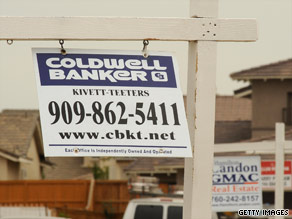
The Making Home Affordable Program aims to help homeowners avoid losing their homes to foreclosures.

The Making Home Affordable Program aims to help homeowners avoid losing their homes to foreclosures.

But six months into the program, only 6 percent of the 4 million eligible homeowners have gotten help. A lot more say they've been frustrated with the runaround they've been getting from lenders.

Are the new program's growing pains responsible for the slow start, as bankers say, or is pain to their bottom lines really preventing the program from working, as critics say?

The Making Home Affordable Program is supposed to work this way:

In return for billions of dollars in taxpayer bailout money, banks would offer loans that would reduce troubled borrowers' monthly mortgage payments to 31 percent of their income. To qualify, a homeowner must have an income and must live in the house, and that house can't be worth more than $730,000.

The bank is also allowed to calculate the value of the mortgage against the profit it would make from a foreclosure.

Banks are prohibited from selling a house in foreclosure while the homeowner is being considered for an adjustment. The Treasury Department oversees the program, and the banks signed contracts with Treasury binding them to cooperate. Watch more about how the program has worked so far Video

Treasury Secretary Timothy Geithner has been so unhappy with the program's pace that he called in lenders for a meeting and demanded they do better.

In a July 9 letter to one servicer, JP Morgan, Geithner and Shaun Donovan, secretary of Housing and Urban Development, wrote "there is a general need for servicers to devote substantially more resources to this program for it to fully succeed and achieve the objectives we share."

They called on the banks to hire more staff, expand their call centers and allow homeowners "an escalation path for borrowers dissatisfied with the service they have received."

The mortgage industry's top lobbyist says any problems to date are the growing pains associated with getting such a massive program up and running.

"It is working, and it needs to be given some time," says John Courson, head of the Mortgage Bankers Association. He says banks are still staffing up and getting the program off the ground. "It took 90 days to get out the rules and the procedures and the forms, and so that's a fairly new program," he said.

Courson says that lenders are still "training more and more staff as they are getting more and more people who are familiar with this program."

He insists that the banks want to cooperate.

"It's in the banks' best interest to work with those borrowers to keep those loans on the books and avoid foreclosure," Courson said.

But critics say that the program works against the banks' best interests, as the homeowners who most need the program are the riskiest bets.

"If the borrower is really in trouble, [the lenders] probably don't want to do the modification, because they think there's a good chance the borrower will redefault, and they will do a lot of work and they won't collect money," said Paul Willen, an economist with the Boston Federal Reserve who has studied bank foreclosures and modifications.

"The problem with this is in some deep sense, you can't penalize the banks for acting in self-interest. It's a for-profit business."

Others are critical of the voluntary nature of the program and the Obama administration's hands-off relationship with lenders.

The Treasury Department official charged with overseeing the program insists it's "off to a strong start, with hundreds of thousands of trial modifications already underway."

Assistant Secretary for Financial Institutions Michael Barr acknowledges that "servicer performance has been uneven, but servicers have committed to ramping up efforts to improve the process for borrowers," and he insists that "the administration will hold these institutions accountable for their progress."

He says Treasury is on track to help 3 million to 4 million homeowners in three years.

Diane Thompson of the National Consumer Law Center has a theory on why the Obama administration isn't getting tougher with the banks: "This is a voluntary program. I think Treasury has been very concerned to make sure that servicers [the banks] are willing to participate."

She's convinced that banks will improve their track record only if they're forced to make loans.

"Until it's made a mandatory program, I think we will not see a significant drop in foreclosures," Thompson said.

Another problem with the program is that banks don't always have the final say.

Many of these mortgages are held by private investors, and the bank simply acts as a middleman. If investors think they can make more money by foreclosing than modifying the loan, experts say the bank is powerless to override that decision.

Susan Wachter, professor of real estate and finance at the Wharton School, explains, "These are contracts. The government does not have the right to rescind contracts. The government can legislate all they want, but there can be lawsuits."

Willen adds: "What's upsetting about this is that with Making Home Affordable, what you ended up with may be worse [than doing nothing]. We're giving more money to banks, and not preventing many foreclosures."

The Treasury Department has begun stepping up pressure on banks. This month, it began publicly reporting the number of the program's loans the banks had offered, as a way to shame banks into better participation rates.

While JP Morgan-Chase has enrolled 20 percent of its eligible customers and Citibank 15 percent, two banks that got the biggest bailouts have some of the lowest enrollment rates, according to Treasury: Wells Fargo has enrolled 6 percent of eligible customers, and Bank of America 4 percent.

Both banks say that those numbers are misleading -- that they have many more offers in the pipeline and have increased staffing.

Bank of America also says it is bigger than other banks, so it has more applicants to process. Wells Fargo also says that it has refinanced many hundreds of thousands of loans outside of the government program.

Courson said many other banks are also offering their own mortgage modification programs, and if you count those, "a million and a half borrowers were assisted in the first six months in this year."

Multiple administration officials insist to CNN that there is adequate oversight of the program and that the Treasury Department has enlisted Freddie Mac to monitor the banks.

A Freddie Mac official, who would speak only on the condition of anonymity because it is acting "at the direction of Treasury," told CNN that its investigators visit banks, but only after giving the banks' management notice that they're coming.

The agency reviews loan documents, but only those that lenders provide. There are no surprise visits, no tape recordings of bank calls to assure quality assurance, and no way to respond to individual homeowner complaints.

Recently, Freddie Mac began random reviews of cases in which homeowners were denied Making Home Affordable loans. So far, Freddie Mac has not found a single instance of noncompliance worth referring to the Treasury Department for a penalty.

The Treasury Department was unable to show CNN any instance of a lender being penalized for breaking the program's rules.

By Jessica Yellin - CNN National Political Correspondent

I have personally had the experience of dealing with this program and system to help a family member who needed some help trying to wade through this program.  It is a nightmare!  The people who need the program the most, don’t qualify for help and then only 6% of the people who do qualify have received help.  Another Obamanomics nightmare program that didn’t work!  Ask Marion~

Posted:  Knowledge Creates Power

Related Resources: