
GBTV - Where the Truth Lives

Election Season 2014

And it has brought us to this trainwreck called ObamaCare and we have bankrupted our kids and grandkids!

We are now headed into the 2014 Election Season and common sense and conservatism are on the rise. Please stand-up and be counted!

Reading Collusion: How the Media Stole the 2012 Election is a great place to start!

The Founding Father's Real Reason for the Second Amendment

And remember the words of Thomas Jefferson "The strongest reason for the people to retain the right to keep and bear arms is, as a last resort, to protect themselves against tyranny in government." See Video of Suzanna Gratia-Hupp’s Congressional Testimony: What the Second Amendment is REALLY For, below (u-tube HERE).

The Leaders Are Here... Palin, Cruz, Lee, Paul, Chaffetz....

T'S A WONDERFUL LIFE

Can You Really Still Believe That None of These People Would Have Done a Better Job???

Bloggers' Rights at EFF

SIGN THE PETITION TODAY...

Showing posts with label Treasury Department. Show all posts

Tuesday, May 22, 2012

Exclusive: U.S. lets China bypass Wall Street for Treasury orders

(Reuters) - China can now bypass Wall Street when buying U.S. government debt and go straight to the U.S. Treasury, in what is the Treasury's first-ever direct relationship with a foreign government, according to documents viewed by Reuters.

The relationship means the People's Bank of China buys U.S. debt using a different method than any other central bank in the world.

The other central banks, including the Bank of Japan, which has a large appetite for Treasuries, place orders for U.S. debt with major Wall Street banks designated by the government as primary dealers. Those dealers then bid on their behalf at Treasury auctions.

China, which holds $1.17 trillion in U.S. Treasuries, still buys some Treasuries through primary dealers, but since June 2011, that route hasn't been necessary.

The documents viewed by Reuters show the U.S. Treasury Department has given the People's Bank of China a direct computer link to its auction system, which the Chinese first used to buy two-year notes in late June 2011.

China can now participate in auctions without placing bids through primary dealers. If it wants to sell, however, it still has to go through the market.

The change was not announced publicly or in any message to primary dealers.

"Direct bidding is open to a wide range of investors, but as a matter of general policy we do not comment on individual bidders," said Matt Anderson, a Treasury Department spokesman.

While there is been no prohibition on foreign government entities bidding directly, the Treasury's accommodation of China is unique.

The Treasury's sales of U.S. debt to China have become part of a politically charged public debate about China's role as the largest exporter to the United States and also the country's largest creditor.

The privilege may help China obtain U.S. debt for a better price by keeping Wall Street's knowledge of its orders to a minimum.

Primary dealers are not allowed to charge customers money to bid on their behalf at Treasury auctions, so China isn't saving money by cutting out commission fees.

Instead, China is preserving the value of specific information about its bidding habits. By bidding directly, China prevents Wall Street banks from trying to exploit its huge presence in a given auction by driving up the price.

It is one of several courtesies provided to a buyer in a class by itself in terms of purchasing power. Although the Japanese, for example, own about $1.1 trillion of Treasuries, their purchasing has been less centralized. Buying by Japan is scattered among institutions, including pension funds, large Japanese banks and the Bank of Japan, without a single entity dominating.

Granting China a direct bidding link is not the first time Treasury has gone to great lengths to keep its largest client happy.

In 2009, when Treasury officials found China was using special deals with primary dealers to conceal its U.S. debt purchases, the Treasury changed a rule to outlaw those deals, Reuters reported last June. But at the same time it relaxed a reporting requirement to make the Chinese more comfortable with the amended rule.

Another feature of the U.S.-China business relationship is discretion: The Treasury tried to keep its motivation for the 2009 rule change under wraps, Reuters reported.

Documents dealing with China's new status as a direct bidder again demonstrate the Treasury's desire for secrecy -- in terms of Wall Street and its new direct bidding customer.

To safeguard against hackers, Treasury officials upgraded the system that allows China to access the bidding process.

Then they discussed ways to deflect questions from Wall Street traders that would arise once the auction results began revealing the undeniable presence of a foreign direct bidder.

"Most hold the view that foreign accounts only submit 'indirect bids' through primary dealers. This will likely cause significant chatter on the street and many questions will likely come our way," wrote one government official in an email viewed by Reuters.

In the email, the official suggested providing basic, general answers to questions about who can bid in Treasury actions.

"For questions more extensive or probing in nature, I think it prudent to direct them to the or Treasury public relations area," the official wrote.

The granting to China of direct bidder status may be controversial because some government officials are concerned that China has gained too much leverage over the United States through its large Treasury holdings.

For example, economist Brad Setser, who is a member of the National Economic Council and has also served on the National Security Council, has argued China's large Treasury holdings pose a national security threat.

Writing for the Council on Foreign Relations in 2009, Setser posited that China's massive U.S. debt holdings gave it power over U.S. policy via the threat of a swift, large sale of U.S. debt that could send the market into turmoil and drive up interest rates.

But Treasury officials have long maintained that U.S. debt sales to China are kept separate from politics in a business relationship that benefits both countries. The Chinese use Treasuries to house the dollars they receive from selling goods to the United States, while the U.S. government is happy to see such strong demand for its debt because it keeps interest rates low.

A spokesman for the Chinese embassy in Washington did not respond to calls and emails seeking comment.

The United States has, however, displayed increasing anxiety about China as a cybersecurity threat. The change Treasury officials made to their direct bidding system before allowing access to China was to limit access to the system to a specially designed private network connection controlled by the Treasury.

China is among the most sensitive topics for bankers and government officials who court the country as a financial client because of its size and importance, and none would agree to comment on the record for this story.

A former debt management official at the Treasury who did not want to be identified said that as China's experience in the U.S. Treasury market has deepened over time, Chinese officials may have felt more comfortable taking the reins in the management of their holdings.

Their request to bid directly, in his view, came from a confidence that their money managers could buy U.S. debt more efficiently on their own than through Wall Street banks, which can often drive up the price of Treasuries at an auction if they know how much large clients are willing to pay. Such a practice that is not specifically illegal, though most traders would deem it unethical.

Evidence of China's growing sophistication as a money manager in the U.S. markets is clear in its expansion of operations in New York. Its money management arm, the State Administration for Foreign Exchange (commonly called SAFE), has an office in Midtown Manhattan and a seasoned chief investment officer -- former Pacific Investment Management Co derivatives head Changhong Zhu -- in Beijing.

A woman who answered the phone at SAFE's New York office said no one in the office was authorized to talk to the media.

(Editing by Martin Howell and Steve Orlofsky)

Related:

WHY IS CHINA OUR NATION’S NATIONAL BANK

Tuesday, September 1, 2009

Only 6% of Eligible Homeowners Helped From Obama's Housing Program

Making Home Affordable Program hasn't helped enough, some say

Only 6% of Eligible Homeowners Helped From Obama's Housing Program

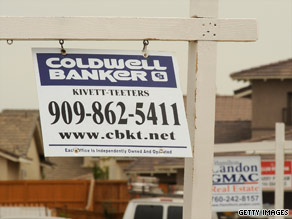
(CNN) -- When President Obama unveiled the Making Home Affordable Program in March, he said it would help "responsible folks who have been making their payments" reduce their monthly mortgage bills and avoid losing their homes to foreclosure.

The Making Home Affordable Program aims to help homeowners avoid losing their homes to foreclosures.

The Making Home Affordable Program aims to help homeowners avoid losing their homes to foreclosures.

But six months into the program, only 6 percent of the 4 million eligible homeowners have gotten help. A lot more say they've been frustrated with the runaround they've been getting from lenders.

Are the new program's growing pains responsible for the slow start, as bankers say, or is pain to their bottom lines really preventing the program from working, as critics say?

The Making Home Affordable Program is supposed to work this way:

In return for billions of dollars in taxpayer bailout money, banks would offer loans that would reduce troubled borrowers' monthly mortgage payments to 31 percent of their income. To qualify, a homeowner must have an income and must live in the house, and that house can't be worth more than $730,000.

The bank is also allowed to calculate the value of the mortgage against the profit it would make from a foreclosure.

Banks are prohibited from selling a house in foreclosure while the homeowner is being considered for an adjustment. The Treasury Department oversees the program, and the banks signed contracts with Treasury binding them to cooperate. Watch more about how the program has worked so far Video

Treasury Secretary Timothy Geithner has been so unhappy with the program's pace that he called in lenders for a meeting and demanded they do better.

In a July 9 letter to one servicer, JP Morgan, Geithner and Shaun Donovan, secretary of Housing and Urban Development, wrote "there is a general need for servicers to devote substantially more resources to this program for it to fully succeed and achieve the objectives we share."

They called on the banks to hire more staff, expand their call centers and allow homeowners "an escalation path for borrowers dissatisfied with the service they have received."

The mortgage industry's top lobbyist says any problems to date are the growing pains associated with getting such a massive program up and running.

"It is working, and it needs to be given some time," says John Courson, head of the Mortgage Bankers Association. He says banks are still staffing up and getting the program off the ground. "It took 90 days to get out the rules and the procedures and the forms, and so that's a fairly new program," he said.

Courson says that lenders are still "training more and more staff as they are getting more and more people who are familiar with this program."

He insists that the banks want to cooperate.

"It's in the banks' best interest to work with those borrowers to keep those loans on the books and avoid foreclosure," Courson said.

But critics say that the program works against the banks' best interests, as the homeowners who most need the program are the riskiest bets.

"If the borrower is really in trouble, [the lenders] probably don't want to do the modification, because they think there's a good chance the borrower will redefault, and they will do a lot of work and they won't collect money," said Paul Willen, an economist with the Boston Federal Reserve who has studied bank foreclosures and modifications.

"The problem with this is in some deep sense, you can't penalize the banks for acting in self-interest. It's a for-profit business."

Others are critical of the voluntary nature of the program and the Obama administration's hands-off relationship with lenders.

The Treasury Department official charged with overseeing the program insists it's "off to a strong start, with hundreds of thousands of trial modifications already underway."

Assistant Secretary for Financial Institutions Michael Barr acknowledges that "servicer performance has been uneven, but servicers have committed to ramping up efforts to improve the process for borrowers," and he insists that "the administration will hold these institutions accountable for their progress."

He says Treasury is on track to help 3 million to 4 million homeowners in three years.

Diane Thompson of the National Consumer Law Center has a theory on why the Obama administration isn't getting tougher with the banks: "This is a voluntary program. I think Treasury has been very concerned to make sure that servicers [the banks] are willing to participate."

She's convinced that banks will improve their track record only if they're forced to make loans.

"Until it's made a mandatory program, I think we will not see a significant drop in foreclosures," Thompson said.

Another problem with the program is that banks don't always have the final say.

Many of these mortgages are held by private investors, and the bank simply acts as a middleman. If investors think they can make more money by foreclosing than modifying the loan, experts say the bank is powerless to override that decision.

Susan Wachter, professor of real estate and finance at the Wharton School, explains, "These are contracts. The government does not have the right to rescind contracts. The government can legislate all they want, but there can be lawsuits."

Willen adds: "What's upsetting about this is that with Making Home Affordable, what you ended up with may be worse [than doing nothing]. We're giving more money to banks, and not preventing many foreclosures."

The Treasury Department has begun stepping up pressure on banks. This month, it began publicly reporting the number of the program's loans the banks had offered, as a way to shame banks into better participation rates.

While JP Morgan-Chase has enrolled 20 percent of its eligible customers and Citibank 15 percent, two banks that got the biggest bailouts have some of the lowest enrollment rates, according to Treasury: Wells Fargo has enrolled 6 percent of eligible customers, and Bank of America 4 percent.

Both banks say that those numbers are misleading -- that they have many more offers in the pipeline and have increased staffing.

Bank of America also says it is bigger than other banks, so it has more applicants to process. Wells Fargo also says that it has refinanced many hundreds of thousands of loans outside of the government program.

Courson said many other banks are also offering their own mortgage modification programs, and if you count those, "a million and a half borrowers were assisted in the first six months in this year."

Multiple administration officials insist to CNN that there is adequate oversight of the program and that the Treasury Department has enlisted Freddie Mac to monitor the banks.

A Freddie Mac official, who would speak only on the condition of anonymity because it is acting "at the direction of Treasury," told CNN that its investigators visit banks, but only after giving the banks' management notice that they're coming.

The agency reviews loan documents, but only those that lenders provide. There are no surprise visits, no tape recordings of bank calls to assure quality assurance, and no way to respond to individual homeowner complaints.

Recently, Freddie Mac began random reviews of cases in which homeowners were denied Making Home Affordable loans. So far, Freddie Mac has not found a single instance of noncompliance worth referring to the Treasury Department for a penalty.

The Treasury Department was unable to show CNN any instance of a lender being penalized for breaking the program's rules.

By Jessica Yellin - CNN National Political Correspondent

I have personally had the experience of dealing with this program and system to help a family member who needed some help trying to wade through this program.  It is a nightmare!  The people who need the program the most, don’t qualify for help and then only 6% of the people who do qualify have received help.  Another Obamanomics nightmare program that didn’t work!  Ask Marion~

Posted:  Knowledge Creates Power

Related Resources: 

Monday, July 13, 2009

Federal Budget Deficit Tops $1 Trillion for the First Time

Federal Deficit Tops $1 Trillion for First Time

The Treasury Department says the deficit in June totaled $94.3 billion, pushing the total since the budget year started in October to nearly $1.1 trillion. (AP)

WASHINGTON -- Nine months into the fiscal year, the federal deficit has topped $1 trillion for the first time.

The imbalance is intensifying fears about higher interest rates and inflation, and already pressuring the value of the dollar. There's also concern about trying to reverse the deficit -- by reducing government spending or raising taxes -- in the midst of a harsh recession.

The Treasury Department said Monday that the deficit in June totaled $94.3 billion, pushing the total since the budget year started in October to nearly $1.1 trillion.

The deficit has been propelled by the huge sum the government has spent to combat the recession and financial crisis, combined with a sharp decline in tax revenues. Paying for wars in Iraq and Afghanistan also is a major factor.

The country's soaring deficits are making Chinese and other foreign buyers of U.S. debt nervous, which could make them reluctant lenders down the road. It could force the Treasury Department to pay higher interest rates to make U.S. debt attractive longer-term.

"These are mind boggling numbers," said Sung Won Sohn, an economist at the Smith School of Business at California State University. "Our foreign investors from China and elsewhere are starting to have concerns about not only the value of the dollar but how safe their investments will be in the long run."

Government spending is on the rise to address the worst financial crisis since the Great Depression and an unemployment rate that has climbed to 9.5 percent.

Congress already approved a $700 billion financial bailout and a $787 billion economic stimulus package to try and jump-start a recovery, and there is growing talk among some Obama administration officials that a second round of stimulus may be necessary.

This has many Republicans and deficit hawks worried that the U.S. could be setting itself up for more financial pain down the road if interest rates and inflation surge. They also are raising alarms about additional spending the administration is proposing, including its plan to reform health care.

President Barack Obama and other administration officials, including Treasury Secretary Timothy Geithner, have said the U.S. is committed to bringing down the deficits once the country has emerged from the current recession and financial crisis.

Our Foreign Debt is also now one quarter of our entire GNP… Don’t ask why we don’t balk when China sends us toys containing led.

Posted: Knowledge Creates Power