GBTV - Where the Truth Lives

Election Season 2014

And it has brought us to this trainwreck called ObamaCare and we have bankrupted our kids and grandkids!

We are now headed into the 2014 Election Season and common sense and conservatism are on the rise. Please stand-up and be counted!

Reading Collusion: How the Media Stole the 2012 Election is a great place to start!

The Founding Father's Real Reason for the Second Amendment

And remember the words of Thomas Jefferson "The strongest reason for the people to retain the right to keep and bear arms is, as a last resort, to protect themselves against tyranny in government." See Video of Suzanna Gratia-Hupp’s Congressional Testimony: What the Second Amendment is REALLY For, below (u-tube HERE).

The Leaders Are Here... Palin, Cruz, Lee, Paul, Chaffetz....

T'S A WONDERFUL LIFE

Can You Really Still Believe That None of These People Would Have Done a Better Job???

Bloggers' Rights at EFF

SIGN THE PETITION TODAY...

Showing posts with label global currency. Show all posts

Thursday, April 21, 2011

Geithner has approved plans for (IMF) to absorb the Fed ???

Submitted by Habit4ming on Sun, 04/17/2011 - 17:30 and posted at  the Daily Paul Liberty Forum  -  Ron Paul is the man when it comes to Fed, so if it was posted on his site, there must be some credibility to it…

There is word on the street that Secretary of the Treasury, Timothy Geithner, has approved plans for the International Monetary Fund (IMF) to absorb the Federal Reserve System with an eye to the IMF becoming a global central bank. A “basket of currencies” (which includes the Chinese renmenbi/yuan) is to be created to replace the dollar as the international currency of trade. Plans are for “the basket” to become America’s new currency.

Is it true? There’s no way to confirm the rumor. The same spark that lit the fire under the rumor also suggests it will not be long in coming. If true, I believe it is an act that borderlines Treason. I’m no lawyer, but it seems to this citizen of the United States that my Constitution (which defines government’s limitations) says the only authority for currency and coinage in this country is the United States Congress.

{SNIP}

We must consider the results of having the IMF absorb the Federal Reserve System as part of a Global Central Bank and loss of the United States Dollar as the international currency of trade (which would put this economy over the edge and America, as a nation, into third world status from which it may never re-emerge). Having the IMF absorb the Federal Reserve System isn’t the only solution – and it is a far cry from being the best one!

For years I have told readers that George Herbert Walker Bush’s New World Order would be achieved by establishing a world economic system that can be easily morphed into world government. The IMF absorbing the Federal Reserve System is just one step along that path.

{SNIP}

We need to pay attention and ensure the IMF stays international and away from America’s financial roots.
-----------------
I decided to share this article because although it's stated it cannot be confirmed as true, I do believe we need to stay on our toes and make sure it doesn't become true!!

With so many distractions of late, I'd hate for this to slip in under the radar...

Re-Posted at the Daily Paul

Full Article:
http://www.newswithviews.com/Barnewall/marilyn162.htm

“If President Obama had the slightest desire to save the American populace from the trials and tribulations that are coming, he would pay Ambassador Lee/Leo Emil Wanta the $4.5 trillion that was lawfully wire transferred to his accounts at Bank of America by the People’s Bank of China in May of 2006.  The money disappeared down a Federal Reserve dark hole and the Ambassador has been fighting to gain access to it ever since. According to Judge Gerald Bruce Lee in a Richmond Federal District Court Decision, the money is Wanta’s. The Ambassador wants to use $1 trillion of his personal funds to build a national high-speed rail system. It would create two million new jobs with full benefits, put a floor under the ever-increasing rate of unemployment that, in turn, would put a floor under the fallen and still falling real estate market – and that, dear reader, would put the economy on the road to recovery.”  ….Marilyn M. Barnewall

Related Articles:

The Greatest Con of the Decade – Part I

The Con of the Decade, Part I

  1. Bernanke Plans on Inflation, Treasuries Sell at Negative Yield and China Accuses US of Dollar Printing
  2. Federal Reserve Most Brazen Of All Ponzi Schemes, US Economy Compared to a Black Hole
  3. $700 Billion Bailouts Each Year

Thursday, April 2, 2009

The Socialist Solution to the Crisis

Thatcherism and Reaganism have failed on a momentous scale.

The job losses, repossessions, uncertainty, fear and misery faced by the people of Europe, the United States and Japan are a terrible stain on the consciences of those bankers and politicians whose doctrine of neo-liberal markets plunged us all into this crash. But the effect of the crisis on the Third World is of an entirely different magnitude. While developed countries scramble to save their economies, half of humanity languishes. For many, this means hunger, disease and death.

In Europe, we have been protected from the worst effects of the crisis thanks to welfare states built up over the past 60 years to cushion citizens from the threats posed by the free market. We can all count on state health care, social housing, education, unemployment support and other universal, tax-funded services.

The task facing us is to extend and adapt this unique recipe for prosperity and solidarity to the developing world, where according to the World Health Organization between 200,000 and 400,000 additional children will die each year due to the global economic downturn. Prices for natural resources are falling, the stream of earnings sent back to developing countries by migrant workers is drying up, government debts are being called in, and spending slashed.

In Asia, Africa and Latin America this will mean job losses in industry and strains on agriculture. Children are being pulled out of school to work in fields or to provide an extra income, livestock are being sold, and unscrupulous employers are extracting even more from overworked and underpaid sweatshop laborers. Political instability has already claimed governments in Guinea Bissau and Madagascar, and unrest is building elsewhere.

It is vitally important that we fight the global financial and economic crisis, but we must remember that this crisis comes on top of a number of crises in the developing world. It adds further misery to the food crisis, the migration crisis, the climate and energy crisis, and the environmental crisis.

So now, as we react to the near-collapse of the international financial system, and as people recognize the fundamental flaws in the neo-liberal recipe of deregulated, market-led globalization, we have a unique opportunity to develop a new approach.

The simplistic dictum of more markets and less government -- championed by Reagan, Thatcher and their ideological heirs -- has failed on a momentous scale. In the White House, President Hope has replaced President Tax Cuts for the Rich. As we go into the G-20 meeting in London, even European conservatives such as Nicolas Sarkozy and Angela Merkel are calling for a new global financial architecture, better financial regulation and a crackdown on tax havens. The previously unimaginable idea of a "Global New Deal" is suddenly on many people's lips.

We must press harder than ever for the implementation of the eight Millennium Development Goals agreed to by the United Nations in 2000, which include halving extreme poverty, achieving universal primary education, and reversing the spread of HIV/AIDS. A global crackdown on tax havens and tax avoidance could provide the funds to take the fight against such scourges as infectious diseases, maternal mortality and poverty to a whole new level. We could base our stimulus spending on smart green growth, making real progress in protecting the environment. Would that not be an inspiring way to combat the recession?

We must press for the strongest possible international agreement on climate change, and make it politically impossible for conservatives to argue that we cannot afford this. We must show that the costs of doing nothing far outweigh the costs of switching to a carbon-free economy, not least because the actions required have the potential to create millions of jobs.

We must also renew our faith in diplomacy as a means to achieve peace. The West now has no excuses for failing to establish dialogue with countries like Iran, countries whose aggressive strength is only augmented if we do not engage all players in peaceful conflict resolution.

I am hopeful that the G-20 will make progress on these areas. But we cannot just leave it to them. We must keep up the pressure by demanding a globalization that works for everyone, and forge new alliances and new lines of communication across national boundaries. We must develop new, progressive ways to achieve global justice.

That's why, as the G-20 meets in London, an even larger group will meet in Brussels -- a group of progressive politicians, trade unionists, NGOs, academics and figures from major international institutions. This is the world conference of the Global Progressive Forum (GPF), which will bring together speakers from five continents to develop a new vision of a globalized world which benefits all. The GPF will take place in the European Parliament and will be opened by Bill Clinton. It will feature debates and discussions on the issues of global governance, trade, financial markets, decent work, migration and climate change, all aimed at coordinating global answers to what are global crises. It shows that the world's progressives are serious about making a solidaristic social model a reality for all.

In ancient Greek drama, the word "krisis" refers to the pivot on which the plot turns, the point at which its resolution, the moment of death or triumph, is decided. How will our crises be resolved? The systemic failings brought to light by the economic crisis offer us a once-in-a-lifetime opportunity to make a proactive new start on all fronts. Now is the time to ensure that this pivotal moment is not wasted. Now is the time for change.

Mr. Rasmussen is president of the Party of European Socialists and a former prime minister of Denmark (1993-2001).

By POUL NYRUP RASMUSSEN - For the Wall Street Journal

  • Karl Marx could not have said it better...
  • The UN back globalism a new global currency...
  • The world is upside down when France and Germany are lecturing us about spending too much and too much government involvement.
  • And all signs lead to the end of capitalism and the march to socialism within the United States if Americans don't stand up for their country and what they believe in... and do it quickly.

Wednesday, April 1, 2009

UN backs new new global currency reserve - US and Europe Reject Chinese and Russian Bid

Today it is a new global currency reserve... tomorrow it is a new global currency for all... Next year it is a new global (world) government and order...

A UNITED Nations panel of economists has proposed a new global currency reserve that would take over the US dollar-based system used for decades by international banks.

The proposal follows the controversial call by China's central bank governor, Zhou Xiaochuan, to create a new world currency reserve to replace the greenback as part of an overhaul of global finance.

China and many developing countries blame the global crisis on US mishandling of over-extended mortgage loans and investments in them.

With the US also borrowing trillions of dollars, it risks hyperinflation, which would considerably weaken the dollar.

An independently administered reserve currency could operate without conflicts posed by the US dollar and keep commodity prices more stable.

The Sunday Telegraph

-------------------------------------------

US and Europe Reject Chinese Bid for New Global Currency

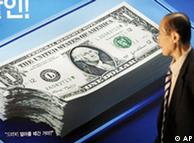
A South Korean man walks past in front of a poster featuring a stack of dollars

Is the world too dependent on the dollar?

US and European policymakers are standing behind the dollar as the world's reserve currency. Their comments followed a Chinese bid to see the currency replaced by International Monetary Fund coinage.

An upcoming global economic summit could turn into a showdown over the dollar as the world's reserve currency.

China has publicly thrown its support behind other emerging economies such as Russia which want to shift the world's currency away from the dollar to a new currency run by the International Monetary Fund (IMF).

"The outbreak of the crisis and its spillover to the entire world reflected the inherent vulnerabilities and systemic risks in the existing international monetary system," People's Bank of China Governor Zhou Xiaochuan said in a speech posted on the People's Bank of China's Web site.

Analysts say Zhou's recent comments are the latest sign of the country's growing assertiveness on the international stage. They also show a growing concern China has over the $1.7 trillion (1.3 trillion euros) it holds in US treasury bonds and reserve dollars.

US, Europe want dollar to stay

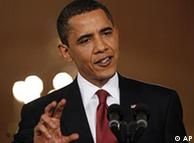
Obama gestures at a press conferenceObama doesn't see the need for a global currency (At least not yet)

The United States and Europe have dismissed the idea of doing away with the dollar as the international reserve currency. The European Union's top economic official said he thinks the dollar will remain the world's major reserve currency.

EU Commissioner Joaquin Almunia said he doesn't see "major structural changes in the role the dollar plays today as a major reserve currency."

Top US leaders, including President Barack Obama, said they want the dollar to keep its current status.

"I don't believe there is a need for a global currency," US President Barack Obama said at a press conference on Tuesday.

He noted that "the dollar is extraordinarily strong right now," and although the United States was "going through a rough patch" at present, the dollar enjoyed a "great deal of confidence" from investors.

Both US Treasury Secretary Timothy Geithner and Federal Reserve Chairman Ben Bernanke said they would not support a plan to strip the dollar of its reserve status.

Issue likely to be debated at G20 summit

International Monetary Fund logoChina would like to see the IMF take a more prominent role

Yet the idea is likely to be floated anyway at an upcoming Group of 20 summit planned for London in April. The meeting of industrialized countries will bring together top leaders in hopes of finding a common approach to the global financial crisis.

People's Bank of China Governor Zhou Xiaochuan said he would support moving away from the dollar to an IMF currency basket that would include a mixture of dollars, euros, sterling and yen. The IMF already created an international reserve asset in 1969, but the Special Drawing Rights, as it is called, is currently used only by governments and international institutions.

Russia has said it will bring up the proposal at the upcoming G20 meeting in London. Russia said its has broad support for its proposal among countries such as Brazil, India, China, South Korea and South Africa.

Not likely to happen anytime soon

In the near-term, such a radical departure from the way the global financial system works would be near impossible, economists say, although it could be feasible in the long term.

"The arguments for doing such a thing have economic merit, though the actual implementation of such a system would likely take a Herculean effort and a great deal of consensus building amongst economic powers," Sacha Tihanyi, currency strategist with Scotia Capital told AFP news agency.

"This is an idea, the idea of a global currency, determined by multilateral organizations, which is not new, but it's a serious proposal," John Lipsky, the IMF's first deputy managing director, said at a news conference in response to a question about China's proposal.

China growing more assertive

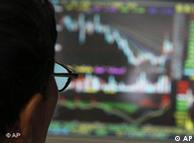
A man examines stock update on a display at a stock brokerage in Beijing, ChinaChina is the biggest US creditor

The recent comments by China's top banker follows on comments made by China's Premier earlier this month. They show how concerned the country is about its US assets.

"We have lent huge amounts of money to the United States. Of course we are concerned about the safety of our assets," Chinese Premier Wen Jiabao said two weeks ago.

China holds US Treasury bonds worth $739.6 billion as of January. It is also the world's largest holder of US dollars as a reserve currency, holding more than $1 trillion, according to US government figures.

"China appears to be growing more and more assertive over its rights," currency analyst Andrew Busch of BMO Capital Markets told AFP news agency.

The dollar, which was installed as the reserve currency after World War II, has been regarded as a "safe haven" by international investors up to now.

th/nda/afp/ap/reuters/dp

Related Articles and Sites:

http://www.amerocurrency.com/index.html