The Founding Father's Real Reason for the Second Amendment
And remember the words of Thomas Jefferson "The strongest reason for the people to retain the right to keep and bear arms is, as a last resort, to protect themselves against tyranny in government." See Video of Suzanna Gratia-Hupp’s Congressional Testimony: What the Second Amendment is REALLY For, below (u-tube HERE).
The Leaders Are Here... Palin, Cruz, Lee, Paul, Chaffetz....
T'S A WONDERFUL LIFE
Can You Really Still Believe That None of These People Would Have Done a Better Job???
Yet with Progressive role models like these, the only Speaker ever to be sanction by the House, recent questionable connections to lobbying for Freddie and Fannie… yesterday in the South Carolina primary, supposedly a conservative state, Washington insider Newt Gingrich pulled off a major victory over Mitt Romney #2, Rick Santorum #3 and Ron Paul #4… and that after his second wife resurrected her story of Newt’s philandering with a supposed request for an open marriage.
AP - Is New t really the most electable, best representative of conservative values, or less moderate than Mitt Romney ?
It’s not as if Newt couldn’t have known his past comments were going to eventually be called into question. He’s capably navigated his way through his big government tendencies so far and miraculously still has solid support in the Tea Party. Will the latest damaging clip have any impact? Gingrich is caught praising his favorite president of the 20th century: FDR. Yup, he picked the mother of all progressives ahead of Ronald Reagan.
Cue sound of heads exploding across the country…NOW!
Seriously?! This is unbelievable.
“This goes back to what Newt Gingrich said on this program. You got to get things done. That’s akin to saying we all love the Constitution but there are things we got to do,” Glenn warned.
“FDR did get things done, and then they were ruled unconstitutional,” Stu joked.
But that’s not the worst thing – on the clip at the top of the page Glenn reads a story where Gingrich praised SEIU’s Andy Stern in one of his books.
In his book “Real Chance: From the World That Fails to the World That Works,” Gingrich praises the SEIU head, who remains a close adviser of the President Obama. Pitching the need for conservatives to respect organized labor, while simultaneously pushing back against some of Labor’s more cherished legislative goals, he wrote the following:
” Conservatives cannot cheer unions overseas and then be blindly anti-union here at home. There are legitimate historic reasons for workers to organize together, and there is a strong need for a healthy, competitive, union, movement that helps improve the lives of its members and the competitiveness of our country.
Andy Stern, the head of the Service Employees International Union, is the union leader who probably best understands the challenge of the world market and the need to make American union members productive in the face of world competition. Sadly, he is a distinct minority among union leaders. “
“So he loves Andy Stern,” Glenn said. “If he can’t figure it of Stern is a Socialist communist dirt bag then he shouldn’t be the leader of the free world.”
Watch Newt claim to be a “realpolitik Wilsonian” Here:
Nobody that loves, emulates, or admires FDR, Woodrow Wilson and Andy Stern is a true conservative… for those 2-men are all Progressives… Progressive heroes. (These men are the heroes and friends of Obama and his czars). And someone with 3-wives, two divorces, a long history of affairs and a tendency for grandiosity (Newt has also compared himself or Pericles, Abraham Lincoln, Moses, and a Viking) even if he has changed, beats Rick Santorum or Mitt Romney as social conservatives. Ron Paul, Mitt Romney and Rick Santorum have been model husbands and fathers.
One must ask… what happened to value voters and the tea party? Is it all really only talk?
When Americans see the bizarre responses of the mainstream media and the progressive politicians to tragedies such as the Tucson shootings — for instance, the proposal to ban rhetoric or symbols perceived to be violent — many wonder how the country has come to this strange place where elitists are moving to gain control at the expense of individual liberties. Perhaps one need not look past the Woodrow Wilson administration for the answer.
Today’s politicians and progressives seem to have taken some notes right out of the works of Edward Bernays, President Wilson’s propaganda master. The author of books such as Crystallizing Public Opinion (1923) and Propaganda (1928) — both of which were heavily utilized by Adolf Hitler’s Nazi propaganda minister, Joseph Goebbels — Bernays has been accredited with manipulating public opinion about such varied subjects as World War I, smoking, and even bacon. He has been dubbed the “Father of Spin” and the “Godfather of modern public relations” because of his extraordinary ability to alter public opinion.
What today's politicians seem to share with Bernays is the mentality that they are in fact members of an elite class, and that it is their sole responsibility to manipulate the huddled and often confused masses.
Ours must be a leadership democracy, administered by the "intelligent minority" who know how to regiment and guide the masses. The common interests very largely elude public opinion entirely, and can be managed only by a specialized class whose personal interests reach beyond the locality.
He also indicated:
If we understand the mechanism and motives of the group mind, it is now possible to control and regiment the masses according to our will without their knowing it.
According to Bernays’ daughter, Ann,
Democracy to my father was a wonderful concept, but I don’t think he felt that all those publics out there had reliable judgment. That they very easily might vote for the wrong man or want the wrong thing. So they had to be guided from above. It’s enlightened despotism.
Similarly, in his January 11 appearance on Tom Hartman’s liberal talk radio show, progressive thinker John Dean, former Nixon counsel, commented:
What the studies show, the empirical studies over — almost, you know, well over a half a century of studying this issue — they really show that about 25 percent of a given population easily follows into the authoritarian personality-types.
These are people who, as I said, like to be told how to think [and] what to do. Some of them who were more aggressive in their personality want to jump out in front and say, "Follow me." But they will follow their leader until they get their turn. And they look upon others who don’t see the world as they do as outsiders.
[These people] are very susceptible to the direction they get from their leaders.
That's why I think it's very irresponsible (or at least dangerous) for the Palins, the Becks, the O'Reillys and the people who feed this violent atmosphere, they should realize ... the people they're dealing with. They're smart enough to look at this information and know indeed they can provoke this kind of behavior.
Likewise, Obama’s regulatory czar Cass Sunstein has indicated that the presence of too many choices can be confusing to the American people. In describing the premise of his book, Nudge, he virtually claimed that the American people were too ignorant to make proper decisions:
We think there is a little Homer Simpson in all of us. Sometimes we have self-control problems, sometimes we’re impulsive. In these circumstances, both public and private institutions, without coercing, can make our lives a lot better.
According to Sunstein, once that reality is accepted, Americans can be “manipulated.”
Joe Klein of Time magazine noted, “It is very difficult to thrive in an increasingly competitive world if you’re a nation of dodos.”
Congressman John Dingle (D-Mich.) has discussed the difficulties of trying to control the people:
The harsh fact of the matter is when you’re going to pass legislation that will cover 300 million American people in different ways, it takes a long time to do the necessary administrative steps that have to be taken to put the legislation together to control the people.
Conservative pundit Glenn Beck has dubbed this the "rancher/cow" mentality: The progressives view themselves as the ranchers, and the average Americans as the cows — incapable of formulating their own thoughts and willing to be herded into a fenced area.
Show Description: (credit glennbeck.com) - Note: Tonight is Glenn’s two year anniversary at Fox News.
Glenn opened up the show the CNN clip of John King saying they are trying to avoid using language like “crosshairs”.
Glenn opened the TV by talking about how stupid CNN must think its listeners are. Glenn played the video of CNN host John King apologizing for using everyday language in a news report. Glenn talked more about it on radio today (LINK), but let’s just say that Glenn said that if CNN felt like they needed to apologize for casually using the word “crosshair”, then Warner Brothers should apologize for having cartoon coyotes drop pianos on road runners.
As Glenn put it, as you squelch language and questioning you stifle creativity and problem solving. You have to push the edges in order to make progress (not progressive progress), and you have to be allowed to fail.
Glenn also pointed out that freedom of speech is important because it exposes your character. For example, Glenn would rather people use terms he finds offensive so that he can know not to interact with them. They have low character.
How does this tie in with Edward Bernays? Well, Bernays believed that people were motivated by animal instincts. And so does Francis Fox Piven. Glenn played a series of clips showing Francis Fox Piven applying Bernays and Freud’s philosophies to modern society and the Tea Party.
Video: Insidious & Scary: Frances Fox Piven Answers Glenn Beck
So what does the whole rancher/cow designation mean? The way Glenn explained it, Progressives believe that as “ranchers” they have a responsibility to guide the people in the “herd”. They use the aggression, self-preservation, sex, and security. Glenn believes that Edward Bernays, Sigmund Freud, Francis Fox Piven, and Cass Sunstein are all guided by this rancher/cow philosophy. But this viewpoint is the opposite of the Founder’s beliefs.
So how does this tie into E4? Glenn promised he would tie everything back to the enlightenment, education, empowerment, and entrepreneurial themes. Glenn showed how the rancher/herd philosophy could affect education. Glenn played several clips, the most outrageous of which showed John Kerry say that without an education you end up in Iraq. Glenn also showed quotes from Woodrow Wilson, who said that the aim of the university is to make students unlike their fathers.
The Progressive elite doesn’t believe in educating the “herd”, but rather keeping them in the lower caste in which they reside. Wouldn’t it be better if they tried to empower and educate the herd rather than giving them money and entitlements so they won’t ask questions.
Glenn also talked about Obama’s regulation reform that was issued through Executive Order. But something was missed. “Equity, human dignity, fairness, and distributive impacts” can be taken into account in regulations. The result, more of the “fence surrounding the cattle can be filled in.
Links to stories and information used in tonight’s program:
INSULT SOT MONTAGE JOE BIDEN, SEPT. 15, 2008, FLAT ROCK, MICHIGAN
* All this stuff about how different Barack Obama is, they’re not just used to somebody really smart. They’re just not used to somebody who’s really well educated.
JOHN KERRY SOT, Oct 2006
* You know, education, if you make the most of it, if you study hard and you do your homework, and you make an effort to be smart, uh, you, you can do well. If you don’t, you get stuck in Iraq.
PRES. BILL CLINTON, SEPT. 26, 2010
* so far, they’ve gathered up about everybody for this Tea Party but the Mad Hatter and Alice in Wonderland will give it to them, I think
ED RENDELL 60 MINUTES
* You guys don’t get that. (Stahl off cam: I do get that) You’re idiots. You’re simpletons if you don’t get that.
INSULT QUOTES - PRES OBAMA
* (Rolling Stone, Oct. 2010) It is inexcusable for any Democrat or progressive right now to stand on the sidelines in this midterm election… The idea that we’ve got a lack of enthusiasm in the Democratic base, that people are sitting on their hands complaining, is just irresponsible.”
Beck contends that the elites have managed to make some headway in their power struggle by preying on the youth:
We used to be taught as kids ourselves that there was no such thing as a stupid question. We were encouraged to be curious.... You know who's protected to ask questions and say controversial things [today]? Not the students — they get downgraded for that. Only the elites. Only the ranchers. Only the professors.
For example, in September 2008, Joe Biden said this of Obama’s critics: "All this talk about how different Barack Obama is. They’re just not used to somebody really smart. They’re just not used to somebody who is really well-educated."
Similarly, liberal pundit Bill Maher observed of politicians’ efforts to sway public opinion on healthcare: "Members of Congress have recessed now so they can go home and listen to their constituents, an urge they should resist because their constituents don’t know anything.”
Such opinions explain why outspoken critics of presidential administrations are accused of hateful rhetoric. Questioning authority is a criminal activity.
Americans today are not encouraged to “question with boldness,” as Thomas Jefferson so artfully phrased it — that is, unless they are questioning the Constitution’s usefulness and whether it is an outdated document.
Preying upon impressionable minds was a notion President Woodrow Wilson embraced. He once asserted, "The use of a university is to make young gentlemen as unlike their fathers as possible.”
It is the elitist mentality that allows billionaires such as George Soros and wealthy Americans such as Andy Stern to believe that they are above the very rules they would like to see imposed on the American people.
Similarly, former Vice President Al Gore, nearly 100 years after Edward Bernays, declared at a conference of young people in Washington, D.C.:
There are some things about our world that you know that older people don’t know. Why would that be? Well in a period of rapid change, the old assumptions sometimes just don’t work anymore because they’re out of date.
The belief that they are above the fray explains how liberals in Washington could propose banning violent symbols and rhetoric following the Tucson shootings, when these violent assertions have been made by their own man, President Barack Obama:
“I’m ready to duel John McCain.” — Sept. 30, 2008
“I want you to argue with them and get in their face.” — Sept. 17, 2008
“… so I know whose ass to kick.” — June 8, 2010
“We're going to have just hand-to-hand combat up here on Capitol Hill.” — Oct. 2010
Likewise, it is their elitism that drives liberal politicians to implement a nanny state — one in which it is the responsibility of the federal government to see to the individual’s wants and needs. It is this attitude that fuels programs such as Medicaid, Medicare, Social Security, agencies such as the Department of Homeland Security, and policies such as gun control.
For example, the Obama administration has announced that it will be reviewing regulations for redundancies to ensure that agencies are operating smoothly. On the surface, the effort appears well-intentioned, except that once again, the President has circumvented Congress by issuing an executive order to carry out the process. Likewise, what is also mentioned in the executive order that has not been touted in the media is the following: “In weighing costs and benefits, for instance, agencies may now consider equity, human dignity, fairness and distributive impacts.”
Only elitists believe they have the right to make such determinations.
The key to Bernays’ ideas on propaganda is the notion that the masses must never know that they are being manipulated. Instead, they must believe that they themselves have conceived the ideas or have come to the very conclusions to which they were actually led by the leaders. Bernays declared:
In practice, if all men had to study for themselves the abstruse economic, political, and ethical data involved in every question, they would find it impossible to come to a conclusion about anything. We have voluntarily agreed to let an invisible government sift the data and high-spot the outstanding issues so that our field of choice shall be narrowed to practical proportions. [Emphasis added.]
Eliminate choices and oppose views of the masses. So much for the days of President George Washington, who asked to be met on the “battlefield of ideas.”
Perhaps that explains the concerted efforts to destroy conservative critics such as Glenn Beck, Sarah Palin, Rush Limbaugh, Michele Bachmann, Sean Hannity, the John Birch Society, average patriotic American in the tea party and others.
The similarities between the progressive elitists of today and Edward Bernays are stark. It is becoming increasingly evident that Bernays’ ideas are taking form at the hands of the ruling elite in Washington.
The Progressive Movement emerging almost as a cancer cell in the United States in late 19th century and into the 20th century in response to the vast changes brought on by industrialization. In some ways it appeared to be a sprinkle of good and bad spices for an economic recipe for some unethical industrialization issues. It became an alternative to the traditional conservative response to social and economic issues of the times. An ideology that changed directions several times as it became a more radical stream of socialism opposing the conservative views.
The ‘Progressive Party’ (American Progressivism) quickly organized at the start of the 20th century when it insisted that clearing city governments of corruption and freeing state governments from control by big business. Middle-class Americans became reformers from fear of wealth and power of the great financiers. The Progressive Movement grew in part under the leadership of Robert M. La Follette when elected Republican governor of Wisconsin in 1900. He pushed for laws that regulated railroads and public utilities, developed a fair tax system, conserved the state’s natural resources, and gave some protection to industrial workers. By 1918 the Progressives helped the adoption of the secret ballot and bad corruption at the polls. The Progressive movement helped set up commissions designed to strictly regulate corporations, and were active in the political influence for support of women’s suffrage laws (Scott, Forman, United States History).
The Progressive movement made great strides in electing Presidents Theodore Roosevelt a Republican. Who endorsed a progressive income tax, and called for national health insurance. Teddy Roosevelt gave a speech titled “The Nationalism”, in talking about personal property, “subject to the general right of the community to regulate its use to whatever degree the public welfare may require it.” In February, 1902 he had the attorney general file suit against Northern Securities Company for violating the Sherman Antitrust Act of 1890, which appeared to attack Wall Street bankers and the financial empire. In 1904, the Supreme Court ruled that the Northern Securities Company had violated the Sherman Antitrust Act. The U.S. Senate’s passed a resolution on Article X of League of Nations Covenant. The U.S. House of Representatives moves to curtail immigration.
During Roosevelt second term he pushed for passed the Hepburn Act, regulating the railroads broadening the power of the Interstate Commerce Commission giving authority over express companies, and pipeline companies that set maximum rates. He also promoted passing the ‘Pure Food and Drug Act’ and ‘Meat-Inspection Act’ which empowered inspectors from Department of Agriculture to go into packinghouses. President Theodore Roosevelt served from 1901-1909, as a ‘Progressive Republican’ who increased governments influence over the economy, known later to be against big corporations, and a crusader for conservation creating national parks, and wildlife refuges (McGerr, Michael 2003).
From 1909-1913, William H. Taft a Progressive Republican took office and turned conservative. This caused a split of the Republican Party into ‘Conservative Republicans’, and ‘Progressive Republicans’, when he refused to support Progressive Republican and Democrat congressman on a bill that would limit the power of a conservative Speaker of the House of Representatives Joseph Cannon to merely a presiding officer. This is the turning point in history when the Progressive Republicans sided with the Democrat Party (Scott, Forman, United States History, 1974).
The Democrats too, had battled with moving toward the Progressive reform when they nominated Woodrow Wilson a ‘Progressive Democrat’ who won 42 percent of the Republican Progressive vote. Wilson believed government had no restriction on power. “For it is very clear,” he said, “that in fundamental theory socialism and democracy are almost if not quite one and the same.” Wilson in 1913 passed the ‘Underwood Tariff Act’ that called for lower tariff’s to bring European goods into competition with American products. To offset the expected government revenue loss from the tariff, Wilson put in a graduated federal income tax bill that marked the beginning of the countries complex tax system. Wilson created the Federal Reserve Act, supervised by a Board of Governors appointed by the President to serve a fourteen year term. In 1914, he signed the Federal Trade Commission Act setting a commission that could investigate industries suspected of violating antitrust laws along with the Clayton Antitrust Act. He also passed the Adamson Act giving railroad workers an eight-hour day at the rate of a ten-hour day (Scott, Forman, United States History, 1974). Probably one of the best books on American Progressivism is Woodrow Wilson and the Roots of Modern Liveralism...
In 1913-1921 Woodrow Wilson became the 28th President of the United States. The Progressivism seemed to have drifted away after Wilson’s presidential term because of World War I. It later reorganized under a new Progressive party with Robert M. La Follette in 1924. He was supported by western farmers, organized labor, and socialists. Henry A. Wallace who became the head figure for the new Progressive Party attracted left-wingers bringing it into the Democrat Party.
Thomas Woodrow Wilson (December 28, 1856 – February 3, 1924) was the 28th President of the United States from March 4, 1913 – March 4, 1921. A leading intellectual of the Progressive Era, he served as President of Princeton University from 1902 to 1910, and then as the Governor of New Jersey from 1911 to 1913. With Theodore Roosevelt and William Howard Taft dividing the Republican Party vote, Wilson was elected President as a Democrat in 1912.
In his first term, Wilson persuaded a Democratic Congress to pass the Federal Reserve Act, Federal Trade Commission, the Clayton Antitrust Act, the Federal Farm Loan Act and America's first-ever federal progressive income tax in the Revenue Act of 1913. Wilson brought many white Southerners into his administration, and tolerated their expansion of segregation in many federal agencies.
Narrowly re-elected in 1916, Wilson's second term centered on World War I. He based his re-election campaign around the slogan "he kept us out of the war," but U.S. neutrality was challenged in early 1917 when the German government proposed to Mexico a military alliance in a war against the U.S., and began unrestricted submarine warfare, sinking without warning every American merchant ship its submarines could find. Wilson in April 1917 asked Congress to declare war.
He focused on diplomacy and financial considerations, leaving the waging of the war primarily in the hands of the Army. On the home front in 1917, he began the United States' first draft since the US civil war, raised billions in war funding through Liberty Bonds, set up the War Industries Board, promoted labor union growth, supervised agriculture and food production through the Lever Act, took over control of the railroads, enacted the first federal drug prohibition, and suppressed anti-war movements. National women's suffrage was also achieved under Wilson's presidency.
In the late stages of the war, Wilson took personal control of negotiations with Germany, including the armistice. He issued his Fourteen Points, his view of a post-war world that could avoid another terrible conflict. He went to Paris in 1919 to create the League of Nations and shape the Treaty of Versailles, with special attention on creating new nations out of defunct empires. Largely for his efforts to form the League, he was awarded the Nobel Peace Prize. In 1919, during the bitter fight with the Republican-controlled Senate over the U.S. joining the League of Nations, Wilson collapsed with a debilitating stroke. He refused to compromise, effectively destroying any chance for ratification. In 1920 the 19th Amendment gives American women the right to vote.
The League of Nations was established anyway, but the United States never joined. A Presbyterian of deep religious faith, he appealed to a gospel of service and infused a profound sense of moralism into Wilsonianism. Wilson's idealistic internationalism, now referred to as "Wilsonianism", which calls for the United States to enter the world arena to fight for democracy, has been a contentious position in American foreign policy, serving as a model for "idealists" to emulate and "realists" to reject ever since (http://en.wikipedia.org/wiki/Woodrow_Wilson).
Warren G Harding (1865-1923) elected 29th President of the United States, and was inaugurated in 1921. In 1922 the U.S. Congressional election reduced Republican majority. In 1923, U.S. President W.G. Harding succeeded by Vice President Calvin Coolidge (The Timetable of History, Grun, 1975).
Later President Franklin Delano Roosevelt a Democrat 1933-1945, picked up the Progressive movement, and included Wallace as Vice president. Harry Truman became another Progressive Democrat President in 1945-1953.
FDR was the only American president elected to more than two terms, he was often referred to by his initials, FDR. Roosevelt won his first of four presidential elections in 1932, while the United States was in the depths of the Great Depression. FDR's combination of optimism and economic activism is often credited with keeping the country's economic crisis from developing into a political crisis. He led the United States through most of World War II, and died in office of a cerebral hemorrhage, shortly before the war ended.
Roosevelt named his approach to the economic situation the New Deal; it consisted of legislation pushed through Congress as well as executive orders. Executive orders included the bank holiday declared when he first came to office; legislation created new government agencies, such as the Works Progress Administration and the National Recovery Administration, with the intent of creating new jobs for the unemployed. Other legislation provided direct assistance to individuals, such as the Social Security Act. As World War II began in 1939, with Japanese occupation of countries on the western Pacific rim and the rise of Hitler in Germany, FDR kept the US on an ostensibly neutral course. In March 1941, Roosevelt provided Lend-Lease aid to the countries fighting against Nazi Germany, with Great Britain the recipient of the most assistance. With the Japanese attack on Pearl Harbor on December 7, 1941, Roosevelt immediately asked for and received a declaration of war against Japan. Germany subsequently declared war on the United States on December 11, 1941. The nearly total mobilization of the US economy to support the war effort caused a rapid economic recovery.
Roosevelt dominated the American political scene, not only during the twelve years of his presidency, but for decades afterwards. FDR's coalition melded together such disparate elements as Southern whites and African Americans in the cities of the North. Roosevelt's political impact also resonated on the world stage long after his death, with the United Nations and Bretton Woods as examples of his administration's wide ranging impact. Roosevelt is rated by historians as one of the greatest U.S. Presidents.
Latter Lyndon Baines Johnson a Democrat followed in the Progressive movement after the death of JFK with social ideologies in 1963-1969. Each of these presidents grew the government, adding more regulations, and taxes.
The progressive movement under Franklin D. Roosevelt took root under the ‘New Deal’ which falsely became the solution for the ‘Great Depression’ when in fact all it did was slow down the natural course of the free market recovery caused by the Great Depression. An economic depression as a result of World War II, brought about by a global economy with a slowdown in trading and barrowing (Schiff, Peter 2009).
By definition, “Progressivism is a political and social term that refers to ideologies and movements favoring or advocating changes or reform, usually in a statist or egalitarian direction for economic policies (government management) and liberal direction for social policies (personal choice). Progressivism is often viewed in opposition to conservative ideologies.”
(www.wikapedia.com). The definition of ‘progressive tax’, “A type of graduated tax which applies higher tax rates as the income of the taxpayer increases.” (Blacks Law Dictionary).
The early Progressive movement under Wilson, and Roosevelt were Socialist. However the new Progressive movement has been taken over by Communist under President Obama. Many members of the new Progressives are products of the SDS (Students for Democratic Society) of 1963-1969 were and are Communist. There seems to be a split between Socialist progressives, and Communist Progressives. Many of the Democrats in the House, and Senate are products of the Socialist. They are being used as a vehicle of Communist agenda under President Obama, Pelosi, and Reed. These three are the product of the SDS movement who are supports of Mao, and the Communist (Little red Book of Mao) supporters. They are followers of the writings of Cloward and Piven and Saul Alinsky, which include the belief in the practice of eugenics (eugenics light: death panels as part of healthcare and harvesting organs without your permission) and the belief that anything is fair as long as you get to the end you desire.
The free market creates more wealth and opportunities for more people than any other economic model. A Capitalist system developed by Adam Smith, studied by the founding fathers of the US constitution now destined to be forgotten by both political parties because of greed, or political influence. Yet the greatest economic challenges that face the free market economy today stems at the beginning of the ‘Progressive Movement’ now considered a slippery slope towards authoritarian tyranny that influences both political parties like a cancer. The free market economy in the United States is presently at risk from an out-of-control government that is quickly adapting a socialist system or nationalization. President George Washington warned against the political parties during his farewell address in 1796.
Since January, 2009 the US House of representative and the US Senate both controlled by the Democrat Party including the President of the United States. The Democratic Party has based its foundation on the format of higher taxes, excessive spending, and bigger government. Under the ‘Liberal Democrat Party now calling themselves ‘Progressives’, will result in the high cost of doing business, which tends to be passed along to the general public for its products and services. Investment is down because of too many unknowns in today’s market, and economy.
The present economic depression is the result of over spending, corruption, energy cost, and bad bank loans because of radicals, ACORN, and the CRA (Community Reinvestment Act). The ‘Great Depression’ started in a different way from today’s depression, and the results are similar. Like most cancers the Progressive Movement begins to spread left under now President Obama when he re-energized the Democratic Party. In this case it becomes a rapid spread of larger government, more regulations, and higher taxes, as it eats away the healthily tissue, the heart of the free market economy and the capitalist system through nationalization. The ever increasing cost of minimum wage, unemployment security taxes, city and state taxes regulations, job loss, stock market downfall, less spending, and nationalization of banks are some of the leading causes of a poor US economy found today.
On February 13, 2009, the debt was raised to $12.104 trillion, by the American Recovery and Reinvestment Act of 2009 (Public Law 111-5 (section 1604). The annual interest payment on the national debt is estimated over $350 billion a year. By 2019, an annual interest payment on the national debt is projected to hit $810 billion (CBO, 2009). This is based on President Obama not passing the proposed congressional plan for a second stimulus package plus nationalized health care that could clap the US economy.
President Ronald Reagan on his first inaugural address said, "In this present crisis, government is not the solution to our problem; government is the problem.”
A fantastic cartoon from 1934, entitled “Planned Economy or Planned Destruction”
Amazingly accurate, incredibly prescient. Note Stalin in the bottom right corner. This cartoon, according to sources, was created in 1934. The Great Depression was on, people were destitute, things were lousy – yet here is a cartoon that exhibits the same beliefs that a growing number of Americans feel. You can not spend your way into prosperity. Capitalism is good. The Republic (and the rule of law) is always better than the oligarchy (and being ruled by a few.) That the last thing we need is another “new deal.”
The past is trying to tell us something.
Carthago Delenda Est!
What a great find and a reminder that history does indeed repeat itself if we don’t pay attention (and don’t teach our kids history or accurate history)!
GLENN: Well, I decided Fusion magazine is my monthly magazine and we decided to do a double issue. And we're doing it on progressivism. So it's a primer. So you will be able to understand what it is, that way you don't have to go out and, you know, do all the work. If you get Fusion magazine this coming month will be a whole issue with extra pages just on the progressive movement. And I have some of the best minds on the progressive movement involved. We've asked some of the best people to write on it. Matthew Spalding is one of those guys. We asked him to write on the remaking of America, which is one of my favorite phrases from Barack Obama. We're not restoring. We're not rebuilding. We're remaking America. He is author of We Still Hold These Truths: Rediscovering Our Principles, Reclaiming Our Future. Matthew Spalding is with us. Matthew, how are you, sir?
SPALDING: I'm fine, Glenn, how are you?
GLENN: I'm very good. Would you say that I how far off the marker do you agree with what I just said about, that is the cancer in America is the progressive movement? SPALDING: You are absolutely right, and I think the key is if you want to there are a lot of things going on right now. It's very confusing, where are we going. If you want a framework for thinking this through, in the shorthand it's basically we live in a world where we have a battle. We're outnumbered and it's basically the founders and self evident truth and the Constitution against this idea of progressivism and liberalism, which is a complete rejection of those ideas. And what we're talking about right now is who's going to win out, what's our future, where are we going. And you've got to understand that. If you don't understand that, we're just going to go float along the river and you know what we're going to do? We're going to become Europe. We're going to be a dead culture. That's our future: Look over at Europe. That's where we're going.
GLENN: Now, the progressive movement, this is so insidious, Matthew, because it is the only ones who have ever written anything about our history, I mean, for instance, and I don't want to get into this, but Woodrow Wilson nobody knows anything about. One evil son of a bitch. And nobody knows it. Nobody really knows what the progressive movement is because they've controlled history.
SPALDING: They've written the history, that's right.
GLENN: Yeah. And so you don't see what's coming. But once you start to go in for instance, I don't know if you're familiar. Are you familiar with Philip Dru: Administrator, the novel?
SPALDING: Yes, it's written by Colonel House anonymously about a dictator.
GLENN: Look at how excited he gets, such geeks, Matthew, such geeks.
SPALDING: It's great stuff, but you are absolutely right. Once you kind of see their vision, these guys wanted to fundamentally remake America and they set about doing it, and the beauty of reading these old books from these old guys is that back in those days they were very clear about what they were doing. Today progressive thinkers are very
July/Aug 2009 Issue
The Founders vs. The Progressives
GLENN: Shady.
SPALDING: Cagey, right? So you go back and see what they said. When they are clear, kind of tells you what's going on here because Barack Obama studied this stuff. He says so in one of his two autobiographies. He studied the progressive and Herbert Croley. He called himself a progressive. He knows what he's doing.
GLENN: Yeah. It's amazing because, Matthew, back around the turn of the century they I mean, this is the time when they were saying, you know, Mussolini, he's a good guy! This is the new wave of government.
SPALDING: That's right.
GLENN: And so there was no shame. But as soon as the idea of a dictator went awry, they went underground and then they hid it. But isn't this, Matthew, when you Philip Dru: Administrator is a novel from Wilson's time, one of Wilson's advisors. This guy played a huge role in the making of America, or the remaking of America.
SPALDING: Right.
GLENN: And it is the czar system. It's what Obama's doing with the car industry right now.
SPALDING: That's right. That particular novel suggests that this guy becomes dictator and he essentially imposes what was the 1912 platform of the Republican Party which was the progressive party at the time. There's amazing parallels today. As a matter of fact, if you look at all the things we're talking about today, healthcare reform, national service, taking over car companies and banks, all of these things have amazingly deep parallels back to the progressive movement. It's as if their agenda was written for them back in the 1920s.
GLENN: I contend, Matthew, I contend that it was. I contend that everything that is happening now, this is that there is no and I don't know anybody who has done this. Maybe you do. I contend that if you go back and you start with Barack Obama and you look at who's influenced him and who influenced them and who influenced them, you will go back to these authors, the same people. It's the same group of people. They've been educating each other and moving it along little by little, bit by bit.
SPALDING: Well, just to fill in the blanks very quickly, you had the progressive movement at the beginning. They kind of get pushed back from World War I. They come back again the New Deal. Very clearly they understood that the New Dealers understood themselves as progressives. That Peters out, but it comes back in spades in the Great Society. The roots of the Great Society are clearly in the progressives. They talk about creating a great society. That kind of falls back. You get Reagan coming into kind of get us back on track. Obama clearly sees himself, he always talks about himself as carrying on tradition of the Great Society but especially FDR. But behind that intellectually is the progressive movement. Liberalism comes into America in waves, one, two, three, and now we're in a fourth wave. This is an agenda over time to fundamentally remake America and we've got to understand that.
GLENN: So Matthew, the president says we are going to remake America. I have been ringing the bell since his inauguration when he said those words, and listen to what he is saying! He again is I think not as cagey as others are. He will use the language of the progressive movement from the early 20th century. He says them which, to me if you understand, it's code language. If you know what he's talking about, you know, "Oh, dear God, I know what's coming."
SPALDING: Well, it's also the fact that I see Obama as he's very intelligent, he knows what he's doing. I think he's the most serious liberal progressive political figure in America since FDR, and he means to seriously change American politics is a serious fundamentally realigned way which will determine a large segment of our future.
GLENN: I tell you I think FDR had some restraint. I don't know if it was personal restraint, but he had the opportunity to become dictator and he didn't. And I think he was a bad dude. Don't get me wrong. But I think Wilson I think Obama does not have that restraint. I think this administration is
SPALDING: He doesn't need to because he can know build on the successes of the past, right? It's completely open to him. No longer is there a court to check him. No longer is there Republican opposition which is willing to stand up to him, seriously in an intellectual and political way. And no longer do we have the kind of self governing spirited population that sees what it is. I mean, we've got a lot of work here. He's got an open playing field right now.
GLENN: So Matthew, I mean, this is why I did the Fusion issue and had people like you and Jonah Goldberg and everybody else write about the progressives in a historic sort of way and tie it to today. What is if you could get one message out to America, and they're like, "I don't know anything about progressives. I mean, they do auto insurance and I guess a few candidates." What is it that you would say, "You must understand this one thing"?
SPALDING: If I can I would say it's two things. One is a complete and utter intellectual and moral rejection of the principles of the founding, complete relativism. There is no truth. That's one thing. The second thing
GLENN: Wait, wait. Before you move on from that.
SPALDING: Yeah.
GLENN: Explain that a little bit because I've heard that before but until I read the words of the progressive movement where they dismantle, where they said forget about the Declaration of Independence, forget about parts of the Constitution, the preamble of the Constitution and forget about the, you know, that it's a living document. Until I actually read what they said, I didn't really understand that. Can you give an example here?
SPALDING: The whole notion of limited government depends upon us having rights granted to us by God that we each possess. If there is no moral truth behind that, there is nothing that limits government. That's what progressivism means. What they said very clearly because they went over and studied with these really bad German philosophers and they came back and they had discovered the new truth that there was no permanent enduring timeless truth, no self evident truths as it says in the declaration. Carl Becker, one of the great historians wrote to ask whether the declaration is true or not is a meaningless question. They are relativists at their core. All truths are merely relative to one another. You like ice cream, I like eating small children, all right? It doesn't matter. Once you've accepted that philosophical assumption, there are no limits on government, the Constitution is living, the president can do whatever he wants. None of this matters.
GLENN: So it's really not
SPALDING: All for the sake of progress: Progress will save us.
GLENN: It's not that they hate God or they, you know, they love pedophiles. It's that if they can destroy the concept of God or if they can destroy the self evident truth that you're endowed by rights, then they grab control.
SPALDING: Because there's nothing left to prevent them from doing so. GLENN: Right.
SPALDING: It's not that they want to do these things but they are impelled to do them because there's no other truth out there.
GLENN: Right.
SPALDING: And if there's no truth, we must be completely tolerant, we must be completely equal. The only way we can do it is we must have government to make us do it.
GLENN: So in other words, again when you say this, I'm hoping that a lot of people will remember the words of the president where he said, "I don't want to take over these car companies. I don't want to do this."
SPALDING: Right.
GLENN: I was left with this job. Now I have to do it, and the only way, the only entity that can save these things is the government.
SPALDING: Is the government, that's right. And when he says remake America, you have to understand that what he means is he wants to get rid of, put back on the history books the always old notions of self evident truths and limited government to the Constitution. That's old school. He wants to get rid of that. In its place we have this new administrative government, and a lot of this culminates, and this is a key aspect of this, a lot of it culminates in Barack Obama himself. His narcissism, the notion that he is kind of the culmination of history, right? That itself is a very progressive concept. That's what Woodrow Wilson thought, right? These great historical figures are absolutely key. And that's what Barack Obama sees himself as. He is leading us into the future.
GLENN: If I'm not mistaken, Woodrow Wilson went so far as saying that God cannot be stopped and that America, when they voted down progressivism and they voted down the League of Nations, et cetera, et cetera, that these all, all these things came from God and he knew it, and God would not be stopped.
SPALDING: That's right. The early progressives were actually, interestingly enough very much influenced by a religious concept. But their religious concept is not God in the (inaudible) sense in any way, it really means history, kind of in a, God takes on this notion of the invisible forces of history taking us into the future. And you need somebody to lead us there. And so Woodrow Wilson was the great leader, the same way that Barack Obama being perfectly progressive is the one who, he has the vision to see where we're going. And so only he can lead us there. That's the beauty of it.
GLENN: Okay. Hold on just a second, Matthew. I appreciate it. Matthew Spalding. In Fusion magazine Matthew writes a great article on the remaking of America, keyword "Remaking" of America. Jonah Goldberg is also writing for it. R. J. Pestritto who is this really smart dude, professor. Where is he a professor of?
SPALDING: Hillsdale college.
GLENN: Hillsdale. Really smart guy. You can get an expanded edition of Fusion magazine by call 888 Glenn Beck or go to GlennBeck.com. It is next month's issue.
Since the Progressives had such a limitless view of state power, and since they wanted to downplay the founders’ emphasis on individual rights, it is only natural to ask if they subscribed to socialism. There are several things to consider in answering this question.
First, when considering the relationship of progressivism to socialism, we must be clear that we are talking about the similarity in the philosophy of government; we are not suggesting that America’s progressives were the kind of moral monsters that we see in the history of some socialist or fascist regimes (although it is the case that their racial views – particularly those of Woodrow Wilson – were indeed morally reprehensible).
Second, we must also bear in mind that there was an actual socialist movement during the Progressive Era, and prominent progressives such as Wilson and Theodore Roosevelt were critics of it. In fact, Wilson and Roosevelt both ran against a socialist candidate in the 1912 election (Eugene Debs). The progressives were ambivalent about the socialist movement of their day not so much because they disagreed with it in principle, but because the American socialist movement was a movement of the lower classes. The progressives were elitists; they looked down their noses at the socialists, considering them a kind of rabble.
Keeping these points in mind, it is, nonetheless, the case that the progressive conception of government closely coincided with the socialist conception. Both progressivism and socialism champion the prerogatives of the state over the prerogatives of the individual. Wilson himself made this connection very plain in a revealing essay he wrote in 1887 called “Socialism and Democracy.” Wilson’s begins this essay by defining socialism, explaining that it stands for unfettered state power, which trumps any notion of individual rights. It “proposes that all idea of a limitation of public authority by individual rights be put out of view,” Wilson wrote, and “that no line can be drawn between private and public affairs which the State may not cross at will.” After laying out this definition of socialism, Wilson explains that he finds nothing wrong with it in principle, since it was merely the logical extension of genuine democratic theory. It gives all power to the people, in their collective capacity, to carry out their will through the exercise of governmental power, unlimited by any undemocratic idea like individual rights. He elaborated:
“In fundamental theory socialism and democracy are almost if not quite one and the same. They both rest at bottom upon the absolute right of the community to determine its own destiny and that of its members. Limits of wisdom and convenience to the public control there may be: limits of principle there are, upon strict analysis, none.”
Roosevelt, too, argued for a new conception of government, where individual natural rights would no longer serve as a principled boundary that the state was prohibited from crossing. He called in his New Nationalism program for the state to take an active role in effecting economic equality by way of superintending the use of private property. Private property rights, which had been serving as a brake on the more aggressive progressive policy proposals, were to be respected, Roosevelt argued, only insofar as the government approved of the property’s social usefulness. He wrote:
“We grudge no man a fortune in civil life if it is honorably obtained and well used. It is not even enough that it should have been gained without doing damage to the community. We should permit it to be gained only so long as the gaining represents benefit to the community. This, I know, implies a policy of a far more active governmental interference with social and economic conditions in this country than we have yet had, but I think we have got to face the fact that such an increase in governmental control is now necessary.”
In the next and final piece, we will consider the some of the most important connections between the original progressives and the resurgence of progressivism today.
Progressivism and the Current Crisis
There are important connections between America’s original Progressive Era and the crisis we are facing today, and it is useful to consider these connections on two levels.
The first connection is at a general level, and concerns our abandonment of the Constitution. The present crisis did not appear out of nowhere, and didn’t simply begin with the election of Barack Obama. Politicians of both parties spent the better part of the 20th century disregarding the Constitution, as they looked to have government step up to solve every conceivable human problem. Thus it ought to be no surprise that the Constitution’s limits on government aren’t even part of the conversation today as our politicians debate the new interventions in our economy and society that seem to come daily.
Such a state of things would have greatly pleased America’s original progressives. As I’ve endeavored to explain in these pieces for the newsletter, progressives believed that the role of government should be determined not by our Constitution, but by whatever the needs of the day happened to be. This is why they sought to eradicate talk of the Constitution from our political discourse; today, that goal seems to have been realized.
The second connection between the original Progressive Era and our situation today has to do with policy. The progressives knew that our original system of government was not capable of handling all of the new tasks that they had in mind for it. So they envisioned creating a vast set of bureaucratic agencies. They argued that Congress should enact very broad and vague laws for supervising more and more facets of the American economy and society, and then delegate to the bureaucratic agencies the power and discretion to enact specific policies. Both Woodrow Wilson and Theodore Roosevelt conceived of government in this way.
The New Deal certainly went a long way toward implementing this progressive vision, and what we have seen in our own situation with TARP and the various other interventions is simply greater steps toward the progressive plan. Our Congress has simply said to the Treasury agencies: here’s a trillion dollars, here’s all the legal authority you need, now go out, determine what is in the public interest, and spend and regulate accordingly. That is the progressive vision of government, in a nutshell.
For more on the Progressives, two of my books may be of interest:
1) American Progressivism, which I co-edited with American historian William Atto, contains a basic introduction to progressive ideas written by Professor Atto and me, and then several selections from the actual writings of Progressives like Wilson, TR, Dewey, Croly, and others.
2) Woodrow Wilson and the Roots of Modern Liberalism... which is a much more in-depth look at Woodrow Wilson and how he was central to originating the liberalism that dominates America today. This is for those who are really interested in history and political theory.
As I explained in my last piece, the Progressives wanted to disregard the Constitution in order to enlarge vastly the scope of government. As a practical matter, how was this to be done? It happened in a variety of ways, but principal among them was a fundamental change in the American presidency.
Under the system of our founders, government was to have sufficient strength and energy to accomplish its ends, but those ends were strictly limited by the Constitution. The principal way in which the Constitution keeps the government within its boundaries is through the separation of powers. As readers of The Federalist and of Thomas Jefferson know, the point of separation of powers is to keep any one set of hands from wielding all of the power in national government.
The Progressives, especially Woodrow Wilson, hated the separation of powers for precisely this reason: it made government inefficient, and made it difficult, if not impossible, to expand the power of government so that it could take on all of the new tasks that Progressives had in mind. So they looked to the presidency as a way of getting around this obstacle.
Under the original system, the president was merely leader of a single branch, or part, of the government, and thus could not provide leadership of the government as a whole. In his book Constitutional Government, Wilson urged that “leadership and control must be lodged somewhere.” The president, Wilson pointed out, was the only politician who could claim to speak for the people as a whole, and thus he called upon the president to rise above the separation of powers – to consider himself not merely as chief of a single branch of government, but as the popular leader of the whole of national politics. Wilson even contrasted the “constitutional aspect” of the presidency – its constitutionally defined role as chief of one of the three co-equal branches of government – to the “political” function of the president, where he could use his connection to public opinion as a tool for moving all of the branches of government in the direction called for by the people.
It was in this way that Wilson believed the original intention of the separation of powers system could be circumvented, and the enhanced presidency could be a means energizing the kind of active national government that the progressive agenda required.
In the next piece, we’ll consider whether the principles of the Progressives made them socialists.
For more on the Progressives, two of my books may be of interest:
1) American Progressivism, which I co-edited with American historian William Atto, contains a basic introduction to progressive ideas written by Professor Atto and me, and then several selections from the actual writings of Progressives like Wilson, TR, Dewey, Croly, and others.
2) Woodrow Wilson and the Roots of Modern Liberalism... which is a much more in-depth look at Woodrow Wilson and how he was central to originating the liberalism that dominates America today. This is for those who are really interested in history and political theory.
As I mentioned in my last piece, America’s Progressives aimed for a thorough transformation in America’s principles of government. While our founders understood that our national government must have the capacity to be strong and vigorous (this is why the Articles of Confederation were failing), they also were very clear that this strength must always be confined to very limited ends or areas of responsibility; government, in other words, while not weak or tiny, was to be strictly limited.
The Progressive conception of government, on the other hand, was quite the opposite; Progressives had an “evolving” or a “living” notion of government (yes, we get the term “living constitution” from the Progressives), and thus wanted government to take on whatever role and scope the times demanded. The Progressives reasoned that people of the founding era may have wanted a limited government, given their particular experience with George III, but they argued that people of their own time wanted a much more activist government, and that we should adjust accordingly.
Quite simply, the Progressives detested the bedrock principles of American government. They detested the Declaration of Independence, which enshrines the protection of individual natural rights (like property) as the unchangeable purpose of government; and they detested the Constitution, which places permanent limits on the scope of government and is structured in a way that makes the extension of national power beyond its original purpose very difficult. “Progressivism” was, for them, all about progressing, or moving beyond, the principles of our founders.
This is why the Progressives were the first generation of Americans to denounce openly our founding documents. Woodrow Wilson, for example, once warned that “if you want to understand the real Declaration of Independence, do not repeat the preface” – i.e. that part of the Declaration which talks about securing individual natural rights as the only legitimate purpose of government. And Theodore Roosevelt, when using the federal government to take over private businesses during the 1902 coal strike, is reported to have remarked, “To hell with the Constitution when people want coal!” This remark may be apocryphal, but it is a fair representation of how TR viewed these matters.
In the next piece, we’ll consider how the presidency was transformed under men like Wilson and TR.
For more on the Progressives, two of my books may be of interest:
1) American Progressivism, which I co-edited with American historian William Atto, contains a basic introduction to progressive ideas written by Professor Atto and me, and then several selections from the actual writings of Progressives like Wilson, TR, Dewey, Croly, and others.
2) Woodrow Wilson and the Roots of Modern Liberalism... which is a much more in-depth look at Woodrow Wilson and how he was central to originating the liberalism that dominates America today. This is for those who are really interested in history and political theory.
Glenn has asked me to expand a bit on our discussion of America’s Progressives from Friday’s television show, which I’ll do in this and four subsequent pieces for the newsletter. In today’s piece, I’ll explain who the Progressives were and why they were important.
Many on the left today call themselves “progressive,” and they do so not just because it’s a nicer way of saying “liberal,” but also because they very much intend to revive the political principles of America’s original Progressives, from the Progressive Era of the 1880s through World War I. Why would leftist politicians, like Mrs. Clinton, purposely identify themselves with this Progressive movement?
The reason is that America’s original Progressives were also its original, big-government liberals. Most people point to the New Deal era as the source of big government and the welfare state that we have today. While this is perfectly accurate, it is important to understand that the principles of the New Deal did not originate in the New Deal; rather, they came from the Progressives, who had dominated American politics and intellectual cultural a generation prior to the New Deal.
We have no less an authority on this connection than Franklin Roosevelt himself. When FDR campaigned in 1932, he pointed to the Progressives – and in particular to Theodore Roosevelt and Woodrow Wilson – as the source of his ideas about government.
In terms of the personalities who made up the Progressive movement, some are familiar to us and others are less so. The movement was comprised of well known politicians like Woodrow Wilson and Theodore Roosevelt; but it was also comprised of intellectuals and writers who are less well known but who have been very influential in America. There were folks like John Dewey, who was America’s public philosopher for much of the early 20th century. Even less well known was Herbert Croly, but Croly was highly influential, since he founded and was the first editor of TheNew Republic – which became the main organ of Progressive opinion in the United States, and is still one of the most important journals on the Left today. I should add here that Woodrow Wilson actually fell into both of these categories – he was both a well known politician and president, but also was, for decades prior to his entry into politics, a prominent intellectual (a college professor and president of Princeton) who wrote many books and influential articles.
As I’ll explain in my next piece, these Progressives wanted a thorough transformation in America’s principles of government, from a government permanently dedicated to securing individual liberty to one whose ends and scope would change to take on any and all social and economic ills. Here’s the order of the points we’ll consider in the pieces to follow:
1) What did Progressives think about the American founding, and why did they want to eradicate its principles?
2) How did we get today’s excessively powerful presidency from the Progressives?
3) What was the connection between Progressivism and Socialism? Were the Progressives actually Socialists?
4) What are some of the critical connections between Progressivism and what’s going on in our country today?
For more on the Progressives, two of my books may be of interest:
1) American Progressivism, which I co-edited with American historian William Atto, contains a basic introduction to progressive ideas written by Professor Atto and me, and then several selections from the actual writings of Progressives like Wilson, TR, Dewey, Croly, and others.
2) Woodrow Wilson and the Roots of Modern Liberalism... which is a much more in-depth look at Woodrow Wilson and how he was central to originating the liberalism that dominates America today. This is for those who are really interested in history and political theory.
thecommunists, I remained silent; I was not a communist.
Then they locked up the social democrats, I remained silent; I was not a social democrat.
Then they came for the trade unionists, I did not protest; I was not a trade unionist.
Then they came for the Catholics, I did not protest; I was a Protestant.
Then they came for the Jews, I did not speak out; I was not a Jew.
When they came for me, there was no one left to speak out for me.
Election 2014 - What Is Really At Stake
Help Stop Voter Fraud!! Stand for the Constitution and God
Time to remember that: "We Surround Them", not the other way!
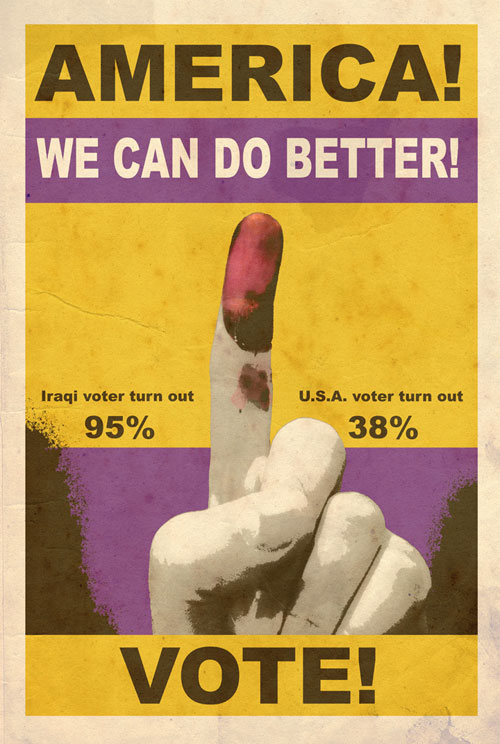
Stand Up Against Voter Fraud... Demand Re-Counts and Verification Until It is Right!! A Little Ink Goes a Long Way Toward Honesty... 1 Person 1 Vote... No More Mickey Mouse or Dead People Voting
"The world is a dangerous place to live; not because of the people who are evil, but because of the people who don't do anything about IT! --Albert Einstein
Call Congress Today and Tell Them To Vote Against Cap and Trade
The hottest places in Hell are reserved for those who in a period of moral crisis, maintain their neutrality -- Dante Alighieri / Often Quoted by Mark Twain
Thanks for calling the Congressional switchboard. Keep up the pressure: "NO on Cap and Trade"!!! "NO Vote on Obamacare", NO on another Stimulus Bill, NO to the never ending parade of "Power Grab Bills", and ABSOLUTELY NO on the Climate Change Treaty in Copenhagen!!
"No" on Cap and Trade and "No" on Government Controlled Healthcare!!! And Keep up the good fight! Keep up the Pressure on both the House and Senate! These are 2-fights the American People cannot afford to lose!!!
If you choose not to go this route… call and fax your Senator and as many of them on the list yourself, but don’t sit idly by!!
United States Capitol switchboard at (202) 224-3121
We apologize in advance for any Videos or links that are not functioning in these or other older posts. Internet information... like 'true' history in our student's textbooks are under constant attack by the Progressive Movement and even more so under the present administration. Try to save what you can to your own computer.
"...there comes a time, ladies and gentlemen, when ideology can cause death. I am so tired, so tired, of zealots, primarily on the left, putting their insane personal agendas above the safety of fellow Americans. Do you think the brave soldiers and Marines operating in dangerous areas right now want [unreleased photos of alleged abuse of prisoners] all over al-Jazeera and the terror websites? So let's look out for the military, OK? Nancy Pelosi has an obligation to get the loons in her party under control. If the Speaker can't do that, she doesn't deserve her position." ... Bill O'Reilly
Updated:If you'd like to contact Speaker of the House Nancy Pelosi, here's the contact information that you'll need.