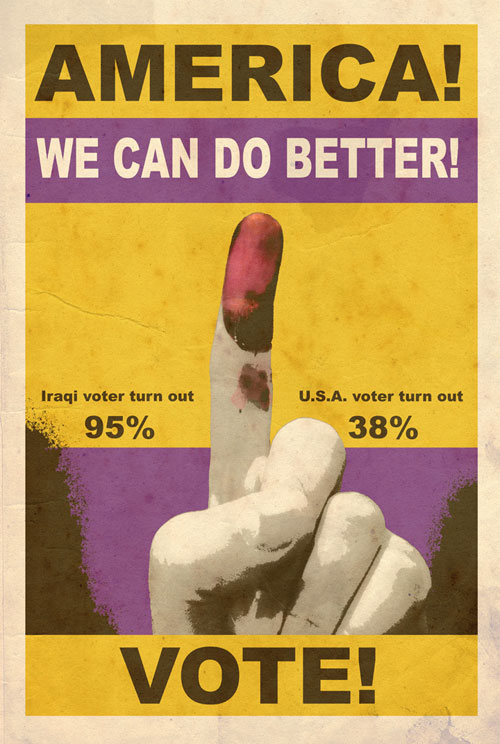



Memorial Day kicks off both America’s summer and longer patriotic season that ends with Veteran’s Day in November. Although there is never a time where Patriotism and Freedom should not be at the forefront of our minds, the period including Memorial Day, the 4th of July, Labor Day, Veteran’s Day, Election Day and the lazy days of summer and summer vacations afford us the the opportunity to spend more time with our kids and grandkids. While we are on vacation, visiting historical venues, going to the national parks, theme parks or sending our kids on group trips to Washington D.C. or Patriot Camp from late May to early November… before roll into the ‘holiday season’ for most Americans, it is the perfect time to educate ourselves and our children about this great country and to get involved.
The uncovering of events over the past months (years) from Benghazi-gate, IRS-gate, Press-gate… Sebelius-gate, EPA-gate, Fast and Furious, voter fraud and the list goes on have finally caused many Americans to take a second look at what is going on in Washington D.C. and the wave of eye-opening news for many about the Common C.O.R.E. educational program has more and more parents and grandparents questioning what is happening in our public schools.
So the ‘patriotic season’ of 2013 could be a turning point in Americans’ apathy and a return to founding principles, fiscal responsibility and a demand for an accountable government at all levels, especially with the realization that most grass-roots, tea party and patriotic groups and organizations have been thwarted for several years now by the activities of the IRS, now coming to light, which very possibly affected the outcome of the 2012 Election at every level.
As we start our journey into 2013’s summer and holidays we can each initiate change by taking time to really talking to our kids and grandkids and choosing both our and their activities wisely.
As we start our journey into 2013’s summer and holidays we can each initiate change by taking time to really talking to our kids and grandkids and choosing both our and their activities wisely.
One of the greatest challenges in relating to and involving the present generation in activities is getting past their addiction to using media and electronics. So perhaps using some of the aspects of their attachment for positive is one way to relate?!?
How about using positive message and historical movies as an activity to watch together and then discuss and perhaps make the leap to reading some books that expands on the themes that interest them and you from there? Investing in some of those movies to have on hand through the summer and patriotic season could be a great investment. Movies that apply to our history are great anytime, but will generally apply directly to Memorial Day, the 4th of July, Veteran’s Day, and much of what is going on in the news daily, so can be a great bridge into discussions and further study, conversations and activities,.
Choosing vacations to presidential libraries, Washington D.C., battlefields, national parks and the like and then discussing the activities from a historical point of view or tying them into current events are positive activities as well. Even a trip to Disneyland or Knott’s Berry Farm can lead into discussions about history, changes in culture, family history and possibly to research and reading after the trips.
A few added suggestions for long weekends, vacations and the patriotic season, in general, would be:
- Start reading a book about our Founding Fathers, American History, or something related to present day politics, current events or the economy. (Some Suggestions Below) Read the Declaration of Independence (Download a copy of the Declaration of Independence), the U.S. Constitution and The Federalist Papers.
- Have everyone in your family read a different book and discuss what everyone has learned each afternoon or evening over lunch, dinner or dessert.
- Rent or buy some patriotic movies and watch them with family or friends and then discuss them. (Most of the movies and books listed herein worth owning.)
- Take a trip for the day at a nearby U.S. Presidential Libraries or historical site.
- Attend or participate 4th of July Freedom March: Showing Your Support for the Constitution… or the like.
- Visit a National or Historical park and explore some of the history of the park or area.
- Attend a local parade, rally, reenactment or patriotic event over the weekend.
- Research a candidate, patriotic group, group supporting an issue or the like to volunteer for, support and/or donate to and make your kids part of it.
- And listen to a mixture of music this weekend: patriotic music, oldies, show tunes, marching band favorites, jazz and other truly American music.
- Begin your personal or family preparedness program.
- Consider joining TheBlaze/TV. It is the media adventure of the decade and will supply valuable information leading to the November Election and preparing you for possible events and emergencies before us.
- Rent, watch and discuss patriotic and historical movies.
A Patriotic Salute to the Movies
(Below is a compellation of movies originally compiled by Advancement of Education that stopped in the 1990’s and missed some very important films… that I filled in or enhanced. Sorry if I missed your favorite! AskMarion~)
Hollywood has a long history of paying tribute to the nation’s glory on screen and a long history of protesting against it off screen but of course they have often taken artistic license with history in their films especially lately; some harmless that makes a better film, some intentionally political. But for those who don’t read or only read and watch fictional tripe the list of movies below would serve as a reminder or even a new look at America’s history, especially for the young that are no longer being taught history or a sanitized version in school. It is a place to start.
Reading and reading original sources is the best way to learn about America’s rich history; the good and the bad, but sometimes movies can spark an interest. M~
FOR TWO GENERATIONS in my family, the required Fourth of July movie-viewing experience has been “Yankee Doodle Dandy” (1942 academy award winner), the biography of patriotic songwriter and playwright George M. Cohan starring James Cagney. Later with teenagers, the holiday began to necessitate a flag-waving double bill of “Yankee” and Will Smith’s world-saving turn as an American hero in the fittingly entitled “Independence Day” (1996).
Unlike the natural correlation between some holidays and a matching film genre such as Valentine’s Day and romantic comedy (and of course even there, there are some cross-over like the The Way We Were) or Memorial Day and war films, there is no comparable one-on-one connection with regard to the Fourth of July. Nevertheless, there are five categories or themes which provide a high proportion of holiday viewing: biography, populism, westerns, war movies and, most predictably, patriotism.
Most significant is the importance of World War II when discussing patriotic films. While not all Fourth of July movie screenings are connected to that conflict, a high percentage of the pivotal examples have that shared subject. There are several reasons for this preponderance of patriotic pictures with World War II ties. First, as the title of historian Michael C.C. Adams book, The Best War Ever, suggests, fighting the forces of Adolf Hitler and Emperor Hirohito was a no-brainer where patriotic wars are concerned. Unlike the moral morass associated with the containment wars in Korea and Vietnam, World War II films set a standard for patriotism which still applies, as demonstrated most recently with “Saving Private Ryan” (1998).
A second reason for the special patriotic hold of pictures from and/or about the 1940’s war years is they address viewing habits. Pre-1930 silent films are largely a lost art form for most modern audiences (yet 2012’s Oscar winner for best picture was the silent film The Artist… with digital or Blu-Ray ). Thus, epics like director D.W. Griffith’s still impressive take on the Revolutionary War, “America” (1924) silent… America (1924) talkie, (and a new version of America which has just been produced) or director John Ford’s celebration of Pres. Abraham Lincoln and the building of the transcontinental railroad, “The Iron Horse” (1924) or part of the Ford At Fox Collection, are all but unknown to today’s audiences. Moreover, the pivotal American movies about World War I, both in the silent and early sound eras, were patently anti-war pictures, often keying upon the soldiers of other nations, such as “All Quiet on the Western Front” (1930), from Erich Maria Remarque’s eloquent novel (Journey’s End) of German boys as soldiers, and “Journey’s End [VHS]” (1930), from the R.C. Sheriff play about British troops. Therefore the more recently made, The Patriot with Mel Gibson, is a good addition to the movies about the Revolution.
Considered by many one of if not the best movies, and definitely civil war films, ever mad was Gone with the Wind (1939) with Clark Gable and Vivien Leigh. The mini-series North and South made in (1986) with Patrick Swayze is also a great depiction of the Civil War era, as well as Tom Berenger in Gettysburg / Gods and Generals.
A third reason for the dominance of 1940s-related patriotism is that the U.S. was struggling with the Great Depression for much of the 1930s. The country’s basic values were often being called into question, which is not exactly the best mind-set for making patriotic pictures. It was not until the late 1930s that a new sense of nationalism began to surface, fueled by America’s weathering of the Depression and a sense of approaching war.
With these parameters, I would posit that a patriotic parade of films best begins with director Frank Capra’s watershed populist work, “Mr. Smith Goes to Washington” (1939). A 1999 newspaper poll documented this homage to American idealism as the country’s favorite political picture. Besides being a touching comedy showcase of the values upon which the U.S. is based, with Jimmy Stewart’s career-making turn as the patriotic Jefferson Smith, the movie is most rewarding when it freely shows flaws such as political corruption in the system. Throughout the years, a hallmark of American populism has been a willingness to show weaknesses as well as positives of a democratic state. This is best demonstrated years later by the Capraesque “All the President’s Men” (1976), which movingly illustrated how a free and open nation could uncover and ultimately attack a crime against democracy like Watergate. (A great discussion point would be why that could happen then versus why Leakgate and Fast and Furious is now being buried.)
Other patriotically pivotal Capra pictures would include “Meet John Doe” (1941) and “State of the Union” (1948). The former has Gary Cooper’s title character initially being duped by, but then fighting, an American fascist (Edward Arnold). The latter has Spencer Tracy running for president as a Wendell Willkie-like idealist. (Willkie was Pres. Franklin Roosevelt’s Republican opponent in the 1940 election. After his defeat, the former liberal Democrat Willkie acted as a presidential emissary abroad during World War II. His 1943 best-selling book, One World, was a popular articulation for liberal internationalism shortly before the founding of the United Nations.)
The Willkie mix of patriotism and internationalism in “State of the Union” was nothing new to Capra. In his 1971 autobiography, The Name Above the Title, he makes it clear that his populist movies are in the cracker-barrel Yankee tradition of Will Rogers, a personal Capra hero. As early as 1930, Rogers’ character in the film version of “So This Is London” (George M. Cohan starred in the original play) (book: So This is London, A comedy in three…) observed, “There isn’t much difference in people World over [they're] just about the same [good].” The picture closes on the shared harmony of Rogers singing “My Country ‘Tis of Thee” while his British counterpart sings the English lyrics for “God Save the King” (both of which are set to the same music).
Capra seems to footnote his ties to Rogers with his pivotal casting and utilization of actor Harry Carey to play the president of the Senate in “Mr. Smith.” Besides bearing a striking physical resemblance to Rogers, Carey’s folksy mannerisms–the slouching posture, the bit of hair falling on the forehead, the half-suppressed smile–are especially reminiscent of the humorist. Though Carey’s is a small part, his largely visual support of the filibustering Smith is both entertaining and central to this segment of the film. Fittingly, Capra’s stars–including Stewart, Cooper, and Tracy–are now seen as archetypal American actors
In 1939, the same year as “Mr. Smith,” Hollywood’s other key populist director, John Ford, made two classics: “Young Mr. Lincoln” and “Drums Along the Mohawk,” both starting Henry Fonda. Lincoln, the ultimate real-life cracker-barrel figure, often turns up in populist films (Ford alone uses him in several pictures), though “Young Mr. Lincoln” is uniformly considered the portrayal of the country’s favorite president, by Ford or any other director. As with “Mr. Smith,” the movie shows a less-than-perfect America, including Lincoln talking down a lynch mob. Still, by working within the system, justice ultimately triumphs. Even this, however, is tempered at the picture’s close by a gathering storm, symbolizing Lincoln’s future Civil War trials, as well as the threat of World War Il.
“Drums Along the Mohawk” is a beautiful Technicolor tapestry of frontier life at the time of the Revolutionary War. The perseverance of the pioneers as they flip-flop between farming and fighting the enemy is as moving a tribute to the American spirit as Ford has ever produced. At the close, the settlers are told the Revolutionary War has been won and they see the Stars and Stripes for the first time. After one of their number observes, “So that’s our new flag,” it is proudly raised to the highest point at the fort. While “My Country ‘Tis of Thee” plays on the soundtrack, the principals return to farming. Kevin Costner’s Dances with Wolves – Extended Cut gives a little different perspective on the wilderness and interaction with the native Americans.
Following the patriotic populism of “Mr. Smith,” “Young Mr. Lincoln,” and “Drums Along the Mohawk,” the early 1940s saw the release of three pivotal nationalistic biography films: “Sergeant York” (1941), “Yankee Doodle Dandy,” and “The Pride of the Yankees” (1942), about baseball legend Lou Gehrig. Each presents its patriotic message in different, but complementary, ways. “York,” with Cooper in the title role, depicts the extraordinary evolution of a man from conscientious objector to war hero. While ostensibly about a reluctant World War I patriot, it is just as much about getting America prepared for World War II.
“Yankee Doodle Dandy” takes a patriotic entertainer, whose heyday was the World War I era (Cohan’s “Over There” was the period theme song), and plugs his needed values into the then new conflict. Thus, Cagney’s Cohan visits the White House by the picture’s close and receives a tribute from FDR. Once he is outside again, a passing parade is marching to “Over There.”
Despite the battle deaths of the Sullivans, the film spends little time with them in uniform. Instead, it is a movie about growing up in heartland USA–Waterloo, Iowa. The constantly scrapping brothers (thus the title, “The Fighting Sullivans“) are likable, funny, and loyal to their siblings. They could be anyone’s children, and that is just the point–populism is about the common man and woman always being available when democracy is in danger. (The True Story of the Fighting Sullivans…)
Countless other pictures dealt more specifically with battle. A good literary starting point is the 1943 adaptation of Ernest Hemingway’s 1940 novel, For Whom the Bell Tolls. Although the book was about the Spanish Civil War, this conflict was the dress rehearsal for World War II. By having as the central character an American (Cooper) who sacrifices his life for freedom, the movie puts a positive patriotic spin on a conflict that should have generated more attention from the democracies of the world.
The novel also had a more direct impact on World War II motion pictures. When the lone America sacrifices his life for others by manning a machine gun against impossible odds, the world of war movies had an inspired icon of resistance. By the time Cooper replicated the stirring finale in the film version, variations of the conclusion had already occurred in “Wake Island” (1942) and “Bataan” (1943). A more upbeat take on this scene occurs in “Sahara” (1943), when Humphrey Bogart and company keep a detachment of German infantry from a source of water.
It was not, however, just a man’s war. There were several excellent pictures keyed on the bravery and sacrifice of women. The most memorable was probably “So Proudly We Hail!” (1943), which chronicled American nurses at the siege of Bataan. At the time termed the first film tribute to women in World War II, it starred Claudette Colbert, Paulette Goddard, and Veronica Lake. An excellent companion picture is “Cry, Havoc” (1943), also focusing on American nurses and women volunteers at beleaguered Bataan, starring Margaret Sullavan, Joan Blondell, and Ann Sothern. For a different slant on heroic women at war, there is “Ladies Courageous” (1944), a saga of the WAFs (Women in the Air Force) and the part they played in air warfare. The picture starred Loretta Young and Geraldine Fitzgerald. (This is a collector’s item if you can find it.)
This female perspective was especially pertinent going into the cynical post-World War II era, when trusting patriotic populism was sometimes revitalized by casting a woman in the focus role. Witness the Academy Award-winning performances of Loretta Young in “The Farmer’s Daughter VHS” (1947), Judy Holliday in “Born Yesterday” (1950) and Three Came Home (1950) with Claudette Colbert. “The Farmer’s Daughter” was originally called “Katie Goes to Congress.” As “Mr. Smith” used a real, martyred president (Lincoln) as an ongoing inspiration for a young idealist in trouble, “The Farmer’s Daughter” works, in large part, through its celebration of Pres. Woodrow Wilson’s insight in supporting the League of Nations, the precursor to the United Nations. A watered-down version of this phenomenon–which might be labeled “Ms. Smith Goes to Washington”– occurred much later in Goldie Hawn’s “Protocol” (1984).
By the mid 1950s, Ford’s vision of the West would turn dark as he questioned the country’s treatment of Native Americans. Although his earlier frequent cinematic battles between cowboys and Indians would later be labeled politically incorrect by some critics, this is a shortsighted take on his artistry and misses the moving sensitivity of earlier pictures like “She Wore a Yellow Ribbon” (1949), with Wayne as a cavalry officer about to retire. Ford’s celebration of the longtime ties of U.S. men in uniform, as filtered through Wayne’s character, has seldom been rivaled.
The 1950s are a difficult time in which to find patriotism in Hollywood films. Between the Cold War and the climate of fear and blacklisting created by the communist witch-hunting (or maybe not… Read: Blacklisted by History: The Untold Story of Senator Joe McCarthy and His Fight Against America’s Enemies – It proves that McCarthy was actually telling the truth) of Sen. Joseph McCarthy, there seemed to be little about which to raise flags. Nevertheless, a few movies slipped by, including one from a most unlikely source–the normally cynical writer/director Billy Wilder. His biographic film of Charles Lindbergh, “The Spirit of St. Louis” (1957), is an inventive portrayal of the famous flight by that celebrated American hero.
Other 1950s biographies with a patriotic twist would include “The Jackie Robinson Story – In COLOR & B&W…” (1950), with the future Hall of Famer playing himself in an engaging look at breaking the color line in baseball, and “Story of Will Rogers” (1952), an often poignant take on the country’s favorite pre-war entertainer/ ambassador-at-large, with Will Rogers, Jr., playing his father. An interesting variation on the 1950s flag-waving biography is the World War II drama, “To Hell and Back” (1955), with Audie Murphy, the most decorated U.S. soldier of the war, playing himself in a movie based on his best-selling autobiography. Murphy also starred in director John Huston’s classic 1951 adaptation of Stephen Crane’s Civil War novel, The Red Badge of Courage.
Even though Korea was the decade’s hot war, patriotic film depictions of conflict still keyed on the noncontroversial World War II. The best straight drama on the subject was “Twelve O’Clock High” (1949), a taut examination of American flyers in England starring Gregory Peck. Not to be outdone, 1955′s comedy-drama “Mister Roberts” proved equally entertaining, with Fonda in the title role, Cagney as the overbearing captain, and Jack Lemmon taking home a best supporting actor Academy Award as Ensign Pulver. After playing the part for years on stage, Fonda was able to re-create movingly for the screen his restless cargo officer anxious for combat action. (After almost two decades of working together, Fonda and director Ford had a falling out, and Mervyn LeRoy eventually finished the movie.) Being reared in a Clark Gable-loving family, I would be remiss if I did not mention “Run Silent, Run Deep” (1958), possibly the best World War II submarine film. There is also a great World War II Heroes Film Collection … And in 1957 Disney released Johnny Tremain
Until the escalation of the Vietnam War in the second half of the 1960s, the “flower child” decade had its fair share of patriotic pictures, too. Again, “the best war ever” produced the most high-profile pictures. Critic Leonard Maltin has called “The Longest Day” (1962), about the Allied invasion of Normandy, one of the “great epic World War II films.” The following year saw the production of another World War II blockbuster, “The Great Escape,” an imposing depiction of a massive POW escape plan from a German prison camp. Both movies had large international casts, with the latter making actor Steve McQueen’s career.
Cinematic depictions during the 1960s of earlier conflicts included John Wayne’s debut as the director (with uncredited assistance from Ford) of the epic “The Alamo” (1960), with Wayne also starting as Davy Crockett. (Remade by Dennis Quaid; The Alamo) Before Italian director Sergio Leone’s anti-establishment “spaghetti westerns” changed audience expectations for the genre in the mid 1960s, the traditional horse opera was still being made at the onset of the decade. This was best demonstrated by the blockbuster American event, “How the West Was Won” (1962), whose all-star cast included Wayne, Fonda, and Stewart, with narration by Tracy. (Ford directed the Civil War sequence.)
In the world of patriotic biographies made in the first half of the 1960s, it was largely a Roosevelt story. For example, Dore Schary adapted his acclaimed play to the screen in “Sunrise at Campobello [VHS]” (1960) with Ralph Bellamy re-creating his Tony-winning stage performance as FDR, heroically battling through both polio and politics. In 1965, (Re-make: Sunrise At Campobello), “The Eleanor Roosevelt Story” won an Oscar as the best feature-length documentary. This inspiring account of the former First Lady also broke new ground by making several top-10 lists, territory normally reserved for fiction films. Truman with Gary Sinise completes that era.
Reclaiming American pride
Patriotic movies during the second half of the 1960s and throughout the 1970s were relatively rare, as the handling and reporting of Vietnam and Watergate did much to drain American pride. Still, there were some memorable exceptions. In 1970, a year that produced such watershed antiwar pictures as “M*A*S*H” and “Catch-22, (hard to find)” And the mini series Roots gave us a better look at the black American history George C. Scott gave the performance of a lifetime in “Patton,” his portrayal of the complex patriotic American warrior. This milestone biography is mesmerizing from film frame one, when Scott as Gen. George Patton gives the ultimate battle pep talk in front of a huge American flag. Despite the period’s antiwar climate, the critical and commercial success of “Patton” should not be seen as a total surprise since the politics of World War II sometimes put limitations on the controversial general’s ability to wage war, and there was MacArthur and Tora! Tora! Tora! After all, part of the frustration centering on Vietnam, at least from the conservative right, was that politics limited the U.S.’s war-making abilities in Southeast Asia. John Wayne made a patriotic Viet Nam War move, The Green Berets. And The Deer Hunter, Platoon, Full Metal Jacket and Apocalypse Now round out the war movies of that era. The National Archives released: Immigrants in America, 1970 and The Immigrant Experience gives us another look into American immigration. And Fess Parker released Daniel Boone a collection of his favorites of this top hit TV show of the 1950’s where every child was wearing a coon skin cap and knew the stories of Daniel Boone and Davy Crockett and A&E released the The Crossing, about George Washington.
Fittingly, two additional patriotic movies from the period opened in 1976 — the 200th anniversary of the Declaration of Independence: “Rocky (Full Collection) and “All the President’s Men.”, but also 1776 and Liberty’s Kids, a collection for the children. As a footnote to the latter picture, Robert Redford’s involvement as both actor and executive producer foreshadowed a proclivity for his future involvement in other Capra-like populist films. “All the President’s Men” lost the best picture Oscar to “Rocky,” a fact which now seems surprising because Sylvester Stallone subsequently went to the “Rocky” well too many times (five installments), but the original was fundamental sports populism at its best.
Rocky Balboa was the classic American underdog, topped off by his being from the birthplace of the Declaration of Independence–Philadelphia. The only one of the sequels to rival the patriotism of the original was “Rocky IV” (1985), wherein Stallone’s aging boxer battles a Soviet fighter and capitalizes on Pres. Ronald Reagan’s U.S. vs. U.S.S.R. Cold War brinkmanship. One might best close the decade out with the Capraesque populist comedy “The Electric Horseman“(1979) … not a favorite of mine, but which among its charms, includes a scene where Redford and Jane “antiwar activist” Fonda are engaged in singing “America” (with “purple mountains’ majesty” in the background).
The 1980s gave the U.S. two types of patriotic military pictures–the contrived romantic melodrama, which focused primarily upon looking good in uniform and having a “top-10″ soundtrack, and the phenomenon one critic labeled “the genre of Idiot Action Movies.” The former group would include “An Officer and a Gentleman” (1982) and “Top Gun” (1986), while the “Idiot” category is defined by Stallone’s “Rambo Trilogy” (1982, 1985, and 1988). With the exception of Lou Gossett’s Oscar-winning performance as a tough drill instructor in “Officer,” these are mainly pictures about Richard Gere and Tom Cruise as beautiful boy toys, set off by all that jet plane gadgetry in “Top Gun.” The Cruise picture, as well as Stallone’s “Rambo” exercises, are largely comic book in tone and are inspiringly spoofed in “Hot Shots!” (1991) and “Hot Shots! / Hot Shots! Part Deux” (1993). 1991 also gave us Kevin Kostner’s JFK – Director’s Cut.
For those viewers who brought a brain to the 1980s, Redford introduced a mythic dimension to American populism in “The Natural” (1984) and “The Milagro Beanfield War” (1988). The former has Redford starting in a poignant fantasy set in the national pastime (baseball). “Milagro” has director Redford applying Capraesque populism to people of color in yew Mexico–underdogs vs. corporate land developers, with the assistance of an old, white-haired, poncho-draped angel.
We Were Soldiers and Black Hawk Down take us into the the next phase if war movies.
A complementary closer for the decade would be “Field of Dreams” (1989), another populist baseball film with links to “Milagro” as well, including a pivotal character of color (James Earl Jones’ writer) and a foundation in fantasy. A more controversial choice would be “Born on the Fourth of July” (1989), which heralds a new twist on patriotism (in the tradition of Henry David Thoreau and civil disobedience). Cruise is electric as he moves from Vietnam vet to anti-war activist while playing real-life hero Ron Kovic. With a title that plays upon George “Yankee Doodle Dandy” Cohan’s old claim to being “Born on the Fourth of July,” Cruise and director Oliver Stone have never been more patriotically provocative. Then look back to the Reagan era, Rendezvous with Destiny, was made after the millennium, looking back.
A must read (Nineteen Eighty-Four) and watch (1984) considering the times we are now living in is George Orwell’s Nineteen Eighty-Four "1984". His predictions have become ever more true; it just took a bit longer to get here. Some prefer the re-mastered version original “1984”. Turning this trend back is part of what the 2012 Election, at all levels of government, is about.
By the 1990s, Hollywood seemed much more willing to embrace patriotic themes. The decade began (2001) with The God Father Part III…Series which gives a look into Italian immigrant (Mafia) life Several large-scale, big-box-office hits are peppered through the decade, starting with the unlikely critical and commercial smash, “Forrest Gump” (1994), with the title populist simpleton played so effectively by Tom Hanks. Then there was the nation’s ultimate science fiction patriot, Will Smith, saving the planet from aliens not once, but twice–in “Independence Day” and “Men in Black” (1997). The runner-up trophy in this All-America category goes to Bruce Willis’ take on saving the world–”Armageddon” (1998).
Populist American movies from the 1990s were bolstered by veteran filmmaker Redford and young director Ron Howard. Growing up on the ultimate populist television program “The Andy Griffith Show,” 1960-68 (Andy passed away yesterday on 07.03.12 at age 86) and then Happy Days. Howard’s best film work falls in this genre, from homage to his Irish immigrant heritage in “Far and Away” (1992) to the updated Yankee ingenuity (synonymous with America’s earlier cracker-barrel philosophers) so pivotal to getting “Apollo 13” (1995) back to Earth safely.
“A River Runs Through It” (1992, director) and “The Horse Whisperer” (1998, director and title character). While both deal with families in crisis, the salve for these wounds, in standard populist tradition, comes from the grandeur of the American West. One might also link Redford and Howard’s 1990s work to writer/ director Barry Levinson’s “Avalon” (1990), a movingly patriotic look at his immigrant family.
A final look at patriotic films of the 1990s would key on today’s two most archetypal American actors, Hanks and Harrison Ford. As novelist Tom Clancy’s ex-CIA agent Jack Ryan, Ford has made the world a safer place in “Patriot Games” (1992) and “Clear and Present Danger” (1994), while “Air Force One” (1997) casts him as a two-fisted president who cannot be held hostage for long. Two-time Oscar winner Hanks has scored great critical and commercial success in “Forrest Gump,” “Apollo 13,” and “Saving Private Ryan,” as well as the World War II-era salute to a women’s baseball team, “A League of Their Own” (1992). And then there was Primary Colors with John Travolta (1998) (hard to find) the story was based on the Clintons.The new century has a rich and varied patriotic film legacy upon which to build.
There has been a reduction in patriotism, conservatism and history focused entertainment in Hollywood in the 2000’s, but nevertheless there are some good works. Beginning with HBO’s Mini-Series: John Adams and (2004) Tom Selleck’s Ike – Countdown to D-Day. Charlie Wilson’s War with Tom Hanks, Julia Roberts and Philip Seymour Hoffman shows us another side of politics. A Nation Adrift and The American Heritage Series are good reminders of where we’ve been and where we are. Pearl Harbor (2001) with Ben Afflick plus Flags of Our Fathers and Letters from Iwo Jima are WWII classics produced by Clint Eastwood and Gran Torino starring Eastwood is a comment on our times. The Hurt Locker brings us to our present war and the The Blind Side shows us our better side. 2010 also brought us America and 2011 gave us the mini-series The Kennedys, (Blu-ray) that almost didn’t get made or seen.
Band of Brothers, The Pacific, War and Remembrance, and The Winds of War are all mini series that take us back to WWII. And The Shirley Temple Ultimate Collecti… takes us back to simpler times and her films are definitely a great addition to your library. Biography – Shirley Temple
And 2012 additions:
‘The Iron Lady’ [Blu-ray/DVD/Digital Combo). The story of Margaret Thatcher which includes her political relationship with Ronald Reagan and their hand in ending the Cold War.
Argo (CIA Operations – Iran): A dramatization of the 1980 joint CIA-Canadian secret operation to extract six fugitive American diplomatic personnel out of revolutionary Iran.
Lincoln (Civil War Era): Covers the final four months of Lincoln’s life, focusing on the President’s efforts in January 1865 to have the Thirteenth Amendment to the United States Constitution passed by the United States House of Representatives.
Zero Dark Thirty (War on Terror): Billed as “the story of history’s greatest manhunt for the world’s most dangerous man”, the film dramatizes the United States operation that found and killed Osama bin Laden leader of al-Qaeda.
Wes D. Gehring, Associate Mass Media Editor of USA Today, is professor of film, Ball State University, Muncie, Ind. - COPYRIGHT 2000 Society for the Advancement of Education and The Gale Group
We all know that Hollywood leans to the left and even more so at certain times during our history… like now. But if you have watched some of these classic movies (and there are plenty more good ones and not so good ones out there); read some of the books on the lists below, visit some historical spots in our Country; keep up on what is going on; get involved and talk about it all to your children, neighbors, and friends… we just might be able to re-start the “great discussion” (American style… where people discussed politics, history, religion, philosophy and their thoughts regularly at the kitchen table, at work and with their friends, families and neighbors… and weren’t afraid of repercussions because of political correctness) to save the “great experiment”!
There are some great books out right now that are filled with valuable information for Americans of all ages, but especially for voters. Nothing like a great book to take to the beach or a park event and a perfect season to start a weekly reading night with the family or friends where everyone can share and discuss the book they are reading.
Some Suggested Reading:
The Enemies Within: Communists, Socialists and Progressives in the United States Congress, The Amateur, Screwed!, Barack Obama and the Enemies Within, Cowards: What Politicians, Radicals, and the Media Refuse to Say , Hostile Takeover, The Jefferson Lies, Killing Kennedy: The End of Camelot, The Great Destroyer: Barack Obama’s War on the Republic, What the (Bleep) Just Happened?: The Happy Warrior’s Guide to the Great American Comeback, Control: Exposing the Truth About Guns,
Here are few older suggestions: Being George , Killing Lincoln, Original Intent, The Original Argument, Stop the Islamization of America, The Shadow Party, Bonhoeffer
Books by or about Obama: Dreams from My Father (try to find a copy published before the re-written 2012 election version), The Audacity of Hope, The Obama Nation, The Roots of Obama’s Rage, Where’s the Birth Certificate?, The Plan, Obama Zombies, The Manchurian President, The Case Against Barack Obama, Welcome to Obamaland
You Cannot Love and Honor What You Don’t Know or Miss just like you cannot honestly and effectively vote for what you don’t understand the consequences and for far too long we have cheated ourselves and future generations of the knowledge needed for America to survive.





 economy is slow a great weekend could be staying local and participating in or attending the city parade or event, visiting a nearby cemetery, catching the