The Founding Father's Real Reason for the Second Amendment
And remember the words of Thomas Jefferson "The strongest reason for the people to retain the right to keep and bear arms is, as a last resort, to protect themselves against tyranny in government." See Video of Suzanna Gratia-Hupp’s Congressional Testimony: What the Second Amendment is REALLY For, below (u-tube HERE).
The Leaders Are Here... Palin, Cruz, Lee, Paul, Chaffetz....
T'S A WONDERFUL LIFE
Can You Really Still Believe That None of These People Would Have Done a Better Job???
CNN reports, "Some potential clues about the impact of the spill have made themselves known: dead baby dolphins and sea turtles; oiled brown pelicans; fish with strange sores; sticky marsh grasses; tar balls on beaches. … "
The Associated Press reported recently, some local governments have been using the $754 million in disaster payments from BP to buy iPads, SUVs, and laptops. Meanwhile, BP just gave another $30 million to Florida to help entice tourists onto its beaches this summer
The Bureau of Ocean Energy Management, Regulation and Enforcement contracted the Norwegian firm Det Norske Veritas to conduct a forensic examination of the blowout preventer. The blind shear rams, which were supposed cut through and close off the well, failed because a pipe had buckled, the 551-page report concluded—a problem that casts doubt on all the other BOPs in use today
Today marks the first anniversary of the worst environmental catastrophe in the history of the US. Unfortunately, most Americans, including our politicians, are suffering from collective amnesia about that tragic event that cost 11 lives, destroyed thousands of jobs, polluted thousands of square miles of the Gulf of Mexico, and damaged the economies of 5 states. As tragic as all those events were (some are still ongoing), media attention has moved on to the Royal Wedding, the next earthquake, and, of course, breathless coverage of American Idol. At the same time, our politicians, especially those in Washington, have used the lack of media attention to not only abdicate their responsibilities to make offshore drilling safer and are actively working to make it less safe, shocking as that seems.
HAARP (High-Frequency Active Auroral Research Program). THE "Weapon of Mass Destruction".
It is the source of artificial weather changes (such as TORNADOS, droughts, flooding, cyclones and tsunamis) and also EARTHQUAKES. Not only that, but the waves that travel into the depths of the ocean heavily hurt and can kill water species, including whales and dolphins. Find more about HAARP now! YouTube it.
HAARP and Fukushima Radioactive Tsunami was HAARP used to generate Japan's earthquake AND Tsunami were the nuclear plants at Fukushima deliberately targeted by HAARP in order to create a radioactive Disaster ??? Electrical engineer and researcher Brooks Agnew talked about Project HAARP-styled technology, used by the U.S., China and Russia .High Frequency Active Auroral Research Program (HAARP) is an Illuminati Earthquake machine used in Japan ?
The Bible : Mark 13:8 " For nation shall rise against nation, and kingdom against kingdom: and there shall be earthquakes in divers places, and there shall be famines, and troubles: these are the beginnings of sorrows."
Isaiah 17:12 Oh, " the raging of many nations--they rage like the raging sea! Oh, the uproar of the peoples--they roar like the roaring of great waters!"
HAARP was an idea that the great inventor NIKOLA TESLA had for the world to provide free energy (world wide) Of course, the planned stopped as soon as the providers heard of this and sold all plans.
If Teslas inventions were not stopped we would be 100 years into the future, but time stopped for us. And yes, HAARP is very, VERY real folks. It is not some kind of BS that people make up. It can change the weather of the world, it can create "natural" disasters...
It's a doomsday device.
Nuclear workers in Japan evacuated as radiation soars - EXTREMELY high levels of radiation have been detected in water leaking from reactor two of the stricken Fukushima nuclear plant, forcing the evacuation of workers. The level of radiation found in the leaked water was 10 MILLION TIMES HIGHER THAN IT SHOULD BE for water inside the reactor
Japan's Nuclear Meltdown, the Economic Meltdown, and the Gulf Oil Meltdown All Happened for the SAME REASON
Apologists for the nuclear power industry pretend there are no better alternatives, so we just have to suck it up and suffer through the Japanese nuclear crisis.
But this is wholly illogical. The truth is that we can store spent fuel rods in dry cask storage, which is much safer than the spent fuel rod pools used in Fukushima and many American reactors.
Short of closing plants, there is a fairly reliable solution to the problem of spent fuel rods. It is called “dry cask storage.” Germany adopted it twenty-five years ago. Instead of storing huge amounts of spent fuel in pools with only roofs over them, small amounts of spent fuel rods are surrounded with inert gas inside large steel casks. These casks are quite stable and secure. At Vermont Yankee one of them was mistakenly dropped a yard or more when a crane malfunctioned—and the cask was fine.
But there is a problem with dry cask storage: it costs money. The track record of the atomic energy industry in the United States—less so in Japan—is to spend as little money as possible and extend the life of old plants for as long as possible, no matter the risks.
We could build a new, safer generation of nuclear power plants which have inherently safer designs, such as low-temperature reactors and thorium reactors.
But the owners of the nuclear plants can make more money with the ridiculous designs and cost-cutting measures used at Fukushima and elsewhere.
Just as the BP oil spill one year ago heaped scrutiny on the United State's Minerals Management Service, harshly criticized for lax drilling oversight and cozy ties with the oil industry, the nuclear crisis in Japan is shining a light on that nation's safety practices. *** Russian nuclear accident specialist Iouli Andreev, who as director of the Soviet Spetsatom clean-up agency helped in the efforts 25 years ago to clean up Chernobyl ... said the sequence of events at Japan's Fukushima I suggested that the plant's owner, Tokyo Electric Power Company (TEPCO), may have put profit before safety. The fire that broke out Tuesday in reactor No. 4's fuel storage pond may have been caused by a desire to conserve space and money, he suggested.
"The Japanese were very greedy and they used every square inch of the space. But when you have a dense placing of spent fuel in the basin you have a high possibility of fire if the water is removed from the basin," Andreev told Reuters.
TEPCO has come under fire in the past for falsifying safety records at the Fukushima Daiichi plant. In 2002, according to The Wall Street Journal, TEPCO admitted to the Nuclear and Industrial Safety Agency that it had falsified the results of safety tests on the No. 1 reactor.
This was only one in a string of scandals and coverups to mar the Asia's biggest utility company. In 2007, the company initially said there was no release of radiation after an earthquake damaged its Kashiwazaki-Kariwa plant, but later admitted that radioactive water spilled into the Sea of Japan.
And less than a year ago, on June 17, a reactor at Fukushima I lost electricity and saw a dangerous drop in cooling water, Bloomberg reported. TEPCO's president failed to adequately investigate to prevent the current crisis, said Iwaki City council member Kazuyoshi Sato ...
And this is not limited to Tepco. As one commentator writes:
Back in the late 80’s, when I was working for an environmental firm in New Jersey, one of the temps who came through said he’d just come from working at a nuclear plant. He said that his design, as delivered, had sufficient margin and backups to take care of whatever could possibly happen.
The owners thanked him for his work, then sent it to other engineers who cheapened down the whole design. Thinner walls in the pipes, fewer fasteners in the connections, less mass in the building walls, the whole bit. Saving money on the build to pay for higher profits, higher interest to the backers, and generally harvesting the value that should have been spread over the plant’s lifetime. He just shook his head.
The nuclear accident was largely caused because of Tepco's penny-pinching, just as the Gulf oil spill was caused by the fact that BP cut every corner in the book ( see this, this, this,this, and this).
And just like BP captured the agencies which were supposed to regulate it, nuclear agencies have been wholly captured by the nuclear power companies. For example, as the above-quoted Christian Science Monitor article notes:
Andreev, the Russian scientist, has also accused the IAEA of being too close with corporations. "This is only a fake organization because every organization which depends on the nuclear industry – and the IAEA depends on the nuclear industry – cannot perform properly."
And the same is true of the economic crisis. As I've extensively documented, the crisis was caused by big banks and other financial players taking irresponsible and speculative gambles, committing fraud and fudging the numbers, using too much leverage, and other dangerous behavior. See this and this. And - just as with the nuclear and oil industries - the government "regulators" have all be captured by the big companies they are supposed to police, helped the bank robbers pull off the heist, and then helped cover it up afterwards.
Stiglitz Speaks Truth to Power
Nobel prize winning economist Jospeph Stiglitz has been speaking out on this same theme this week.
Stiglitz describes well the intertwining of state and private power [quoting Stiglitz]:
The personal and the political are today in perfect alignment. Virtually all U.S. senators, and most...[House] representatives...are members of the top 1 percent....are kept in office by money from the top 1 percent, and know that if they serve the top 1 percent well they will be rewarded by the top 1 percent when they leave office. By and large, the key executive-branch policymakers on trade and economic policy also come from the top 1 percent. When pharmaceutical companies receive a trillion-dollar gift--through legislation prohibiting the government...from bargaining over price--it should not come as cause for wonder....Given the power of the top 1 percent, this is the way you would expect the system to work.
Stiglitz points out that a system gamed to benefit only that 1 percent is destined to sink us all, eventually, because it means America is squandering its productivity, efficiency, and much-needed infrastructure dollars. We would go a step further and say that this system, of, by, and for the 1 percent, is what paved the way for some of the greatest disasters of the new century. The BP-Transocean Oil Spill and the Wall Street collapse might never have happened without the promotion by shadow lobbyists of loose regulation and/or weak enforcement that benefited themselves and their elite brethen. Japan might not be facing a nuclear crisis, were it not for the fact that the very old reactors at the Fukushima Daiichi plant got an extension to keep operating despite safety concerns. That decision was a byproduct, critics say, of Japan's own gamed system known as amakudari, or "descent from heaven", a longstanding, widespread practice in which Japanese senior bureaucrats retire to high-profile positions in the private and public sectors.
A string of smaller, but still terrible disasters can be traced to weak regulation and/or spotty enforcement: the half-billion eggs that had to be recalled last year; a 2009 plane crash that killed 50 people, which Frontline traced back to the "cozy" relationship between the FAA and carriers, allowing some of them to operate flights despite safety violations; and several mine disasters that have killed dozens in recent years. A Washington Post analysis found that more than 200 former congressional staffers, regulators and retired lawmakers work for the mining industry as lobbyists, senior executives, or consultants. Those last two roles make it possible for top power brokers to shadow lobby - they go unregistered simply by evading formal registration and refusing the accept the title of lobbyist, even if lobbying is essentially what they are doing.
***
A signature feature of the shadow lobbyist era is not just a manipulation of public policy, but also an embrace of "failing upward". No matter the track record, the elite 1 percent seek more of the same. Transocean executives thought they deserved rich bonuses, as did their unabashed, deeply entitled peers on Wall Street, despite their staggering failures.
The CEO of mine operator Massey, who retired a few months back, is due to get a reported 12 million dollars, a year after Massey's Upper Big Branch mine exploded, killing dozens. And then there's egg producer Jack DeCoster, who's been called "Teflon Chicken Don." For years DeCoster has fought various workplace safety and environmental violations. Yet here's what one lawyer who sued DeCoster's company said about him, to Tribune reporter Andrew Zajac: "He gets fined and things happen to him, but he comes back. He always bounces back."
The insulation from failure is galling, to be sure, but it's much more than that. It is both an outrage and a clear and present danger. If executives and stealth power brokers face no repercussions for making risky bets or pushing the limits on safety to save a buck or working the system to their advantage no matter the consequences, what incentive do they have to act more responsibly in the future?
The entire financial sector was rife with agency problems and externalities. Ratings agencies had incentives to give good ratings to the high-risk securities produced by the investment banks that were paying them. Mortgage originators bore no consequences for their irresponsibility, and even those who engaged in predatory lending or created and marketed securities that were designed to lose did so in ways that insulated them from civil and criminal prosecution.
This brings us to the next question: are there other "black swan" events waiting to happen? Unfortunately, some of the really big risks that we face today are most likely not even rare events. The good news is that such risks can be controlled at little or no cost. The bad news is that doing so faces strong political opposition - for there are people who profit from the status quo.
We have seen two of the big risks in recent years, but have done little to bring them under control. By some accounts, how the last crisis was managed may have increased the risk of a future financial meltdown.
Too-big-to fail banks, and the markets in which they participate, now know that they can expect to be bailed out if they get into trouble. As a result of this "moral hazard", these banks can borrow on favorable terms, giving them a competitive advantage based not on superior performance but on political strength. While some of the excesses in risk-taking have been curbed, predatory lending and unregulated trading in obscure over-the-counter derivatives continue. Incentive structures that encourage excess risk-taking remain virtually unchanged.
So, too, while Germany has shut down its older nuclear reactors, in the US and elsewhere, even plants that have the same flawed design as Fukushima continue to operate. The nuclear industry’s very existence is dependent on hidden public subsidies - costs borne by society in the event of nuclear disaster, as well as the costs of the still-unmanaged disposal of nuclear waste. So much for unfettered capitalism!
***
In the end, those gambling in Las Vegas lose more than they gain. As a society, we are gambling – with our big banks, with our nuclear power facilities, with our planet. As in Las Vegas, the lucky few - the bankers that put our economy at risk and the owners of energy companies that put our planet at risk - may walk off with a mint. But on average and almost certainly, we as a society, like all gamblers, will lose.
That, unfortunately, is a lesson of Japan’s disaster that we continue to ignore at our peril.
The bottom line is that if we continue to let the top 1% - who are never satisfied, but always want more, more, more - run the show without challenge from the other 99% of people in the world, we will have more Fukushimas, more Gulf oil spills and more financial meltdowns.
Make no mistake. Nuclear power can be safe... if designed by honest and prudent people. Make no mistake. The economies of nations and planets can function well, and life can continuously improve... if only real, physical goods (including gold and silver) are exchanged in transactions.
Make no mistake. Life can be good. Life can be efficient. Life can be benevolent. Life can continuously improve as years go by, and as humans learn more about the nature of reality. The reason everything is getting worse can all be traced back to the predators-that-be, the predator-class, and their endless dishonesty.
Note: This is not a question of left-versus-right. The war between liberals and conservatives is a false divide-and-conquer dog-and-pony show created by the powers that be to keep the American people divided and distracted. See this, this, this, this, this, this,this, this and this.
This week Bill Heid and Brian Brawdy broadcast Off the Grid Radio from Mexico City, Mexico, where they’ve been attending the Trade Winds Forum, an official U.S. Department of Commerce trade mission and business development conference that is bringing people from all across North, Central, and South America together in commerce and trade. Mexico in particular is looking to utilize the solar technologies that companies like Solutions From Science offers.
HAARP (High-Frequency Active Auroral Research Program). THE "Weapon of Mass Destruction".
It is the source of artificial weather changes (such as TORNADOS, droughts, flooding, cyclones and tsunamis) and also EARTHQUAKES. Not only that, but the waves that travel into the depths of the ocean heavily hurt and can kill water species, including whales and dolphins. Find more about HAARP now! YouTube it.
HAARP and Fukushima Radioactive Tsunami was HAARP used to generate Japan's earthquake AND Tsunami were the nuclear plants at Fukushima deliberately targeted by HAARP in order to create a radioactive Disaster ??? Electrical engineer and researcher Brooks Agnew talked about Project HAARP-styled technology, used by the U.S., China and Russia .High Frequency Active Auroral Research Program (HAARP) is an Illuminati Earthquake machine used in Japan ?
The Bible : Mark 13:8 " For nation shall rise against nation, and kingdom against kingdom: and there shall be earthquakes in divers places, and there shall be famines, and troubles: these are the beginnings of sorrows."
Isaiah 17:12 Oh, " the raging of many nations--they rage like the raging sea! Oh, the uproar of the peoples--they roar like the roaring of great waters!"
HAARP was an idea that the great inventor NIKOLA TESLA had for the world to provide free energy (world wide) Of course, the planned stopped as soon as the providers heard of this and sold all plans.
If Teslas inventions were not stopped we would be 100 years into the future, but time stopped for us. And yes, HAARP is very, VERY real folks. It is not some kind of BS that people make up. It can change the weather of the world, it can create "natural" disasters...
It's a doomsday device.
Nuclear workers in Japan evacuated as radiation soars - EXTREMELY high levels of radiation have been detected in water leaking from reactor two of the stricken Fukushima nuclear plant, forcing the evacuation of workers. The level of radiation found in the leaked water was 10 MILLION TIMES HIGHER THAN IT SHOULD BE for water inside the reactor
Japan's Nuclear Meltdown, the Economic Meltdown, and the Gulf Oil Meltdown All Happened for the SAME REASON
Apologists for the nuclear power industry pretend there are no better alternatives, so we just have to suck it up and suffer through the Japanese nuclear crisis.
But this is wholly illogical. The truth is that we can store spent fuel rods in dry cask storage, which is much safer than the spent fuel rod pools used in Fukushima and many American reactors.
Short of closing plants, there is a fairly reliable solution to the problem of spent fuel rods. It is called “dry cask storage.” Germany adopted it twenty-five years ago. Instead of storing huge amounts of spent fuel in pools with only roofs over them, small amounts of spent fuel rods are surrounded with inert gas inside large steel casks. These casks are quite stable and secure. At Vermont Yankee one of them was mistakenly dropped a yard or more when a crane malfunctioned—and the cask was fine.
But there is a problem with dry cask storage: it costs money. The track record of the atomic energy industry in the United States—less so in Japan—is to spend as little money as possible and extend the life of old plants for as long as possible, no matter the risks.
We could build a new, safer generation of nuclear power plants which have inherently safer designs, such as low-temperature reactors and thorium reactors.
But the owners of the nuclear plants can make more money with the ridiculous designs and cost-cutting measures used at Fukushima and elsewhere.
Just as the BP oil spill one year ago heaped scrutiny on the United State's Minerals Management Service, harshly criticized for lax drilling oversight and cozy ties with the oil industry, the nuclear crisis in Japan is shining a light on that nation's safety practices. *** Russian nuclear accident specialist Iouli Andreev, who as director of the Soviet Spetsatom clean-up agency helped in the efforts 25 years ago to clean up Chernobyl ... said the sequence of events at Japan's Fukushima I suggested that the plant's owner, Tokyo Electric Power Company (TEPCO), may have put profit before safety. The fire that broke out Tuesday in reactor No. 4's fuel storage pond may have been caused by a desire to conserve space and money, he suggested.
"The Japanese were very greedy and they used every square inch of the space. But when you have a dense placing of spent fuel in the basin you have a high possibility of fire if the water is removed from the basin," Andreev told Reuters.
TEPCO has come under fire in the past for falsifying safety records at the Fukushima Daiichi plant. In 2002, according to The Wall Street Journal, TEPCO admitted to the Nuclear and Industrial Safety Agency that it had falsified the results of safety tests on the No. 1 reactor.
This was only one in a string of scandals and coverups to mar the Asia's biggest utility company. In 2007, the company initially said there was no release of radiation after an earthquake damaged its Kashiwazaki-Kariwa plant, but later admitted that radioactive water spilled into the Sea of Japan.
And less than a year ago, on June 17, a reactor at Fukushima I lost electricity and saw a dangerous drop in cooling water, Bloomberg reported. TEPCO's president failed to adequately investigate to prevent the current crisis, said Iwaki City council member Kazuyoshi Sato ...
And this is not limited to Tepco. As one commentator writes:
Back in the late 80’s, when I was working for an environmental firm in New Jersey, one of the temps who came through said he’d just come from working at a nuclear plant. He said that his design, as delivered, had sufficient margin and backups to take care of whatever could possibly happen.
The owners thanked him for his work, then sent it to other engineers who cheapened down the whole design. Thinner walls in the pipes, fewer fasteners in the connections, less mass in the building walls, the whole bit. Saving money on the build to pay for higher profits, higher interest to the backers, and generally harvesting the value that should have been spread over the plant’s lifetime. He just shook his head.
The nuclear accident was largely caused because of Tepco's penny-pinching, just as the Gulf oil spill was caused by the fact that BP cut every corner in the book ( see this, this, this,this, and this).
And just like BP captured the agencies which were supposed to regulate it, nuclear agencies have been wholly captured by the nuclear power companies. For example, as the above-quoted Christian Science Monitor article notes:
Andreev, the Russian scientist, has also accused the IAEA of being too close with corporations. "This is only a fake organization because every organization which depends on the nuclear industry – and the IAEA depends on the nuclear industry – cannot perform properly."
And the same is true of the economic crisis. As I've extensively documented, the crisis was caused by big banks and other financial players taking irresponsible and speculative gambles, committing fraud and fudging the numbers, using too much leverage, and other dangerous behavior. See this and this. And - just as with the nuclear and oil industries - the government "regulators" have all be captured by the big companies they are supposed to police, helped the bank robbers pull off the heist, and then helped cover it up afterwards.
Stiglitz Speaks Truth to Power
Nobel prize winning economist Jospeph Stiglitz has been speaking out on this same theme this week.
Stiglitz describes well the intertwining of state and private power [quoting Stiglitz]:
The personal and the political are today in perfect alignment. Virtually all U.S. senators, and most...[House] representatives...are members of the top 1 percent....are kept in office by money from the top 1 percent, and know that if they serve the top 1 percent well they will be rewarded by the top 1 percent when they leave office. By and large, the key executive-branch policymakers on trade and economic policy also come from the top 1 percent. When pharmaceutical companies receive a trillion-dollar gift--through legislation prohibiting the government...from bargaining over price--it should not come as cause for wonder....Given the power of the top 1 percent, this is the way you would expect the system to work.
Stiglitz points out that a system gamed to benefit only that 1 percent is destined to sink us all, eventually, because it means America is squandering its productivity, efficiency, and much-needed infrastructure dollars. We would go a step further and say that this system, of, by, and for the 1 percent, is what paved the way for some of the greatest disasters of the new century. The BP-Transocean Oil Spill and the Wall Street collapse might never have happened without the promotion by shadow lobbyists of loose regulation and/or weak enforcement that benefited themselves and their elite brethen. Japan might not be facing a nuclear crisis, were it not for the fact that the very old reactors at the Fukushima Daiichi plant got an extension to keep operating despite safety concerns. That decision was a byproduct, critics say, of Japan's own gamed system known as amakudari, or "descent from heaven", a longstanding, widespread practice in which Japanese senior bureaucrats retire to high-profile positions in the private and public sectors.
A string of smaller, but still terrible disasters can be traced to weak regulation and/or spotty enforcement: the half-billion eggs that had to be recalled last year; a 2009 plane crash that killed 50 people, which Frontline traced back to the "cozy" relationship between the FAA and carriers, allowing some of them to operate flights despite safety violations; and several mine disasters that have killed dozens in recent years. A Washington Post analysis found that more than 200 former congressional staffers, regulators and retired lawmakers work for the mining industry as lobbyists, senior executives, or consultants. Those last two roles make it possible for top power brokers to shadow lobby - they go unregistered simply by evading formal registration and refusing the accept the title of lobbyist, even if lobbying is essentially what they are doing.
***
A signature feature of the shadow lobbyist era is not just a manipulation of public policy, but also an embrace of "failing upward". No matter the track record, the elite 1 percent seek more of the same. Transocean executives thought they deserved rich bonuses, as did their unabashed, deeply entitled peers on Wall Street, despite their staggering failures.
The CEO of mine operator Massey, who retired a few months back, is due to get a reported 12 million dollars, a year after Massey's Upper Big Branch mine exploded, killing dozens. And then there's egg producer Jack DeCoster, who's been called "Teflon Chicken Don." For years DeCoster has fought various workplace safety and environmental violations. Yet here's what one lawyer who sued DeCoster's company said about him, to Tribune reporter Andrew Zajac: "He gets fined and things happen to him, but he comes back. He always bounces back."
The insulation from failure is galling, to be sure, but it's much more than that. It is both an outrage and a clear and present danger. If executives and stealth power brokers face no repercussions for making risky bets or pushing the limits on safety to save a buck or working the system to their advantage no matter the consequences, what incentive do they have to act more responsibly in the future?
The entire financial sector was rife with agency problems and externalities. Ratings agencies had incentives to give good ratings to the high-risk securities produced by the investment banks that were paying them. Mortgage originators bore no consequences for their irresponsibility, and even those who engaged in predatory lending or created and marketed securities that were designed to lose did so in ways that insulated them from civil and criminal prosecution.
This brings us to the next question: are there other "black swan" events waiting to happen? Unfortunately, some of the really big risks that we face today are most likely not even rare events. The good news is that such risks can be controlled at little or no cost. The bad news is that doing so faces strong political opposition - for there are people who profit from the status quo.
We have seen two of the big risks in recent years, but have done little to bring them under control. By some accounts, how the last crisis was managed may have increased the risk of a future financial meltdown.
Too-big-to fail banks, and the markets in which they participate, now know that they can expect to be bailed out if they get into trouble. As a result of this "moral hazard", these banks can borrow on favorable terms, giving them a competitive advantage based not on superior performance but on political strength. While some of the excesses in risk-taking have been curbed, predatory lending and unregulated trading in obscure over-the-counter derivatives continue. Incentive structures that encourage excess risk-taking remain virtually unchanged.
So, too, while Germany has shut down its older nuclear reactors, in the US and elsewhere, even plants that have the same flawed design as Fukushima continue to operate. The nuclear industry’s very existence is dependent on hidden public subsidies - costs borne by society in the event of nuclear disaster, as well as the costs of the still-unmanaged disposal of nuclear waste. So much for unfettered capitalism!
***
In the end, those gambling in Las Vegas lose more than they gain. As a society, we are gambling – with our big banks, with our nuclear power facilities, with our planet. As in Las Vegas, the lucky few - the bankers that put our economy at risk and the owners of energy companies that put our planet at risk - may walk off with a mint. But on average and almost certainly, we as a society, like all gamblers, will lose.
That, unfortunately, is a lesson of Japan’s disaster that we continue to ignore at our peril.
The bottom line is that if we continue to let the top 1% - who are never satisfied, but always want more, more, more - run the show without challenge from the other 99% of people in the world, we will have more Fukushimas, more Gulf oil spills and more financial meltdowns.
Make no mistake. Nuclear power can be safe... if designed by honest and prudent people. Make no mistake. The economies of nations and planets can function well, and life can continuously improve... if only real, physical goods (including gold and silver) are exchanged in transactions.
Make no mistake. Life can be good. Life can be efficient. Life can be benevolent. Life can continuously improve as years go by, and as humans learn more about the nature of reality. The reason everything is getting worse can all be traced back to the predators-that-be, the predator-class, and their endless dishonesty.
Note: This is not a question of left-versus-right. The war between liberals and conservatives is a false divide-and-conquer dog-and-pony show created by the powers that be to keep the American people divided and distracted. See this, this, this, this, this, this,this, this and this.
Why are we not asking… insisting that media be allowed to report about the Gulf… without restrictions? Why are your Congressmen and Senators not heading down there and reporting? Why are the people from the Gulf not speaking up?? Where is the independent media?? Why are we sitting here and allowing ourselves to be led to the slaughter?
University of Georgia report reveals 80% of oil from BP spill remains in Gulf
(AXcess News) Atlanta - The University of Georgia says their latest study suggests up to 80% of the oil spilled in the Gulf of Mexico from the BP oil rig collapse is still present and remains a threat to the ecosystem.
The report was announced Monday, the same day the fall shrimping season began in the Gulf of Mexico.
The report, authored by five prominent marine scientists, strongly contradicts media reports that suggest that only 25 percent of the oil from the Deepwater Horizon oil spill remains.
"One major misconception is that oil that has dissolved into water is gone and, therefore, harmless," said Charles Hopkinson, director of Georgia Sea Grant and professor of marine sciences in the University of Georgia Franklin College of Arts and Sciences. "The oil is still out there, and it will likely take years to completely degrade. We are still far from a complete understanding of what its impacts are."
The group analyzed data from the Aug. 2 National Incident Command Report, which calculated an “oil budget” that was widely interpreted to suggest that only 25 percent of the oil from the spill remained.
Hopkinson notes that the reports arrive at different conclusions largely because the Sea Grant and UGA scientists estimate that the vast majority of the oil classified as dispersed, dissolved or residual is still present, whereas the NIC report has been interpreted to suggest that only the "residual" form of oil is still present.
Hopkinson said that his group also estimated how much of the oil could have evaporated, degraded or weathered as of the date of the report. Using a range of reasonable evaporation and degradation estimates, the group calculated that 70-79 percent of oil spilled into the Gulf still remains. The group showed that it was impossible for all the dissolved oil to have evaporated because only oil at the surface of the ocean can evaporate into the atmosphere and large plumes of oil are trapped in deep water.
Another difference is that the NIC report estimates that 4.9 million barrels of oil were released from the wellhead, while the Sea Grant report uses a figure of 4.1 million barrels since .8 million barrels were piped directly from the well to surface ships and, therefore, never entered Gulf waters.
On a positive note, the group noted that natural processes continue to transform, dilute, degrade and evaporate the oil. They add that circular current known as the Franklin Eddy is preventing the Loop Current from bringing oil-contaminated water from the Gulf to the Atlantic, which bodes well for the East Coast.
Joye said that both the NIC report and the Sea Grant report are best estimates and emphasizes the need for a sustained and coordinated research effort to better understand the impacts of what has become the world's worst maritime oil spill. She warned that neither report accounted for hydrocarbon gasses such as methane in their oil budgets.
"That's a gaping hole," Joye said, "because hydrocarbon gasses are a huge portion of what was ejected from the well."
FOR IMMEDIATE RELEASE MEDIA CONTACT: S. Smith (504) 593-9600 C. Brylski/H. Harper (504) 897-6110 begin_of_the_skype_highlighting (504) 897-6110 end_of_the_skype_highlighting
August 16, 2010 News from Stuart Smith, Attorney Smith Stag LLC
Independent toxicologists issue warning:
We object to the FDA Claim that chemical dispersants have a low potential for accumulating in seafood and do not pose a public health concern Attorney Stuart H. Smith, representing the United Commercial Fishermen’s Association, the Louisiana Environmental Action Network, public and private entities, and citizens harmed by the BP oil catastrophe, today issued this statement:
“Independent analysis by toxicologists dispute FDA claims made in the last few days that chemical dispersants used by BP during the oil catastrophe may not accumulate in seafood.
“In fact, in a full report by Dr. Bill Sawyer released today, there is a grave problem caused by dispersants, due to the fact that these were used in deep waters and on such a vast scale.
“Studies of other spills show that the toxic components of crude oil ‘bio-accumulate’ into the food chain and become highly toxic to marine reproduction and harmful when consumed by humans, even when dispersants are applied at the surface and the chemical toxins may be sufficiently diluted over time to pose only minimal risks.
“However, BP’s use of dispersants deep underwater in the Gulf, and on such a vast scale, represents the first time dispersants have been used in this manner. The greatly-reduced biodegradation in the DEEPWATER HORIZON case, resulting from lack of sunlight, extreme cold temperatures at 5000 feet, and other environmental factors significantly reduce the rate at which the dispersed crude components are degraded.
“Eight months would be required to remove 96 percent of the petroleum under ideal conditions, thus we can only assume what remains in the Gulf waters will be a ‘toxic soup’ of chemicals for the foreseeable future, due to the worst-case scenario which has unfolded.
“The most potentially dangerous of the components in the Gulf’s toxic soup are ‘polynuclear aromatic hydrocarbons’ (PAHs), dangerous cancer-causing chemicals which slowly break down after being ingested by marine life, persist in marine organisms and can be passed to both humans and other wildlife through consumption.
“PAHs are not contained within the dispersants used, but rather, have been extracted from the BP crude and suspended in the water column via dispersant use.
“It must also be noted that the deep water National Oceanic and Atmospheric Administration Weatherbird analyses and our own near shore water, tunicate and beach samples have revealed a consistent pattern of dispersant-induced C19-C36 hydrocarbons and PAHs. Unfortunately, these specific PAHs are of the most toxic variety. Clearly, analyses of seafood in impacted regions require additional testing for PAH uptake protective of human carcinogenic potential.
“It is important that the public be vigilant and educate itself to these risks, as further compounding this misinformation from FDA are published news reports which show the government trying to discount university studies about the toxicity of the Gulf water column and seafood, and denying the continued use of dispersant spraying off the coast of Florida.”
I cannot imagine many worse case scenario’s than this described above. I must again ask this question. Where is the criminal investigations by the states ordered by the Governors into the actions of both federal authorities and BP? I don’t even want to hear that states can’t prosecute federal empolyees under some federal exemption clause because no person, no comapany, no government official is above the law when it comes to deliberate criminal actions such as using these dispersants which I know was hotly contested early on.
It is dereliction of their sworn duty for these state officials not to seek criminal and civil penalties against all those who had a hand in making the decision to use this dispersant at all and or gave cover for its use let alone in the massive qunatities that they did.
It’s time for some real action called guts in office not words. I certainly would not allow this to go on in Pennsylvania as its Governor and there would certainly be a very huge standoff over who trumps who when it comes to state sovereignty. I’d use what ever means were at my disposal as Governor as outlined in our Commonwealths Constitution and I mean everything and our Pennsylvania Constitution makes it clear what powers I have and who I can call up.
thecommunists, I remained silent; I was not a communist.
Then they locked up the social democrats, I remained silent; I was not a social democrat.
Then they came for the trade unionists, I did not protest; I was not a trade unionist.
Then they came for the Catholics, I did not protest; I was a Protestant.
Then they came for the Jews, I did not speak out; I was not a Jew.
When they came for me, there was no one left to speak out for me.
Election 2014 - What Is Really At Stake
Help Stop Voter Fraud!! Stand for the Constitution and God
Time to remember that: "We Surround Them", not the other way!
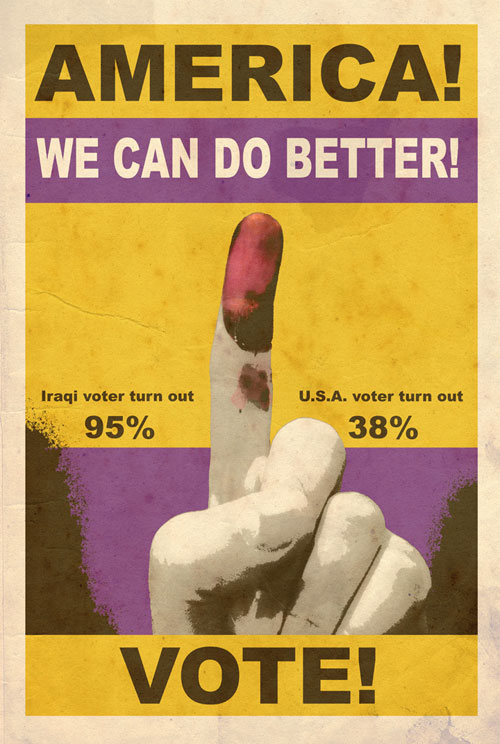
Stand Up Against Voter Fraud... Demand Re-Counts and Verification Until It is Right!! A Little Ink Goes a Long Way Toward Honesty... 1 Person 1 Vote... No More Mickey Mouse or Dead People Voting
"The world is a dangerous place to live; not because of the people who are evil, but because of the people who don't do anything about IT! --Albert Einstein
Call Congress Today and Tell Them To Vote Against Cap and Trade
The hottest places in Hell are reserved for those who in a period of moral crisis, maintain their neutrality -- Dante Alighieri / Often Quoted by Mark Twain
Thanks for calling the Congressional switchboard. Keep up the pressure: "NO on Cap and Trade"!!! "NO Vote on Obamacare", NO on another Stimulus Bill, NO to the never ending parade of "Power Grab Bills", and ABSOLUTELY NO on the Climate Change Treaty in Copenhagen!!
"No" on Cap and Trade and "No" on Government Controlled Healthcare!!! And Keep up the good fight! Keep up the Pressure on both the House and Senate! These are 2-fights the American People cannot afford to lose!!!
If you choose not to go this route… call and fax your Senator and as many of them on the list yourself, but don’t sit idly by!!
United States Capitol switchboard at (202) 224-3121
We apologize in advance for any Videos or links that are not functioning in these or other older posts. Internet information... like 'true' history in our student's textbooks are under constant attack by the Progressive Movement and even more so under the present administration. Try to save what you can to your own computer.
"...there comes a time, ladies and gentlemen, when ideology can cause death. I am so tired, so tired, of zealots, primarily on the left, putting their insane personal agendas above the safety of fellow Americans. Do you think the brave soldiers and Marines operating in dangerous areas right now want [unreleased photos of alleged abuse of prisoners] all over al-Jazeera and the terror websites? So let's look out for the military, OK? Nancy Pelosi has an obligation to get the loons in her party under control. If the Speaker can't do that, she doesn't deserve her position." ... Bill O'Reilly
Updated:If you'd like to contact Speaker of the House Nancy Pelosi, here's the contact information that you'll need.





 This week Bill Heid and Brian Brawdy broadcast Off the Grid Radio from Mexico City, Mexico, where they’ve been attending the Trade Winds Forum, an official U.S. Department of Commerce trade mission and business development conference that is bringing people from all across North, Central, and South America together in commerce and trade. Mexico in particular is looking to utilize the solar technologies that companies like Solutions From Science offers.