GBTV - Where the Truth Lives

Election Season 2014

And it has brought us to this trainwreck called ObamaCare and we have bankrupted our kids and grandkids!

We are now headed into the 2014 Election Season and common sense and conservatism are on the rise. Please stand-up and be counted!

Reading Collusion: How the Media Stole the 2012 Election is a great place to start!

The Founding Father's Real Reason for the Second Amendment

And remember the words of Thomas Jefferson "The strongest reason for the people to retain the right to keep and bear arms is, as a last resort, to protect themselves against tyranny in government." See Video of Suzanna Gratia-Hupp’s Congressional Testimony: What the Second Amendment is REALLY For, below (u-tube HERE).

The Leaders Are Here... Palin, Cruz, Lee, Paul, Chaffetz....

T'S A WONDERFUL LIFE

Can You Really Still Believe That None of These People Would Have Done a Better Job???

Bloggers' Rights at EFF

SIGN THE PETITION TODAY...

Showing posts with label AMERICAN POLITICS. Show all posts

Thursday, May 21, 2009

Why the U.S. Should Listen to India's Voters

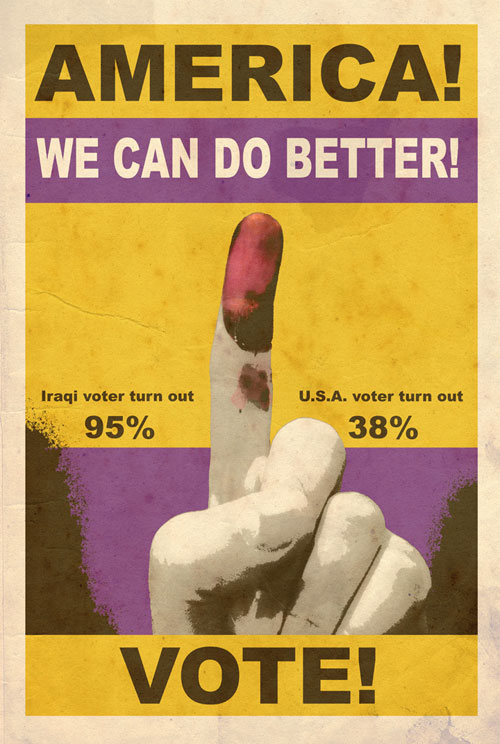
Last November, 131 million Americans voted, and the whole world took notice. Over the last month, about 700 million Indians voted, and most Americans, like most of the world, didn't much notice.

To be sure, American elections are more important to people all over the world than those in any other country. But the election in India is more important to Americans than most of us realize. Including, perhaps, our president.

This was not always so. During the Cold War, India was something of a de facto ally of the Soviet Union. This was due in part to our alliance with its rival neighbor Pakistan, but also to a feeling of solidarity with the U.S.S.R. on the part of the ruling Congress Party and its two historic leaders, Jawaharlal Nehru and his daughter Indira Gandhi.

The Congress vision of India was built on three pillars: socialism, autarky and secularism. Socialism meant a government-driven economy policed by a Permit Raj -- government bureaucrats had to approve every economic change. Autarky meant cutting India off from world trade, so that local industries could grow. Secularism meant toleration of religious diversity in a nation with both a large Hindu majority and the world's second-largest Muslim population.

The fall of the Soviet Union removed two of these three pillars. Manmohan Singh, then finance minister and now prime minister, began dismantling the Permit Raj. Successive governments led by the Congress Party and the Hindu nationalist BJP opened up India to trade, and export industries grew. Secularism remained, embraced by the Congress and not entirely repudiated by the BJP.

With the de facto alliance with the Soviets defunct, India was now open to an American alliance. Bill Clinton became the first U.S. president to visit India in years. George W. Bush moved further, cultivating closer ties with India and signing and getting ratified a nuclear cooperation treaty.

It became obvious that we had much in common. Both countries have a large and capable military, both have nuclear weapons, both have electoral democracies and English common law traditions, and both are prime targets of Islamist extremists. After Sept. 11, when Pakistan's Gen. Pervez Musharraf made a U-turn and promised to help the United States in Afghanistan, he did so in the awareness that the United States had a friend on the other side of his border.

India also has the potential to contain the power of China, in conjunction with other well-armed democracies around its periphery -- Japan, South Korea and Australia. Its economy has been growing almost as fast as China's, and it now has a middle class of perhaps 200 million people.

The election held over four weeks in April and May has produced a result very much to our advantage. The Congress Party has been returned to power with a larger share of the vote than indicated by pre-election and exit polls and will no longer need Communists and left-wingers for majorities in the Lok Sabha. The BJP attacked Congress for being too close to the United States; voters evidently decided that this was not a minus but a plus.

All of which puts the ball in Barack Obama's court. He has scarcely mentioned India in public since he became president, even as he has been making emollient noises to the mullah regime in Iran. Secretary of State Hillary Clinton, meanwhile, said publicly she wouldn't object to China's abuses of human rights, while India has worked hard to uphold human rights.

The United States is preoccupied with the turmoil inside Pakistan, as well as with Pakistan's problematic role in the fight against the Taliban. But building closer relations with India would give us more leverage in Islamabad. Clinton, who played a constructive role in her husband's outreach to India, should understand this. Perhaps Obama does, too.

But it's hard to tell. Obama has continued military operations in Iraq and stepped them up in Afghanistan, but otherwise he is banking heavily on the proposition that he can persuade those who have been our sworn enemies that they should be our friends. Maybe that will work. But in the meantime, it would not hurt to show some solicitude for our friends in India, with whom we share strategic interests and moral principles. The 700 million voters of India have chosen to be our ally. We should take them up on it.

Michael Barone :: Townhall.com Columnist by Michael Barone - a senior writer with U.S. News & World Report and the principal co-author of The Almanac of American Politics, published by National Journal every two years. He is also author of Our Country: The Shaping of America from Roosevelt to Reagan, The New Americans: How the Melting Pot Can Work Again, the just-released Hard America, Soft America: Competition vs. Coddling and the Competition for the Nation's Future

Posted: Knowledge Creates Power

Monday, May 11, 2009

Elizabeth Edwards: How I Survived John's Affair

Elizabeth Edwards during her husband's presidential campaign

elizabeth_edwards_0430

On May 3, former Democratic presidential candidate John Edwards acknowledged that a federal investigation had been opened into whether his campaign improperly gave money to a woman with whom Edwards had an extramarital affair. Edwards has denied any wrongdoing by his campaign. In an exclusive excerpt from her new book, Resilience, Edwards' wife Elizabeth describes her reaction to learning of the affair in late 2006. - (Photo: Scott Olson / Getty)

John was gone a lot in 2003 and 2004 running for office, and although I saw him all the time in 2005 when I was getting treatment for breast cancer, I knew I would see him less in 2006. I even participated in his being gone. I thought he should do a spring-break trip for college students in New Orleans to help with the Hurricane Katrina cleanup. His antipoverty work would take him across the country, and I knew that. When he told me that the political action committee was going to have behind-the-scenes videos made of some of these efforts, it didn't seem like that bad an idea, and it certainly didn't occur to me to ask about who was making them. It didn't occur to me that at a fancy hotel in New York, where he sat with a potential donor to his antipoverty work, he would be targeted by a woman who would confirm that the man at the table was John Edwards and then would wait for him outside the hotel hours later when he returned from a dinner, wait with the come-on line "You are so hot" and an idea that she should travel with him and make videos. And if you had asked me to wager that house we were building on whether my husband of then 28 years would have responded to a come-on line like that, I would have said no. (See pictures of John Edwards' Road to One America tour.)

John told me of his indiscretion on Dec. 30, 2006, after returning from a tour to announce that he was running for President. Before the announcement tour he had asked my brother to come with him to film it, since Jay taught film at the graduate film school at NYU, but when Jay found out another videographer was coming whether he came or not, Jay said no. Now the announcement tour was over and we were sitting in our family room, John telling us about the response in the various cities. John pulled Jay aside and asked him again to film the campaign. The female videographer who had been on the announcement tour was not going to travel with him again. John did not tell him why. The next morning he told me why, or told me a version of why. He had made a terrible decision and had been with the woman. After I cried and screamed, I went to the bathroom and threw up. (See a TIME package on tabloid truths.)

And the next day John and I spoke. He wasn't coy, but it turned out he wasn't forthright either. A single night and since then remorse, was what he said. There were other opportunities, he admitted, but on only one night had he violated his vows to me. So much has happened that it is sometimes hard for me to gather my feelings from that moment. I felt that the ground underneath me had been pulled away. I wanted him to drop out of the race, protect our family from this woman, from his act. It would only raise questions, he said, he had just gotten in the race; the most pointed questions would come if he dropped out days after he had gotten in the race. And I knew that was right, but I was afraid of her. And now he knows I was right to be afraid, that once he had made this dreadful mistake, he should not have run. But just then he was doing, I believe, what I was trying to do: hold on to our lives despite this awful error in judgment.

Like most wives — or husbands — in my position, I wanted to believe his involvement with this woman had been as little as possible. A single night, another opportunity, but that was it and he had wanted away from her.... It turned out that a single time was not all it was. More than a year later, I learned that he had allowed [the woman] into our lives and had not, even when he knew better, made her leave us alone. I tried to get him to explain, but he did not know himself why he had allowed it to happen. In months of talking with him, I have come to understand his liaison with this woman, if I have, not as a substitute for me. Those with any fame or notoriety or power attract people for good reasons and bad. Some want to contribute and some want to take something away for themselves. They flatter and entreat, and it is engaging, even addictive. They look at our lives, which from the outside in particular are pictures of joy and plenty, and they want it for themselves. (Read an interview with Elizabeth Edwards and Teresa Heinz Kerry.)

Just as I don't want cancer to take over my life, I don't want this indiscretion, however long in duration, to take over my life either. But I need to deal with both; I need to find peace with both. It is hard for John, I can see, because it is something about which he is ashamed. But his willingness to open up is a statement that he trusts me, too. For quite a long time, I used whatever he admitted in the next argument and he was hesitant to say anything. That is, gratefully, behind us. There is still a great deal of sorting through to do — the lies went on for some time. And we both understand that there are no guarantees, but the road ahead looks clear enough, although from here it looks long.

By ELIZABETH EDWARDS Tuesday, May. 05, 2009

Reprinted by permission from Resilience: Reflections on the Burdens and Gifts of Facing Life's Adversities by Elizabeth Edwards. Copyright 2009 by Elizabeth Edwards. To be published by Broadway Books, a division of Random House, Inc.

Source:  Time Magazine – Politics

Related

Photos

John Edwards' Road to One America Tour
Special Report

The Tabloids Strike Again
Stories
More Related