Congress made Monday the official day to commemorate national figures and events with the Monday Holiday Law in 1968 (Thanksgiving and the Fourth of July are exceptions to the Monday rule). Observance of Washington’s birthday was moved from February 22 to the third Monday in February. Contrary to popular opinion, no action by Congress or order by any president has changed “Washington’s Birthday” to “Presidents' Day.” Section 6103 of Title 5 of the United States Code still designates the legal federal holiday as “Washington’s Birthday.” It would be easy for the president to issue an executive order that would enforce the law and remind all Americans that George Washington ought not to be lumped in with every other president: good, bad, and the ugly (yes, James Buchanan, we are talking about you).
If anyone in American history (let alone a president) deserves to have a day celebrated in his honor, it’s George Washington. Henry Lee summed up Washington best when he said:
“First in war, first in peace, and first in the hearts of his countrymen, he was second to none in humble and enduring scenes of private life. Pious, just, humane, temperate, and sincere; uniform, dignified, and commanding; his example was as edifying to all around him as were the effects of that example lasting…. Correct throughout, vice shuddered in his presence and virtue always felt his fostering hand. The purity of his private character gave effulgence to his public virtues…. Such was the man for whom our nation mourns.”
Such was the man for whom our nation celebrates this February 22nd.
The Heritage Foundation
--------
It's Still George Washington's Birthday (Not President's Day)
"Washington was the directing spirit, without which there would have been no independence, no Union, no Constitution, and no republic. . . . We cannot yet estimate him. We can only indicate our reverence for him and thank the Divine Providence which kept him to serve and inspire his fellow man." Calvin Coolidge
February 22 is the birthday of George Washington, the man who, more than any other, made possible our republican form of government. The third Monday in February has come to be known - wrongly - as President's Day. America's political leaders should take this occasion to remember Washington's deeds, recollect his advice, and once again call the holiday celebrating him by its legal name: Washington's Birthday.
James Flexner, George Washington's greatest biographer, called him the "indispensable man" of the American Founding. Without Washington, America would never have won our War of Independence. He played the central role in the Constitutional Convention and, as our first President, set the precedents that define what it means to be a constitutional executive: strong and energetic, aware of the limits of authority but guarding the prerogatives of office. Washington not only rejected offers to make him king, but was one of the first leaders in world history to relinquish power voluntarily. His peaceful transfer of the presidency to John Adams in 1797 inaugurated one of America's greatest democratic traditions.
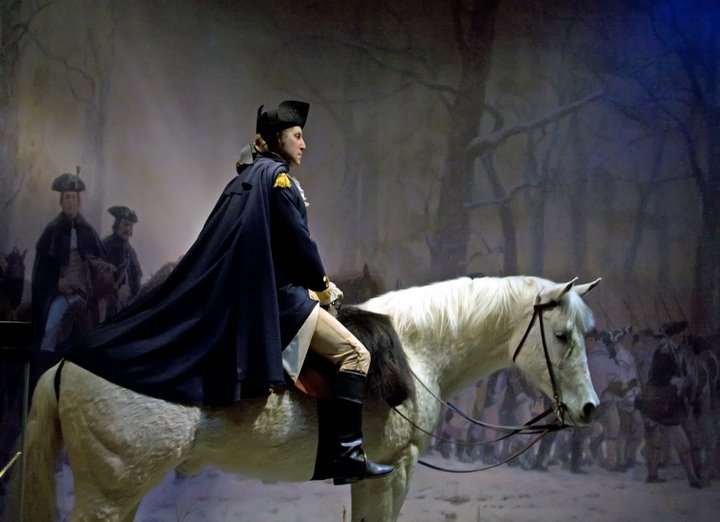
From 1775 onward, when the Continental Congress appointed him military commander of continental forces, Washington personified the American Revolution. For eight years, General Washington led his small army through the rigors of war, from the defeats in New York and the daring crossing of the Delaware River to the hardships of Valley Forge and the ultimate triumph at Yorktown. Through force of character and brilliant political leadership, Washington transformed an underfunded militia into a capable force that, although never able to take the British army head-on, outwitted and defeated the mightiest military power in the world. And when the job was done, Washington resigned his commission and returned to his beloved Mount Vernon.
Washington was instrumental in bringing about the Constitutional Convention, and his widely publicized participation gave the resulting document a credibility and legitimacy it would otherwise have lacked. Having been immediately and unanimously elected president of the convention, he worked actively throughout the proceedings, and an examination of his voting record shows his consistent support for a strong executive and defined national powers. The vast powers of the presidency, as one delegate to the Constitutional Convention wrote, would not have been made as great "had not many of the members cast their eyes towards General Washington as president; and shaped their ideas of the powers to be given to a president, by their opinions of his virtue."
Washington wrote extensively and eloquently about the principles and purposes of the American Founding; he was a champion of religious freedom, of immigration, and of the rule of law. His most significant legacy is his Farewell Address of 1796, which ranks with the Declaration of Independence and the Constitution as one of the greatest documents of the Founding. The Farewell Address is best remembered for its counsel about international affairs: Washington recommended commercial relations with other nations but as few political entanglements as possible. Often overlooked is his sage advice about the character of our political system:
1. Uphold the Constitution. Washington reminds us that the Constitution--by which our government is carefully limited yet strong enough to defend our rights and liberties--is our strongest check against tyranny and the best bulwark of our freedom. He warns us to guard against oppositions to lawful authority and those that seek to circumvent the rule of law, the customary method by which free governments are destroyed.
2. Beware of the politics of passion. Washington was concerned about the excessive partisanship that stirs up individual passions, bringing out the worst aspects of popular government. While partisan spirit is rooted in human nature, it should not come to dominate our politics to the exclusion of deliberation, persuasion, and reason but should, like other passions, be moderated by better motives.
3. Protect American independence. Although often remembered as an isolationist, Washington advocated an active policy of building the political, economic, and physical strength for America to defy external threats and pursue its own long-term national purpose. He wanted liberty to be the objective of our international relations and commerce, not conquest, to be the primary means by which America would acquire goods and deal with the world.
4. Encourage morality and religion. Public virtue cannot be expected in a climate of private vice, Washington reminds us, and the most important source of virtue is religion and morality. Religion is the bedrock of morality, and morality is the foundation of a good society, he believed; together, they teach Americans their obligations to each other and create the conditions for decent politics and public justice.
Although it was celebrated as early as 1778, and by the early 19th century was second only to the Fourth of July as a patriotic holiday, Congress did not officially recognize Washington's Birthday as a national holiday until 1870. The Monday Holiday Law in 1968--applied to executive branch departments and agencies by Richard Nixon's Executive Order 11582 in 1971--moved the holiday from February 22 to the third Monday in February. Section 6103 of Title 5, United States Code, currently designates that legal federal holiday as "Washington's Birthday." Contrary to popular opinion, no action by Congress or order by any President has changed "Washington's Birthday" to "President's Day."
Several times, legislators have introduced legislation to direct all federal government entities to refer to the holiday as George Washington's Birthday. Better yet: the President could issue an executive order that, in one stroke of the pen, would not only enforce the law, but also remind all Americans that this George W - George Washington, that is - still deserves to be "first in the hearts of his countrymen."
Matthew Spalding is Director of the B. Kenneth Simon Center for American Studies at The Heritage Foundation.
"Government is not reason; it is not eloquence. It is force. And force, like fire, is a dangerous servant and a fearful master." President George
NOTABLE QUOTES FROM GEORGE WASHINGTON:
My ardent desire is, and my aim has been...to comply strictly with all our engagements, foreign and domestic; but to keep the U States free from political connexions with every other Country. To see that they may be independent of all, and under the influence of none. In a word, I want an Americancharacter, that the powers of Europe may be convinced we act for ourselves and not for others; this is in my judgment, is the only way to be respected abroad and happy at home.
Letter to Patrick Henry, October 9, 1775
Our own Country's Honor, all call upon us for a vigorous and manly exertion, and if we now shamefully fail, we shall become infamous to the whole world. Let us therefore rely upon the goodness of the Cause, and the aid of the supreme Being, in whose hands Victory is, to animate and encourage us to great and noble Actions.
General Orders, July 2, 1776
The preservation of the sacred fire of liberty, and the destiny of the republican model of government, are justly considered as deeply, perhaps as finally, staked on the experiment entrusted to the hands of the American People.
First Inaugural Address, April 30, 1789
It is now no more that toleration is spoken of as if it were the indulgence of one class of people that another enjoyed the exercise of their inherent natural rights, for, happily, the Government of the United States, which gives to bigotry no sanction, to persecution no assistance, requires only that they who live under its protection should demean themselves as good citizens in giving it on all occasions their effectual support.
Letter to the Hebrew Congregation of Newport, Rhode Island, September 9, 1790
To point out the importance of circumspection in your conduct, it may be proper to observe that a good moral character is the first essential of man, and that the habits contracted at your age are generally indelible, and your conduct here may stamp your character through life. It is therefore highly important that you should endeavor not only to be learned but virtuous.
Letter to George Steptoe Washington, December 5, 1790
The Constitution which at any time exists, 'till changed by an explicit and authentic act of the whole People, is sacredly obligatory upon all.
Farewell Address, September 19, 1796
Of all the dispositions and habits which lead to political prosperity, Religion and morality are indispensable supports. In vain would that man claim the tribute of Patriotism, who should labor to subvert these great Pillars of human happiness--these firmest props of the duties of Men and citizens.
Farewell Address, September 19, 1796
ON WASHINGTON:
His example is now complete, and it will teach wisdom and virtue to magistrates, citizens, and men, not only in the present age, but in future generations, as long as our history shall be read.
John Adams, Message to the U.S. Senate, December 19, 1799
First in war, first in peace, and first in the hearts of his countrymen, he was second to none in humble and enduring scenes of private life. Pious, just, humane, temperate, and sincere; uniform, dignified, and commanding; his example was as edifying to all around him as were the effects of that example lasting.... Correct throughout, vice shuddered in his presence and virtue always felt his fostering hand. The purity of his private character gave effulgence to his public virtues.... Such was the man for whom our nation mourns.
Official eulogy of Washington, written by John Marshall
and delivered by Representative Richard Henry Lee, December 26, 1799
Perhaps the strongest feature in his character was prudence, never acting until every circumstance, every consideration, was maturely weighed; refraining if he saw a doubt, but when once decided, going through with his purpose, whatever obstacles opposed. His integrity was pure, his justice the most inflexible I have ever known, no motives of interest or consanguinity, of friendship or hatred, being able to bias his decision. He was, indeed, in every sense of the words, a wise, a good, and a great man.
Thomas Jefferson, letter to Dr. Walter Jones, January 2, 1814
To him who denies or doubts whether our fervid liberty can be combined with law, with order, with the security of property, with the pursuits and advancement of happiness; to him who denies that our forms of government are capable of producing exaltation of soul, and the passion of true glory; to him who denies that we have contributed any thing to the stock of great lessons and great examples; to all these I reply by pointing to Washington.
Daniel Webster, Address at Bunker Hill, June 17, 1842
Wherever men love liberty, wherever they believe in patriotism, wherever they exalt high character, by universal consent they turn to the name of George Washington. No occasion could be conceived more worthy, more truly and comprehensively American, than that which is chosen to commemorate this divinely appointed captain.
Calvin Coolidge, address marking the 150th anniversary of Washington's taking command of the continental army, July 3, 1925
Published on February 13, 2004 by Matthew Spalding, Ph.D.




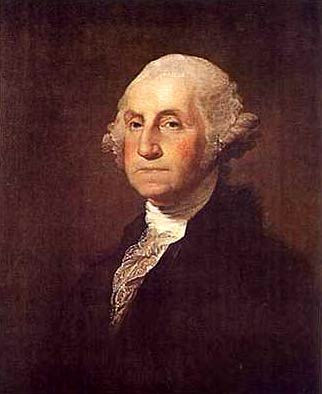
 If you don’t know a lot about George Washington… He was a remarkable man, leader and servant to both God and the American people. And, most of what you learned about him in school, was wrong.
 celebrate every president in our Nation’s history. The president