
Video: Reality
House Republicans - See our plan for jobs and economic growth: http://jobs.GOP.gov

Can You Really Still Believe That None of These People Would Have Done a Better Job???



Fox News - True Health Is True Wealth:
Video: Rick Perry on Neil Cavuto… Not Setting up ObamaCare Insurance Markets
Several Republican governors, in what could be their last symbolic stand against ObamaCare, announced 
A total of 20 states have now decided not to implement their own exchanges -- which could also mean increased costs for the federal government.
The governors of Wisconsin and Ohio joined Texas Gov. Rick Perry and others in confirming that they will not establish so-called "health insurance exchanges," which are set to launch in January 2014. Under the federal health care overhaul, these exchanges will act as virtual markets where people and small businesses can shop for private coverage in a regulated environment. Many will also be eligible for government subsidies.
The governors' move does not stop those exchanges from being implemented. Rather, it kicks the project back to the federal government to run with regard to those states. While a number of states, largely those run by Democrats, will establish their own exchanges, Republicans who declined argued that it wasn't worth the cost and resources to set up a marketplace that would be under the thumb of the federal government anyway.
"As long as the federal government has the ability to force unknown mandates and costs upon our citizens, while retaining the sole power in approving what an exchange looks like, the notion of a state exchange is merely an illusion," Perry wrote in a letter to Health and Human Services Secretary Kathleen Sebelius. "It would not be fiscally responsible to put hard-working Texans on the financial hook for an unknown amount of money to operate a system under rules that have not even been written."
Wisconsin Gov. Scott Walker said the same, writing in a letter to Sebelius Friday that "no matter which option is chosen, Wisconsin taxpayers will not have meaningful control over the health care policies and services sold to Wisconsin residents." With that in mind, he wrote, the state has decided not to build its own system. Ohio Gov. John Kasich echoed that point of view.
Republican governors have been largely opposed to the health care law anyway. But for months, they were effectively waiting to see if the Supreme Court would overturn it or whether Obama would lose re-election and potentially leave an opening to repeal it. Neither of those things happened.
Walker was among those who stopped implementation last year on the hopes the law would be overturned either by the U.S. Supreme Court or Republicans following the November election.
Thursday evening, the Obama administration responded to a request for more time from Republican governors on the exchange question by granting states a month's extension, until Dec. 14.
A few states have signaled they want to partner with the federal government, as opposed to running it themselves or handing the reins to Washington. Those states would handle consumer issues and oversight of health plans in the exchanges, while the feds do the heavy lifting by enrolling individuals for coverage and determining who's eligible for government assistance. Among these states are Arkansas and North Carolina.
The number of partnership states could grow significantly, since the Obama administration has given states until next February to decide on that option.
Obama's election victory virtually guaranteed the survival of his health care law, which is eventually expected to provide coverage to more than 30 million people through the exchanges and expanded Medicaid programs. It was the final hurdle, after the Supreme Court upheld a legal challenge from 26 states. In the aftermath of the election, some Republican state leaders say it's time to accept the law.
"I don't like it; I would not vote for it; I think it needs to be repealed. But it is the law," said Mississippi Insurance Commissioner Mike Chaney, after announcing that his state wants to set up its own exchange. "If you default to the federal government, you forever give the keys to the state's health insurance market to the federal government."
Traditionally, states have regulated the private health insurance market.
But other Republican-led states say they don't have enough information to make a decision at this point and are clamoring for the Obama administration to release major regulations that have been bottled up for months.
"States are struggling with many unanswered questions and are not able to make comprehensive far-reaching decisions prudently," Govs. Bob McDonnell of Virginia and Bobby Jindal of Louisiana wrote Obama earlier this week. They asked for a meeting with the president, as well as a postponement of the original Nov. 16 deadline.
Some of their main concerns are hidden costs of operating the exchanges and the sheer bureaucratic complexity of the new system. The Obama administration has steadfastly maintained it will not postpone the Jan. 1, 2014, launch date for the law's coverage expansion. Open enrollment for exchange plans will begin even sooner, Oct. 1, 2013.
The Associated Press contributed to this report.
Related:
Rick Perry: 'Another federal power grab'
The Original Posted Republican National Convention Speaker Lineup
On Sunday Mitt Romney's campaign laid out an updated three-day Republican National Convention schedule that incorporated a number of speakers, including former Democrat-turned Republican Rep. Artur Davis (Ala.) and Sen. Rand Paul (R-Ky.), whose Monday sessions had been cancelled due to Tropical Storm Isaac as a safety precaution. GOP officials confirmed that the 2012 Republican National Convention will primarily take place Tuesday, Wednesday and Thursday of this week, due to weather complications.
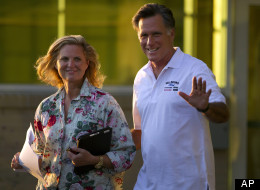
Republican presidential candidate, former Massachusetts Gov. Mitt Romney and his wife Ann leave Brewster Academy after finishing convention preparations for the day on Sunday, Aug. 26, 2012 in Wolfeboro, N.H. (AP Photo/Evan Vucci)
Monday's schedule has been reduced to a five-minute pro forma session, comprised of party chairman Reince Priebus gaveling in the convention. This act will also trigger a running public debt clock, which will track the amount of national debt accrued by the US government over the four-day stretch.
The "official business" of nominating Mitt Romney and Paul Ryan will take place Tuesday afternoon. Convention organizers said they were able to incorporate all of Monday's "headliner" speakers into the truncated program by eliminating some program elements deemed to be "non essential," and by tailoring a few speeches to be slightly shorter. Party officials said Monday's theme -- "we can do better" -- will be woven into the final three nights.
As for reports and rumors about a potential Friday session, officials said they have no plans for that, and declined to discuss the "hypothetical" scenario any further. The new convention schedule is below. The limited 10-11pm ET hours, which the broadcast networks will carry live (shame on them because these are national conventions that all Americans should watch and especially if they plan to vote! ), have not been altered. Bolded speeches indicate "prime-primetime" addresses. All times are approximate:
Monday, August 27, 2012
2:00 p.m. Chairman of the RNC Reince Priebus
Call to Order/Start Debt Clocks
2:10 p.m. Announcement of Recess
Tuesday, August 28, 2012
2:00 p.m. Chairman of the RNC Reince Priebus
Color Guard Knights of Columbus
Pledge of Allegiance by Former Governor Tim Babcock (MT)/ Tom Hogan (FL)
National Anthem sung by Philip Alongi
Invocation by Rabbi Meir Soloveichik
Opening procedural steps, appointment of convention committees
Welcoming remarks, and House and Senate candidates and RNC auxiliaries
RNC Chairman Priebus
RNC Co-Chairman Sharon Day
Tampa Mayor Bob Buckhorn
Convention Chief Executive Officer William Harris
Chairman of Tampa Bay Host Committee Al Austin
Republican Congressional Candidates
State Delegate Barbara Comstock (VA)
Representative Tim Griffin (AR)
Republican Senate Candidates
Republican National Committee auxiliaries
Consideration of convention committee reports
RNC Chairman Reince Priebus
Committee on Credentials Chairman Mike Duncan
Committee on Permanent Organization Chairwoman Zoraida Fonalledas
Convention Permanent Chairman Speaker John Boehner, Presiding
Official Convention Photograph
Committee on Rules Chairman John Sununu
Committee on Resolutions Chairman Governor Bob McDonnell
Committee on Resolutions Co-Chairman U.S. Senator John Hoeven
Committee on Resolutions Co-Chairman U.S. Rep. Marsha Blackburn
Roll Call for Nomination of President of the United States
Roll Call for Nomination of Vice President of the United States
6:40 p.m. Recess
7:00 p.m. Reconvene
Remarks by Speaker John Boehner
Remarks by RNC Chairman Reince Priebus
Video and remarks by Mayor Mia Love (Saratoga Springs, UT), U.S. congressional candidate
Remarks by Janine Turner
Remarks by former U.S. Senator Rick Santorum
Remarks by Host, U.S. Rep. Cathy McMorris Rodgers
8:00 p.m. Remarks by U.S. Senator Kelly Ayotte (NH), accompanied by Jack Gilchrist
Remarks by Governor John Kasich (OH)
Remarks by Governor Mary Fallin (OK)
Remarks by Governor Bob McDonnell (VA), accompanied by Bev Gray
Remarks by Governor Scott Walker (WI)
9:00 p.m. Remarks by Governor Brian Sandoval (NV)
Remarks by Sher Valenzuela (small business owner, candidate for DE Lt. Governor)
Remarks by Senate Republican Candidate Ted Cruz (TX)
Remarks by Artur Davis
Remarks by Governor Nikki Haley (SC)
10:00 p.m. Remarks by Mrs. Luce' Vela Fortuño
Remarks by Mrs. Ann Romney
Remarks by Governor Chris Christie (NJ)
Benediction by Sammy Rodriguez
Adjournment
Wednesday, August 29, 2012
7:00 p.m. Convention convenes
Call to order
Introduction of Colors by Amputee Veterans of America Support Team (AVAST)
Pledge of Allegiance by Brigadier General Patrick E. Rea, US Army (Ret.)
National Anthem sung by Ayla Brown
Invocation by Ishwar Singh
Ron Paul Video
Remarks by Senate Republican Leader and Convention Temporary Chairman Mitch McConnell (KY)
Remarks by Senator Rand Paul (KY)
Remarks by Christopher Devlin-Young and Jeanine McDonnell
8:00 p.m. Remarks by Senator John McCain (AZ)
Remarks by Attorney General Pam Bondi (FL) and Attorney General Sam Olens (GA)
Remarks by Governor Bobby Jindal (LA) – Bobby Jindal cancelled early Monday morning because of Hurricane Isaac
Remarks by Senator John Thune (SD)
Remarks by Senator Rob Portman (OH)
9:00 p.m. Remarks by Governor Luis Fortuño (PR)
Remarks by Governor Tim Pawlenty (MN)
Bush 41, 43 Film
Remarks by Mike Huckabee
10:00 p.m. Remarks by Condoleezza Rice
Remarks by Governor Susana Martinez (NM)
Remarks by vice presidential nominee Rep. Paul Ryan
Benediction by Archbishop Demetrios
Adjournment
Thursday, August 30, 2012
7:00 p.m. Convention convenes
Call to order
Introduction of Colors US Central Command Joint Forces Color Guard Team
Pledge of Allegiance by Dylan Nonaka
National Anthem sung by SEVEN
Invocation by Ken and Priscilla Hutchins
Remarks by U.S. Rep. Connie Mack (FL)
Reagan Legacy Video
*Remarks by Newt and Callista Gingrich – notable additions from the original released schedule
Remarks by Craig Romney
8:00 p.m. Remarks by Governor former Jeb Bush (FL)
Remarks by Bob White, chairman of Romney for President campaign
Remarks by Grant Bennett
Remarks by Tom Stemberg
9:00 p.m. Remarks by former Massachusetts Lt. Governor Kerry Healey
Remarks by Jane Edmonds, former Massachusetts Secretary of Workforce
Remarks by Olympians Michael Eruzione, Derek Parra and Kim Rhode
10:00 p.m. Remarks by U.S. Senator Marco Rubio (FL)
Remarks by presidential nominee Mitt Romney
Benediction by Archbishop Timothy M. Dolan - Cardinal Dolan to offer closing prayer at Republican Convention
Speaker Boehner declares convention adjourned
For more information on the 2012 Republican National Convention in Tampa, check out RNC 2012 page for all the information you need regarding the convention.
FOX News announces GOP convention coverage schedule
FOX Business Network Presents Live Coverage of The Republican National Convention
Official website of the 2012 Republican National Convention
One GOP Convention Session to be Themed “We Built That”
And if anyone questions the bias of the media their coverage of the GOP Convention should settle it. RNC chairman chides TV networks over convention programming:
ABC and CBS will each air one hour of prime time convention programming on Tuesday, Wednesday and Thursday nights of both the Republican and Democratic conventions. NBC will mirror the other networks in coverage of the RNC, but at the DNC, will air one hour of primetime programming on Tuesday and two hours on Thursday.
But unlike the Democrats, who have no events on the Monday before their three-day convention, Republicans have four days of podium action and a full slate of speakers for Monday night. The networks are not taking any of that nights programming live in primetime. CNN Promises ‘Unbiased’ Convention Coverage
 RNC: Ann Romney to address convention Tuesday Republican National Convention officials say Mitt Romney’s wife, Ann, will speaking during prime-time television coverage of the event. Florida Sen. Marco Rubio, a rising national figure in the party Gives Prime Time Speaking Slot to Ann Romney. Mitt Romney was disappointed in networks! Now with Hurricane Isaac Monday night ended up being cancelled and the gulf governors have had to cancel and stay in their states.
Related:
Republican National Convention 2012: Romney Accuses Obama Of Engaging In 'Low' Politics
Electoral College Prediction Model Points To A Mitt Romney Win In 2012
Gallup: 60 Percent of Americans Believe Media Are Biased … – The rest aren’t paying attention or drank the Kool Aid!
Romney in Crisis: Two Dark Spots in Fortunate Life
Romney Tells Israel: “You Built That!”

Romney-Ryan: America’s New Dream Team and a Clear Choice
Romney-Ryan are just the guys to turn things around; the right team for the times!

Republicans in Congress have been objecting to new infrastructure spending that would put Americans to work repairing and rebuilding bridges, highways, schools, airports, skyscrapers, high speed rail lines, and clean energy industries. Now we may know why.
San Francisco is getting a new bridge connecting to Oakland. But it’s not being built by American workers. It’s being built in China and shipped back to America for assembly. But that’s not the only infrastructure project being built by the Chinese, and it’s not just being built in China. It turns out, the state owned Chinese contractors are being hired out to build American infrastructure right here in the United States.
According to Engineering News Record, five of the world’s top 10 contractors, in terms of revenue, are now Chinese. One of them, China State Construction Engineering Group, has overtaken established American giants like Bechtel.
The Chinese contractor has already built seven schools in the US, apartment blocks in Washington DC and New York and is in the middle of building a 4,000-room casino in Atlantic City. In New York, it has won contracts to renovate the subway system, build a new metro platform near Yankee stadium, and refurbish the Alexander Hamilton Bridge over the Harlem river.
But why are we hiring contractors from China to build American infrastructure, when we have a perfectly good workforce here in the states? The answer is profit, and it’s the reason why Republican politicians and many corporations do not support infrastructure projects that would put millions of Americans to work. Because the Chinese contracting firms are government owned, they are able to bid for contracts at very low prices. In other words, the labor is cheap. American companies don’t want to hire Americans to do the work when they can call up Communist China to come do the work instead. This is particularly helpful to Republicans politicians because their campaigns receive the extra profits made by these companies. It’s a win-win. But it’s a loss to Americans who are desperate to find work.
Obviously, Republicans will say that all we need to do is end regulations and abolish the minimum wage to entice companies to start hiring Americans. But that’s pretty un-American if you ask me. What Republicans are saying is that if we want to beat China, we need to be just like them. That’s very hypocritical considering the rhetoric Republicans have been using to slam communism all the while praising the free market system. How exactly “free” is the free market when they hire the Chinese to do jobs that Americans should be doing? How are private enterprises “patriotic” when they favor Chinese workers over American workers? The reason America became the richest country in the world is because we made sure that Americans were paid livable wages and not pennies. We passed regulations to keep American workers safe on the job and American consumers safe at home. And private industry employed Americans, and made products in America. That is how America became an economical superpower. American companies would still make huge profits by hiring Americans at livable wages. They just don’t want to because they want to make disgustingly bigger profits. It’s all about the bottom line.
We shouldn’t be hiring Chinese contractors to build our infrastructure. We should build our schools. We should build our roads and bridges. We Should build our high speed rail lines. The fact is, by hiring such contractors, the American private sector is relying on a foreign government owned industry to do the work, all while they oppose the United States government getting involved in infrastructure programs that would create American jobs for American citizens. It’s time for the American government to take back what American corporations have been giving away to the Chinese for the last decade. And the only way to do that is to fire the Republican politicians who only represent the interests of corporations and replace them with politicians that want to create jobs for Americans. Because it is clear, that private industry will not hire Americans to do the work when they can hire slave labor do it instead. We cannot let that be the new American way.
Source: Addicting Info
See the: House Republican Plan for America's Job Creatorsat Jobs.GOP.Gov
I urge you to contact your Representative and ask him to co-sponsor and vote YES on the Cut, Cap, and Balance Act of 2011.
--The bill number is H.R.2560. (The number of the companion Senate bill is S.1340.)
--The House is slated to vote on H.R.2560 on Tuesday, July 19, 2011.
--The Cut, Cap, and Balance Act meets the criteria of the Cut, Cap, and Balance Pledge:
1) It substantially cuts spending;
2) It creates enforceable spending caps;
3) It requires congressional passage of a Balanced Budget Amendment to the U.S. Constitution that includes a spending limitation and a super-majority to raise taxes before the debt ceiling can be raised.
--The debt held by the public has more than doubled in just the past five years. Interest paid on the national debt is expected to more than triple over the next ten years.
--Many economists believe the US faces a Greek-style debt crisis within the next five years if we do not get our fiscal house in order very soon.
--The federal government has hit the $14.292 trillion debt limit set in February 2010. Raising the debt ceiling without significant spending cuts is simply a tax increase on future generations.
--Moody’s Investors Services has said the AAA rating of US government bonds is in jeopardy unless Congress passes “a budget that includes long-term deficit reduction.”
--Standard & Poor's has said it will downgrade US debt if the US doesn't 1) cut spending substantially and 2) REFORM the way it budgets, to control future spending.
--The Cut Cap and Balance Act (CCB) would meet the tests set forth by Moody's and S&P, so we never again face this kind of debt problem. In short, "CCB=AAA."
--The Cut, Cap, and Balance Act is a long-term deficit reduction package that will ensure we get back on the path of fiscal sanity and are not downgraded from our AAA bond rating.
Click here to see FreedomWorks' letter on the Cut, Cap, and Balance Act.
Click here to see FreedomWorks' Key Vote Notice on the Cut, Cap, and Balance Act.
Please fax, call and email your Congressman and Senator(s) today and tell them to vote for Cut, Cap and Balance
Related:
Michele Bachmann Personalizes Cut, Cap and Balance
Red State: Cut, Cap and Balance
Jim DeMint’s “Cut, Cap and Balance” Qualifier
The Caucus of House Conservative: Cut, Cap and Balance
Obama Officially Threatens to Veto Republicans’ Cut, Cap and Balance Bill (Before It Even Passes) – So Who Is Really the Obstructionist?
 AP Graphics
House GOP begins long drive to dismantle Obamacare
By: Byron York 01/20/11 8:05 PM
Chief Political Correspondent
Everyone knows House Republicans (along with three Democrats) voted Wednesday to repeal Obamacare. But fewer people know what those same House Republicans -- this time, with 14 Democrats -- did Thursday.
By a vote of 253 to 175, the GOP directed key House committees to report on ways to lower health care premiums, allow patients to keep their current health plans, increase access to coverage for those with pre-existing conditions, and decrease the price of medical liability lawsuits. In other words, the committees are beginning work on replacing the House-repealed Obamacare with Republican health policies.
Repeal got a lot of press coverage. Replacement got far less. If they needed any reminding, GOP lawmakers are learning that controlling the levers of power in the House doesn't mean controlling the media narrative on health care. "Democrats wanted to characterize repeal as draconian, ignoring the fact that we do have very, very positive alternatives," says Rep. David Dreier, chairman of the House Rules Committee. "It's been difficult for us to get that [message] out there. We said repeal and replace, and we're in the process of replacing."
House Republicans are pursuing a three-part strategy. Part One was repeal; they promised to do it, and they did it. Part Two is replace, which in coming months will involve House votes on a series of GOP health care measures. And Part Three -- since full repeal can't win in the Senate -- is another series of votes on measures to repeal individual parts of Obamacare. The net result will be that Republicans gradually push more and more House Democrats -- and perhaps some in the Senate -- away from an all-or-nothing defense of Obamacare.
When Democrats passed the national health care bill, many admitted that they didn't like this or that part, or that the bill as a whole wasn't "perfect." But after Obamacare became law, they balked at changing even the smallest part. For example, there is widespread agreement that the so-called 1099 provision -- the requirement that requires businesses to file zillions of new Internal Revenue Service forms -- is extremely burdensome. But when Republicans tried to kill the provision last year, Senate Majority Leader Harry Reid made sure it didn't happen.
Now, after voters gave the GOP control of the House and a stronger voice in the Senate, things are different. Democrats are talking openly about changing Obamacare -- just as long as the changes stop short of full repeal. "Let us modify the health care law in a bipartisan way," House Assistant Minority Leader James Clyburn told Fox News this week. "But this whole stuff of repeal and throwing it out and starting all over -- that's not going to happen."
Obamacare is filled with vulnerable provisions. In addition to the 1099, there's the individual mandate (which is also being challenged in court), cuts to Medicare, and the long-term care measure called the Community Living Assistance Services and Supports Act, better known as the CLASS Act. During the Senate's Obamacare debate in December 2009, some Democrats voiced reservations about each of those provisions.
"Just look at the ones who made noise during the original debate," says a well-connected GOP Senate source. "Claire McCaskill, Ben Nelson, Kent Conrad -- Conrad called the CLASS Act a Ponzi scheme, but he voted for the whole bill that included it. How would he vote on a separate bill to repeal it?"
We'll probably find out. In the next year and a half, Senate Democrats, including some who are facing tough re-election fights in 2012, could have a chance to vote again on the most troublesome parts of Obamacare. With 47 Republican senators, the GOP would need just four Democrats to reach majority support for repealing significant chunks of the health care law.
If that happens, Senate Democrats, who at this very moment are railing against Republican filibusters, would have to resort to -- you guessed it -- a filibuster to stop repeal of any part of Obamacare. Even if they do, Republicans believe they might muster 60 votes to win the day. And if key parts of Obamacare fall, it's not clear whether the whole structure can remain standing.
As those fights go on, House Republicans, with some Democratic help, will pass new measures to address the health care problem piece-by-piece. Some will be attractive to Senate Democrats facing re-election. "A lot of them come from states that are sympathetic to the message we heard last November 2," says David Dreier. "So in light of that, we're not going to give up on this."
Byron York, The Examiner's chief political correspondent, can be contacted at byork@washingtonexaminer.com. His column appears on Tuesday and Friday, and his stories and blogposts appear on ExaminerPolitics.com.

House Speaker John Boehner of Ohio, center, speaks about the upcoming vote to repeal the health care bill, Wednesday, Jan. 19, 2011, on Capitol Hill in Washington. From left are, Rep. Nan Hayworth, R-N.Y., Rep. Cathy McMorris Rodgers, R-Wash., Boehner, House Majority Whip Kevin McCarthy of Calif., and Rep. Jeb Hensarling R-Texas. (AP Photo/Alex Brandon)
Source: Washington Examiner – Cross Posted: True Health Is True Wealth


In Germany... When the Nazis came for
the communists,
I remained silent;
I was not a communist.Then they locked up the social democrats,
I remained silent;
I was not a social democrat.Then they came for the trade unionists,
I did not protest;
I was not a trade unionist.Then they came for the Catholics,
I did not protest;
I was a Protestant.Then they came for the Jews,
I did not speak out;
I was not a Jew.When they came for me, there was no one left to speak out for me.

Click here to read the "Your Life, Your Choices" guide. - Being Given to Veterans (Duty To Die Pamphlet)
Click Here to See ObamaCare Chart: Republicans unveil chart depicting bureaucratic nightmare of Dem government-run health care... Developing...

Call the United States Capitol switchboard today... everyday at (202) 224-3121 and keep them on their toes!
Call the White House at 202-456-1414 or 1111 and tell President Obama you have had enough!


If you choose not to go this route… call and fax your Senator and as many of them on the list yourself, but don’t sit idly by!!
United States Capitol switchboard at (202) 224-3121
Also, check in regularly with PetitionPelosi.com - Petions Always Changing, fighting Pelosi’s liberal and unconstitutional bills and actions.
Wow... They Did It To Us Again...
Glenn Beck... Who Is He? - Crash Course Review (2011)
KCP Test Yourself Quiz and Answers
Fall of the Republic - The Presidency of Barack Obama... Full Length Movie - The Big Picture
We Have Until December... 2009 Says Author of Welcome to Obamaland
The Dumbing Down of America Series
Warning: "We Are At the 11th Hour!" - A Must Read/Watch
Decline Is A Choice - Charles Krauthammer
Pulling No Punches - John McCain
We Figured Him Out - Ben Stein
Listening To A Liar – Thomas Sowell
The Manchurian Candidate - David Horowitz
C'Mon That Will Never Happen in America - Rep Ron Paul
Cloward-Piven Strategy of Economic Recovery (or Demise) - Nancy Coppock
The Rise of the Black Conservative Voice
America's Ruling Class and the Perils of Revolution - Important Read
Agenda 21 - The Ending of Liberty in America
Must See Collection of Videos and Resources
Follow us on Twitter at: http://twitter.com/AskMarion


